
The immediate days following the loss of a loved one are undoubtedly the most emotionally challenging times a family can face. Your primary focus should rightfully be on grieving, being together, and ensuring a respectful farewell.
However, whether you are arranging a hearse van service for the final journey, booking local cremation services in Bangalore, or coordinating comprehensive funeral services, the sudden burden of legal and municipal paperwork can quickly become overwhelming.
Among these required administrative duties, securing official municipal documentation stands out as the most critical step. Families are often thrust into a complex bureaucratic process when they apply for a certificate of death.
As this task must be handled amidst intense sorrow, it is incredibly common for well-meaning family members to make small but significant administrative errors. Unfortunately, these mistakes can lead to cascading delays, freezing bank accounts, delaying insurance claims, and complicating property transfers for months to come.
In this guide, we will gently walk you through the most frequent documentation errors families encounter during this difficult time. Understanding these common pitfalls in advance, you can navigate the civic requirements with clarity and confidence, ensuring your loved one’s legacy and your family’s future are legally protected without unnecessary stress.
Mistake 1: Delaying the Registration of Death Beyond 21 Days
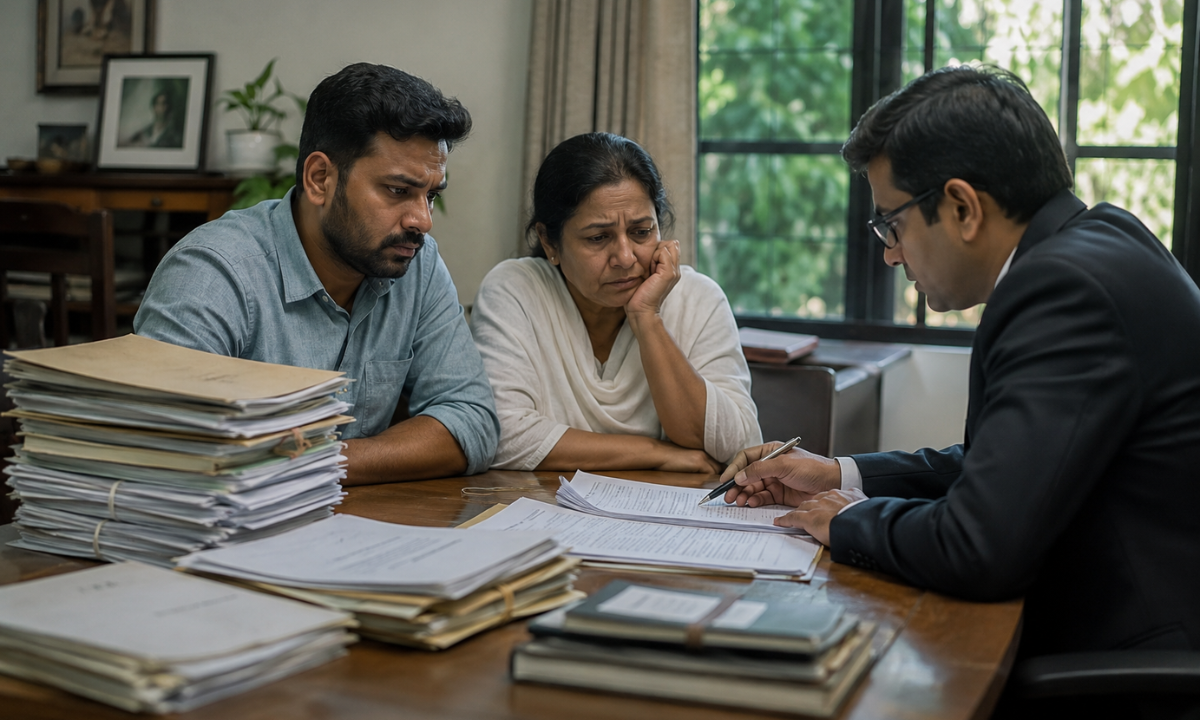
When a family is navigating the immediate shock of a loss, civic deadlines are naturally the furthest thing from their minds.
Relatives often assume that the hospital documentation or the cremation receipt is sufficient, putting off the official municipal registration until weeks or even months later. However, this is one of the most critical and common administrative mistakes families make.
Under the provisions of the Registration of Births and Deaths Act, 1969 (and its vital 2023 amendments), the Government of India mandates a strict timeline: the registration of death must be completed within 21 days of the passing.
Failing to meet this 21-day window transforms a straightforward administrative task into a complex, multi-tiered legal process:
- Within 21 Days: The process is entirely free of charge and relatively simple. The local registrar (such as the BBMP in Bangalore or the village Panchayat) processes the hospital records and issues the certificate swiftly.
- Between 21 and 30 Days: The family must pay a stipulated late fee and submit a formal request for delayed registration.
- Between 30 Days and 1 Year: The process becomes significantly stricter. The family must obtain written permission from the District Registrar, submit self-attested documents, and pay late fees. This often involves multiple visits to civic offices.
- Beyond 1 Year: This is the most distressing scenario. The local registrar loses the authority to issue the document directly. The family must now obtain a formal order from a First-Class Executive Magistrate or Sub-Divisional Magistrate (SDM), which involves drafting legal affidavits, police verification, and enduring extensive delays.
The sudden absence of a loved one brings a stillness that makes paperwork feel impossible. We deeply understand this. However, initiating the registration within the first week is the most effective way to protect your family from enduring harsh bureaucratic and legal stress while you are trying to heal.
If you feel unable to manage this, a dedicated funeral management team can step in to liaise with the authorities on your behalf.
Mistake 2: Overlooking Name Mismatches and Spelling Errors

During the chaotic and deeply emotional moments following a passing at a hospital or nursing home, administrative details are often left to hurried conversations. When medical staff ask for the details of the deceased to prepare the initial medical summary, grieving family members may inadvertently provide a shortened name, a common family nickname, or an incomplete surname.
While this might seem like a trivial detail at the time, it is one of the most structurally damaging mistakes you can make when you apply for a certificate of death.
The local municipal registrar (such as the BBMP) does not conduct independent identity checks; they will print the final civic death certificate exactly as it is written on the hospital’s medical cause of death form.
If there is even a single letter difference between the final death certificate and your loved one’s official government IDs, you will face severe bureaucratic roadblocks.
Here is where a name mismatch will immediately halt crucial processes:
- Life Insurance and Pension Claims: Insurance companies and pension boards scrutinise documents with absolute rigidity. If the death certificate reads “Ram K. Sharma” but the Aadhar card or policy document reads “Ramesh Kumar Sharma,” the claim will be outright rejected until a legal affidavit is provided.
- Banking and Asset Transfer: Closing bank accounts, claiming fixed deposits, or transferring property titles requires seamless matching across all documents. A misspelt name can freeze financial assets for months, placing unnecessary financial strain on the bereaved family.
- Spousal and Dependent Visas: For families managing international affairs, foreign embassies will flatly refuse to cancel a passport or process dependent visa updates if the death certificate does not perfectly mirror the deceased’s passport details.
To protect your family from future distress, always carry your loved one’s primary government ID (such as an Aadhar Card, PAN Card, or Passport) with you. When the hospital staff is preparing the final discharge or death summary, kindly but firmly request that they copy the name and age exactly as they appear on that official identification.
Taking just two minutes to verify the spelling on the hospital’s initial forms will save your family months of stressful visits to civic offices and legal courts later on.
Mistake 3: Confusing the Medical Certificate with the Municipal Certificate
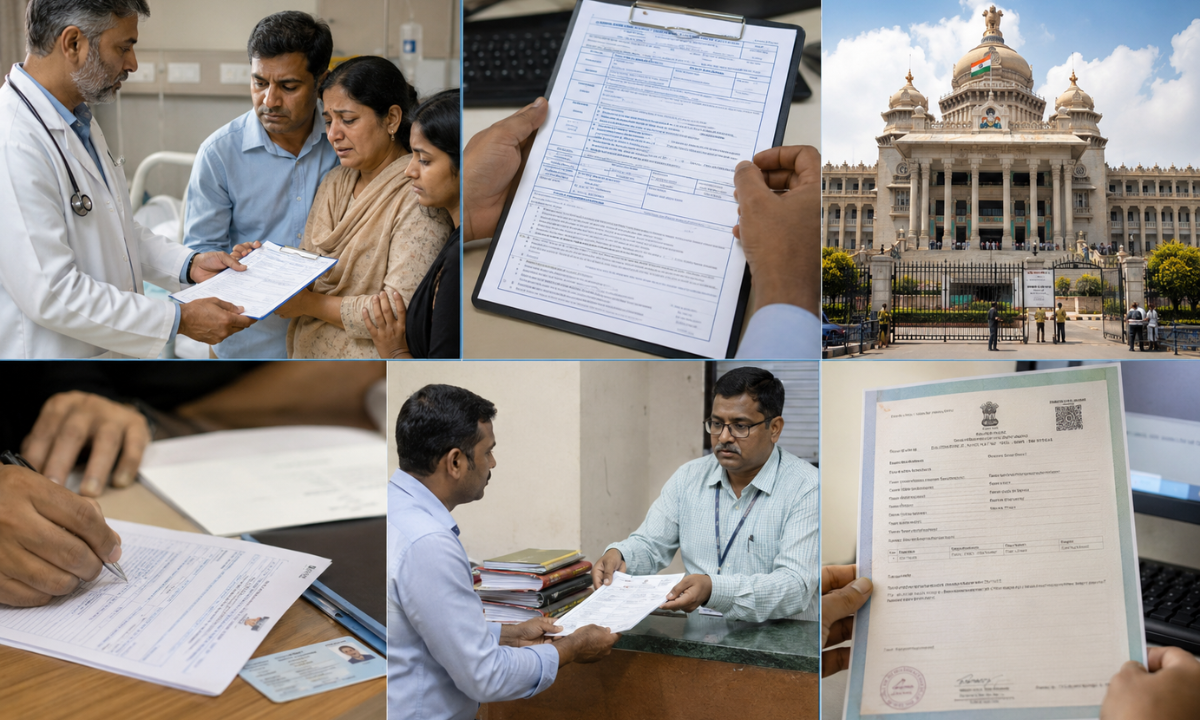
One of the most frequent sources of confusion for families during the initial days of mourning is distinguishing between the different types of death certificates. When a loved one passes away, the paperwork handed to the family can seem incredibly overwhelming.
Many families mistakenly believe that the initial document provided by the doctor or hospital is the final legal death certificate.
This misunderstanding often leads to severe delays when the family later attempts to close bank accounts or claim insurance. To navigate this smoothly, it is vital to understand the distinct difference between the two primary documents:
1. The Medical Certificate of Cause of Death (MCCD)
This is the very first document you will receive. It is purely a medical record issued by the attending doctor or the hospital. Under Indian law, this document follows a specific World Health Organisation format governed by the Registration of Births and Deaths Act, 1969.
- Form 4: This is issued if your loved one passed away in a hospital or medical institution.
- Form 4A: This is issued by a registered medical practitioner if the passing occurred at home (a non-institutional death).
The MCCD strictly records the medical details. It states the immediate cause of death, any underlying medical conditions, and the exact time of passing. However, this medical form is not a legally binding document for financial or property matters. You cannot use Form 4 or Form 4A to claim a life insurance policy or transfer a property title.
2. The Municipal Death Certificate
This is the final, legally binding civic document. It is issued by the local government authority, such as the Bruhat Bengaluru Mahanagara Palike (BBMP) in Bangalore or the local village Panchayat.
To obtain this official municipal certificate, the family or their appointed funeral director must submit the doctor’s MCCD (Form 4 or 4A) along with the deceased’s identification to the local registrar. The municipal certificate serves as the ultimate legal proof of death recognised by all banks, insurance companies, international embassies, and legal courts.
You do not need to decipher these medical forms alone. When you engage a professional funeral management team, they will collect the MCCD directly from the doctor and immediately submit it to the municipal registrar on your behalf.
This ensures that the final, legally valid municipal certificate is processed and delivered to your family without you having to visit a single civic office.
Mistake 4: Ignoring Cause of Death Documentation Errors

When a hospital hands over the Medical Certificate of Cause of Death (Form 4 or Form 4A), family members are understandably too overwhelmed by grief to read through the complex medical terminology.
Most families simply fold the document and file it away for municipal registration. However, assuming that a hospital-issued document is flawlessly executed is a frequent and costly mistake.
Recent audits of medical death certification in India have revealed that a staggering majority of these certificates contain significant clinical or administrative errors. If you submit a flawed medical certificate to the local registrar, the issuance of the final municipal certificate can be severely delayed. Furthermore, life insurance companies rigorously investigate the stated cause of death; any ambiguity can lead to an immediate freezing of the claim.
When reviewing the hospital’s medical certificate, you must briefly ensure it does not suffer from these common causes of death documentation errors:
1. Vague “Mechanism of Death” vs. “Underlying Cause”:
This is the most prevalent major error. Doctors sometimes hurriedly write down the mechanism of death, such as Cardiac Arrest, Heart Failure, or Respiratory Arrest.
However, civic authorities and insurance companies require the underlying cause of that arrest (for example, Coronary Artery Disease or Chronic Kidney Disease). A certificate listing only Cardiac Arrest is often rejected for being incomplete.
2. Use of Unacceptable Abbreviations:
Medical practitioners frequently use shorthand or abbreviations (e.g., MI for Myocardial Infarction or CRF for Chronic Renal Failure).
Municipal registrars, who require clear data for national mortality statistics (ICD-10 coding), will routinely reject forms that use medical shorthand instead of fully spelled-out diagnoses.
3. Missing Time Intervals:
The official WHO-adapted format requires the doctor to mention the approximate time interval between the onset of the underlying illness and the time of death.
If this column is left entirely blank, insurance companies may flag the claim for a prolonged fraud investigation, assuming the medical history is being hidden.
4. Missing Doctor’s Credentials and Seal:
A medical certificate is completely invalid if it lacks the attending doctor’s clear signature, their official medical registration number, and the hospital’s official rubber stamp.
We know that challenging a doctor’s paperwork is the last thing you want to do during this painful time. However, before leaving the hospital premises, simply request a senior nurse or the hospital’s administrative desk to double-check that the underlying cause is spelled out completely, abbreviations are avoided, and the hospital seal is clearly stamped. This brief moment of vigilance provides immense legal protection for your family’s future.
Why Choose Kaashimukthi for Final Rites?
When your family is navigating the overwhelming emotional landscape of a loss, handling intricate municipal guidelines should be the very last thing on your mind. At Kaashimukthi, our mission is to step in with deep cultural empathy and absolute operational precision, ensuring you have the emotional space to heal while we carry the administrative weight.
As a trusted partner in complete bereavement care, we provide seamless, end-to-end management designed to bypass every common documentation error:
- Expert Documentation Liaison: We understand the technicalities of the Civil Registration System and local civic bodies like the BBMP. Our experienced coordinators collect the Medical Certificate of Cause of Death (MCCD) directly from the hospital, thoroughly audit it for spelling and clinical errors, and swiftly manage the entire registration of death process for you.
- Comprehensive Logistical Support: From arranging a dignified hearse van service in Bangalore to securing immediate booking slots at local cremation services, we ensure every transit requirement is handled flawlessly and respectfully.
We don’t just handle the paperwork. Kaashimukthi provides learned priests, authentic Antim Sanskar Samagri (ritual kits), and end-to-end coordination for the entire 13-day mourning window, including the Shradh and Pind Daan ceremonies.
The Way Forward
Securing a flawless municipal death certificate is far more than just an item on a civic checklist. It is a vital final act of care that protects your loved one’s legacy, safeguards your family’s financial future, and prevents future legal distress. While the bureaucratic steps can appear cold and confusing during a time of intense grief, knowing which common pitfalls to look out for can save your family from months of unnecessary administrative strain.
You do not have to walk this intricate path alone. Let our family support yours.
Reach out to Kaashimukthi today. Allow our compassionate team to handle the legalities, logistics, and traditional arrangements, so you can focus entirely on honoring your loved one with a peaceful, dignified, and loving farewell.

Madhu is an Entrepreneur, a Mentor, a Writer and an Aspiring Car Race Driver. He is Deeply passionate about leveraging Technology and Human Centred Design to make complex care and End of Life Planning easier. With the ultimate aim of Improving the quality of Life in the Twilight years. Madhu is highly educated and Alumni of IIM-Bangalore, Sikkim Manipal University and Bangalore University besides a Rich Industry Experience in the field of Product Management, Design, Supply chain, Finance, Commercial Management and Funeral Services.