
The sudden loss of a loved one is a profoundly disorienting experience that leaves families reeling from an intense wave of emotional grief. In the immediate aftermath, processing your sorrow is made even more difficult by a sudden wave of logistical and legal responsibilities that must be addressed without delay.
When a demise occurs unexpectedly, whether due to a sudden medical emergency, a road accident, or any unforeseen event, the family is unexpectedly thrust into a complex world of state regulations, police procedures, and documentation hurdles.
During these vulnerable moments, understanding the formal steps required for the official declaration of death becomes essential to prevent administrative delays and protect your family from unnecessary distress.
While navigating the legal framework can feel overwhelming, having a clear roadmap allows you to manage the situation with dignity. At Kaashimukthi, recognised among the best funeral service providers in India, our mission is to gently guide you through these intricate legal realities, absorbing the administrative burdens so you can focus entirely on honouring your loved one.
Legal Foundations: Natural vs. Unnatural Death
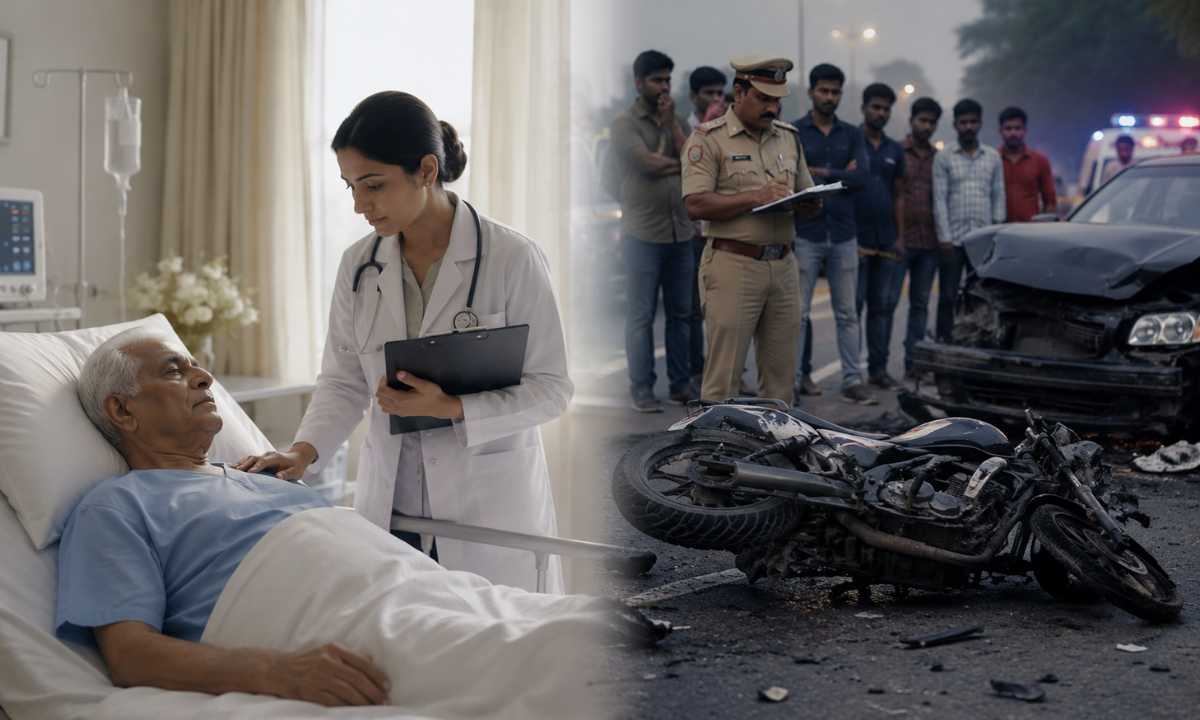
When an individual passes away in India, the very first legal crossroads the family encounters is determining the legal classification of the demise. Indian law draws a sharp, non-negotiable line between a natural death and an unnatural or suspicious death.
Understanding this distinction is vital, as it dictates whether local law enforcement agencies must step in before any funeral arrangements can proceed.
1. Natural Death: This classification applies when a person leaves us due to the unassisted operation of natural causes. This includes a long-standing illness, age-related biological decline, or a terminal medical condition where the individual was already under continuous medical care.
In such scenarios, a registered medical practitioner can comfortably verify the medical history and issue the required paperwork without any police intervention.
2. Unnatural Death: Conversely, an unnatural death is defined as any demise that does not result from ordinary health failures. Legally, this encompasses fatal road accidents, industrial mishaps, suicides, homicides, or any sudden passing where the exact cause is unknown or suspicious.
When an accidental or sudden demise occurs, it immediately triggers the activation of Section 194 of the Bharatiya Nagarik Suraksha Sanhita, 2023 (BNSS) , the modern legal framework that succeeded Section 174 of the legacy Criminal Procedure Code (CrPC).
Under this mandate, the state must legally investigate the incident to completely rule out foul play. Consequently, a standard medical certificate cannot be issued immediately, and the family cannot host a funeral or utilise local Cremation Services in Bangalore until the local police station conducts a formal inquest and grants an official No Objection Certificate (NOC).
Navigating the Police NOC and Inquest
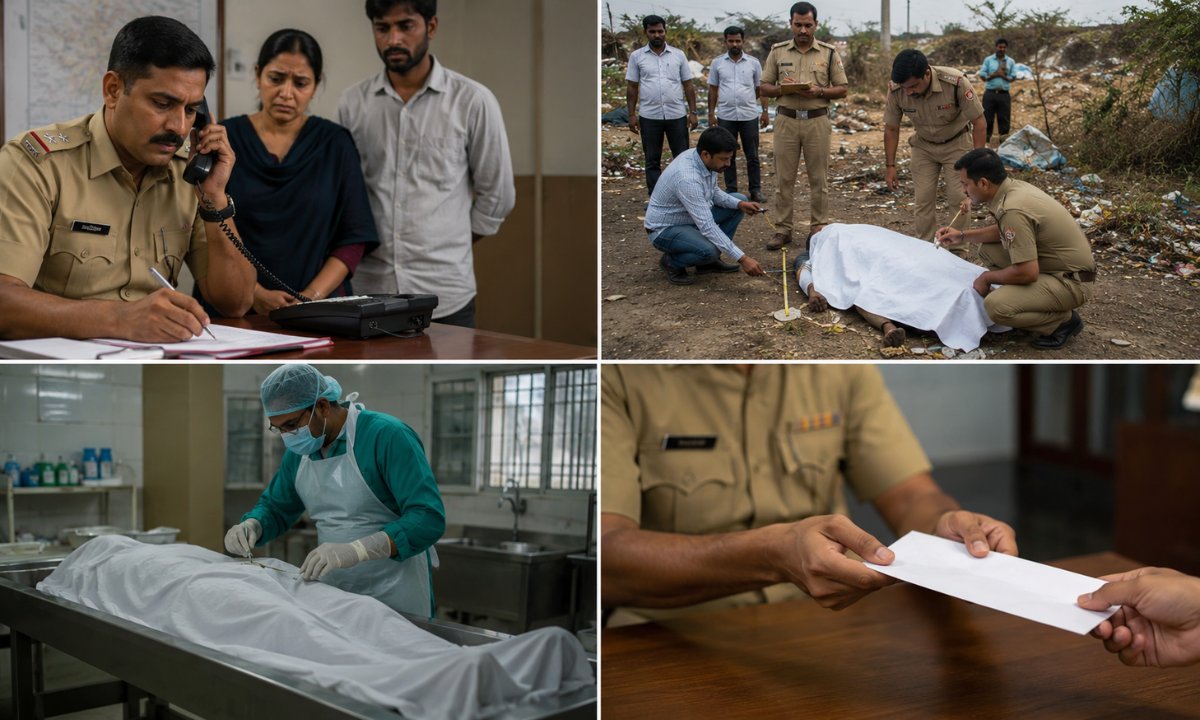
When dealing with an accidental or unnatural demise, a specific legal sequence must be followed before the final rites can be performed. The purpose of this procedure is to create an unassailable public record of the events and ensure complete legal compliance.
The entire process follows a mandatory, time-sensitive progression under Section 194 of the BNSS:
1. Reporting and Intimation (Initiating the legal record)
The moment an unnatural event occurs, the local police station within whose jurisdiction the incident took place must be immediately informed. The officer in charge is legally bound to register an Unnatural Death (UD) report and instantly notify the nearest Executive Magistrate.
2. The Inquest and Panchnama (The spot investigation)
An investigating officer will physically visit the spot. In the presence of at least two respectable local inhabitants from the neighbourhood, the officer will examine the deceased person, document any external marks of injury, and draw up an official Inquest Report (Panchnama).
3. The Post-Mortem Examination (Establishing the scientific timeline)
Unless the cause of death is entirely free from doubt, the body is legally forwarded to the nearest government hospital or authorised civil surgeon for a formal post-mortem (autopsy) to scientifically establish the precise biological failure.
4. Issuance of the Police NOC (The final legal clearance)
Once the autopsy is complete and the police are satisfied that no immediate signs of a cognizable criminal offense exist, they will issue a formal No Objection Certificate (NOC). This document formally releases the body to the family, allowing them to proceed with the final rites.
Body Preservation Logistics During the Investigation
Because a police inquest and subsequent autopsy involve mandatory bureaucratic steps, the entire process can easily span anywhere from 12 to 48 hours depending on hospital schedules and operational timelines.
During this challenging waiting period, the physical preservation of the dead body becomes a matter of utmost priority to ensure the deceased is treated with the highest degree of dignity.
Families often find comfort in utilizing temperature-controlled mortuary cabinets or hiring specialised mobile freezer boxes during this interim period. Ensuring that the physical form is preserved perfectly protects your loved one from rapid decomposition, giving the family complete peace of mind while the state paperwork is being formalised.
Once the vital police NOC is securely in hand, the family can smoothly coordinate with trusted partners to schedule immediate transportation to professional Cremation Services in Bangalore.
Securing the Medical Certification: Form 4 vs. Form 4A
Once the local police station issues the necessary No Objection Certificate (NOC) for an accidental or unnatural demise, the focus immediately transitions to securing the official medical certification of cause of death (MCCD).
This specialized clinical document serves two critical functions: it provides the scientific explanation of the demise for public health records, and it acts as the primary legal trigger that allows the local Municipal Corporation to issue the final, formal cause of death certificate.
Under the rules of the Registration of Births and Deaths Act, 1969, the medical certification is strictly split into two distinct formats.
Choosing the correct document depends entirely on where your loved one was being cared for at the time of their passing:
Form 4: Institutional Deaths

This specific Form 4 death certificate framework is used strictly when the demise takes place within a registered medical facility, such as a hospital, nursing home, or clinic.
- The Process: The attending physician or the resident hospital medical officer who was directly responsible for the patient’s terminal care is legally authorized to complete this form.
- In Unnatural Cases: If the demise was accidental or unnatural, the hospital administration will not hand Form 4 directly to the family. Instead, immediately following the mandatory autopsy, the forensic medical officer completes the form and routes it directly to the investigating police team. The police then hand this official certification to the family alongside the physical custody of their loved one.
Form 4A: Non-Institutional Deaths
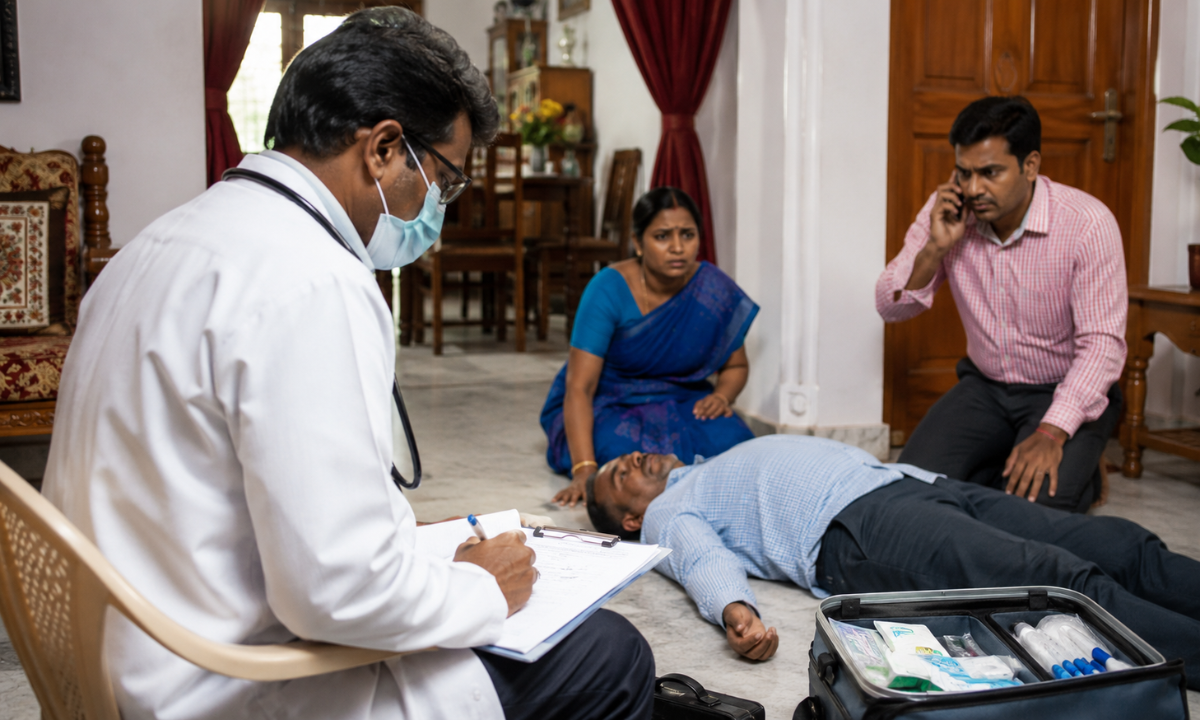
Conversely, the Form 4a death certificate layout is reserved exclusively for non-institutional demises, meaning the individual passed away at home, at their workplace, or in a public space outside of a hospital setting.
- The Process: This certificate must be filled out and signed by a licensed Registered Medical Practitioner (RMP) who was actively treating the deceased during their last illness, or a family physician called to examine the form immediately after passing.
- Important Warning: For sudden, accidental, or suspicious home demises, an RMP cannot simply sign Form 4A on demand. If a person is “brought dead” to a private clinic or if a sudden accident occurs at home, a doctor is legally barred from certifying the cause. The case must be routed directly to law enforcement, converting the process into a formal inquest timeline where the final certification is generated via the post-mortem track rather than a standard home doctor’s note.
- The Path to the Final Legal Certificate: It is critical to remember that neither Form 4, Form 4A, nor a police NOC is an actual legal death certificate.
These are the mandatory prerequisite documents that the family or a designated care team must digitally submit to the local civil registrar’s office within 21 days to receive the official, legally binding death certificate required for all future estate settlements.
Why Choose Kaashimukthi? How Kaashimukthi Directs the Logistics
When an accidental or sudden tragedy hits a household, the sheer weight of handling police statements, visiting government hospitals, and navigating complex municipal paperwork can leave a family feeling completely paralyzed. Managing intense emotional grief while simultaneously trying to understand complex civil laws is a burden no one should carry alone.
This is where Kaashimukthi steps in as your steady, compassionate, and reliable anchor. While your family focuses on supporting one another through the immediate shock of loss, our highly specialized team takes complete charge of the logistical horizon.
As a comprehensive provider of Funeral services in Bangalore, we seamlessly absorb the administrative and heavy-lifting phases of the transition.
Our end-to-end support system gracefully covers every logistical detail:
- Immediate, Dignified Transfer: We dispatch professional mortuary transport vehicles equipped to handle sensitive transfers from accident sites or hospitals to state cold-storage facilities with the utmost reverence.
- Document Coordination: Our experienced care managers assist your family at the Sub-Registrar and police desks, ensuring that all copies of the police NOC, Form 4, or Form 4A are compiled accurately to prevent frustrating delays.
From booking respected crematorium slots to coordinating specific community customs, we handle the entire physical environment so your family can say goodbye in absolute peace.
Conclusion
An unexpected or accidental demise brings an undeniable storm of legal complexities, but it does not mean your loved one’s final journey should be defined by bureaucratic chaos. By understanding the protective purpose behind the police inquest and ensuring the correct medical forms are filed, you can maintain perfect dignity throughout the transition.
You do not have to walk this dark path alone. At Kaashimukthi, our hands are always extended in support, ready to manage the heavy burdens of state compliance, preservation, and logistics, guaranteeing that your loved one is returned home and laid to rest with deep cultural reverence, absolute legal safety, and boundless, unconditional kindness.
If your family is facing a crisis or requires immediate, 24/7 guidance through an unnatural death documentation process, please reach out to Kaashimukthi’s compassionate care helpline today.

Madhu is an Entrepreneur, a Mentor, a Writer and an Aspiring Car Race Driver. He is Deeply passionate about leveraging Technology and Human Centred Design to make complex care and End of Life Planning easier. With the ultimate aim of Improving the quality of Life in the Twilight years. Madhu is highly educated and Alumni of IIM-Bangalore, Sikkim Manipal University and Bangalore University besides a Rich Industry Experience in the field of Product Management, Design, Supply chain, Finance, Commercial Management and Funeral Services.