
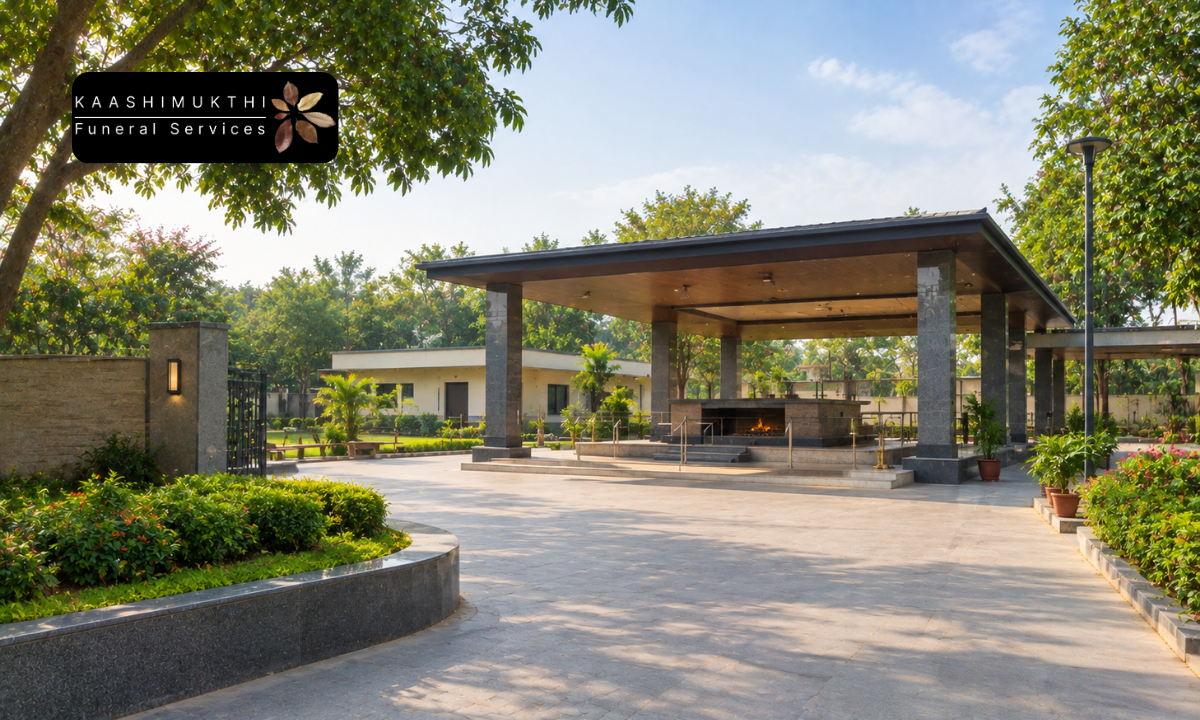
Losing a cherished family member brings profound emotional sorrow alongside immediate administrative responsibilities. In North Bengaluru, navigating final rites at the Yelahanka crematorium provides families with a peaceful setting to pay their deepest respects.
Whether you require modern electric pyre systems or traditional ground spaces across the Yelahanka & Jakkur crematorium network, understanding municipal booking protocols and Vedic rituals ensures a sacred, dignified departure for your loved one.
Conducting end-of-life ceremonies in the expanding northern suburbs of Bengaluru involves balancing municipal procedures with sacred Vedic traditions:
- Civic Clearances and BBMP Formalities: Obtaining the necessary medical death certificates, completing Bruhat Bengaluru Mahanagara Palike (BBMP) token registrations, and securing allocated furnace slots without distressing waiting periods.
- Hygienic and Timely Transit: Coordinating dignified hearse transport from premier medical centres such as Aster CMI, Manipal Hospital Hebbal, or Cytecare as well as private residences across Sahakara Nagar, Yelahanka New Town, and Vidyaranyapura.
- Adherence to Sacred Vedic Vidhis: Arranging pure ritual samagri, holy Ganga jal, and experienced Vedic purohits capable of conducting traditional community-specific rites (Antim Sanskar).
Navigating these logistical steps while in deep mourning can be emotionally exhausting for family members. We harmonise compassionate ground logistics with authentic spiritual traditions.
Our dedicated team assists families throughout North Bengaluru with hearse coordination, BBMP documentation, crematorium slot management, and complete Vedic ceremonies, ensuring that your loved one’s soul is honoured with absolute reverence and peace.
Infrastructure, Facilities & Service Options (Yelahanka & Jakkur)
Selecting the right facility within North Bengaluru depends upon your family’s personal preferences, specific community traditions, and environmental considerations.
The municipal facilities serving the Yelahanka and Jakkur areas offer distinct options ranging from modern, eco-conscious electric furnaces to traditional earth burial grounds, ensuring every departed soul is honoured in accordance with sacred rites.
1. Modern Electric & Eco-Friendly Gas Furnaces at Yelahanka
The municipal crematorium in Yelahanka features high-efficiency, automated furnace systems designed to provide a swift, hygienic, and environmentally responsible cremation process:
- Low-Emission Technology: Advanced filtration mechanisms significantly minimise smoke and atmospheric pollutants, ensuring an eco-friendly departure that aligns with urban environmental standards.
- Controlled Thermal Efficiency: High-temperature processing reduces the overall duration of the cremation to approximately 60 to 90 minutes, allowing families to complete final rites without extended waiting periods.
- Sanitised Viewing & Final Offering Decks: Clean, well-maintained platforms allow the chief mourner (Karta) and immediate family to perform Agni Sparsha and recite Vedic prayers in a peaceful, sheltered setting.
These modern systems offer a dignified and orderly environment, making them the preferred choice for families seeking a clean and time-efficient cremation.
2. Traditional Pyres and Ground Services at Jakkur
For communities whose customs mandate traditional earth burial or open-air wood pyres, dedicated spaces in neighboring Jakkur provide the necessary infrastructure:
- Traditional Earth Interments: Dedicated burial grounds accommodating Lingayat, Veerashaiva, Christian, and other specific denominational traditions requiring earth burial rather than cremation.
- Open-Air Vedic Pyres: Designated earthen spaces where families can perform full traditional wood pyre rites with sacred woods, cow dung cakes (uple), and herbal samagri under open skies.
- Community-Specific Ground Support: Experienced ground staff assisting with pit preparation, ceremonial shroud placements, and traditional soil ceremonies.
Utilising specialised Jakkur burial ground services ensures that ancestral customs and distinct community tenets are faithfully preserved without logistical compromise.
3. Essential Amenities for Mourners and Relatives
Both the Yelahanka and Jakkur facilities are equipped with civic amenities designed to accommodate attending relatives with care and respect:
- Sheltered Prayer & Gathering Halls: Spacious, covered pavilions protect mourners from severe sun and tropical rains during final eulogies and community prayers.
- Dedicated Ritual Platforms: Raised, clean stone platforms enabling Vedic purohits to lay out sacred mats, perform Antim Snanam, apply holy pastes, and chant Vedic hymns prior to entering the furnace area.
- Purified Water & Washroom Facilities: Dedicated taps and washing areas to facilitate ritual hand-and-foot cleansing (Achamana) and post-ceremony ablutions for family members.
- Vehicular Parking & Stretcher Access: Wide approach roads with dedicated parking spaces for hearse vans, family vehicles, and ambulance access directly to the ceremonial gates.
Having access to these well-maintained facilities allows visiting relatives to focus entirely on spiritual remembrance and offering heartfelt prayers in a serene atmosphere.
North Bengaluru Cremation & Burial Facility Comparison
| Facility Feature | Yelahanka Crematorium | Jakkur Grounds & Services |
|---|---|---|
| Primary System | Electric / Eco-friendly Gas Furnaces | Traditional Earth Burial & Wood Pyre Grounds |
| Average Ceremony Duration | 60 to 90 minutes | 2 to 3 hours (depending on rites) |
| Best Suited For | Modern, eco-conscious cremation rites | Traditional burials and open-air Vedic wood pyres |
| Core Amenities | Automated furnace, viewing deck, waiting hall | Burial plots, pit assistance, shaded gathering shed |
| Ash Collection Timeline | Next-morning collection from office locker | Immediate closure / not applicable for burials |
Assessing these operational features against your community requirements will guide your family towards making a well-considered, respectful decision for your loved one’s final journey.
BBMP Documentation Roadmap & Slot Booking Procedures
Securing the appropriate municipal paperwork is essential before entering the crematorium premises in North Bengaluru. The Bruhat Bengaluru Mahanagara Palike (BBMP) follows a structured regulatory process to register cremations and burials.
Completing these statutory formalities swiftly avoids distressing delays, allowing families to transition peacefully from medical release to the sacred performance of final rites.
Navigating these civic formalities involves four key administrative stages:
1. Procuring the Official Medical Certificate of Cause of Death
The foundational document required by BBMP registrars is the official Medical Certificate of Cause of Death (MCCD), which legally confirms the time and nature of passing:
- Hospital or Nursing Home Passing (Form 4): Issued directly by attending doctors at medical establishments (such as Aster CMI, Manipal Hospital Hebbal, or Baptist Hospital) alongside a clinical discharge summary and death report.
- Natural Passing at Home (Form 4A): Issued by a registered medical practitioner (RMP) following an in-person examination at the residence, formally certifying natural biological causes.
Before leaving the medical facility or private residence, relatives should carefully cross-check that the spelling of the departed’s name, age, gender, and residential address matches their government identification records precisely. Minor spelling discrepancies on medical certificates can temporarily stall municipal clearance at the administrative counter.
2. Identity Verification & BBMP On-Site Token Allocation
Upon arriving at the facility gates, family members must present legal identification to register the cremation in the municipal ledger:
- Government Photo Proofs: Submitting self-attested photocopies of the deceased’s Aadhaar Card, Passport, or Voter ID alongside original identification for physical verification.
- Applicant & Next-of-Kin Details: Providing the Aadhaar card and signed declaration of the primary family member or Karta authorising the cremation arrangements.
- Token Issuance: The municipal desk registers the entry and assigns a sequential token number corresponding to the next available furnace or pyre slot.
Families can check current operational hours and token availability directly through the designated yelahanka crematorium contact desk or municipal ward office, ensuring that hearse arrival is timed accurately with furnace readiness.
3. Clearances for Medico-Legal and Unnatural Deaths
In situations where passing occurs unexpectedly, under non-medical circumstances, or due to road accidents, additional law enforcement verifications are legally mandatory:
- Police Station Intimation: Lodging an official report at the local jurisdictional police station to secure an initial station diary entry and transit clearance.
- Post-Mortem Examination Report: Conducted at an authorised civil or government hospital mortuary to establish forensic clarity regarding the exact cause of death.
- Police No Objection Certificate (NOC): An official stamped certificate from investigating police authorities confirming that no legal disputes remain before the body is released for final rites.
Experienced bereavement coordinators handle these police station visits, mortuary handovers, and paperwork submissions directly, relieving grieving relatives from dealing with bureaucratic procedures during an emotionally taxing period.
BBMP Administrative Clearance Summary
| Stage | Issuing Authority | Core Purpose | Verification Method |
|---|---|---|---|
| Medical Certification | Treating Hospital / Registered Medical Doctor | Establishes biological cause of death (Form 4/4A) | Original doctor’s signature and registration seal |
| Police Clearances | Local Jurisdictional Police Station | Mandated for accidental or unnatural passing | Stamped Police NOC and Post-Mortem report |
| Municipal Registration | BBMP Crematorium Administrative Counter | Token allocation and entry in the civic ledger | Verification of Aadhaar IDs and medical certificates |
| Final Cremation Slip | On-site Facility Supervisor | Authorises gate entry to the furnace or pyre area | Presentation of allocated token and entry slip |
Compiling these essential documents into a single folder prior to departure ensures that BBMP officials can verify all details within minutes, allowing family members to proceed directly with sacred Vedic rituals.
Step-by-Step Antim Sanskar Vidhi & Sacred Samagri
In Hindu philosophical traditions, cremation (Antim Sanskar) is revered as the sixteenth and final sacrament (Antyesti Samskara). It represents the sacred offering of the physical body back into the five primal elements (Pancha Mahabhutas): earth, water, fire, air, and ether.
Performing these rites with scriptural precision and pure devotional intent releases the departed soul (Jiva) from earthly attachments, paving the way towards spiritual liberation (Moksha).
When conducting final rites at Yelahanka, following a structured Vedic workflow ensures every ritual is performed faithfully in accordance with ancestral traditions:
1. Preliminary Purification and Shrouding (Antim Snanam & Vastradharana)
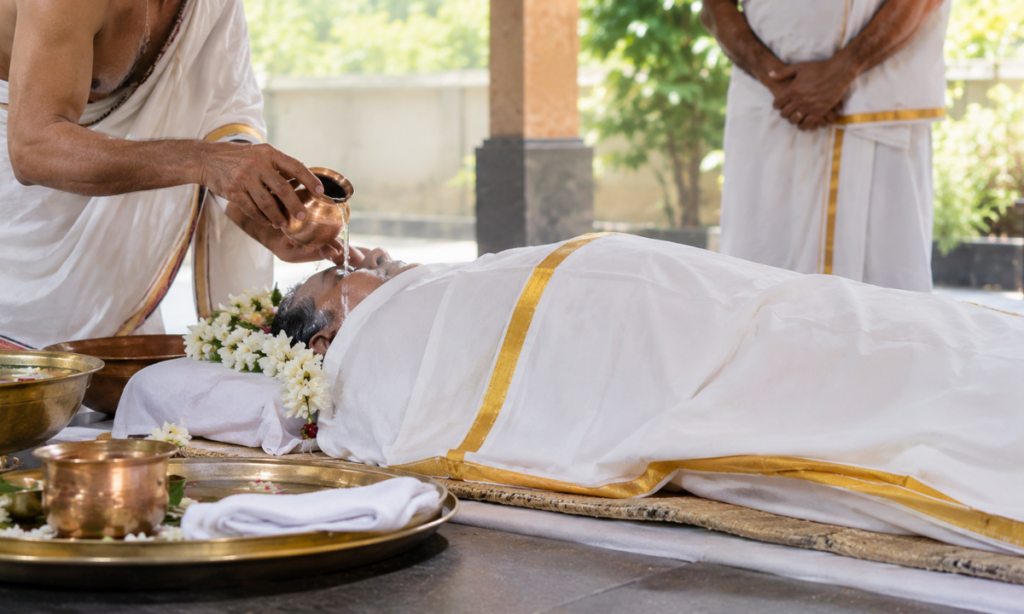
Before entering the furnace area or pyre deck, the physical body is lovingly prepared through sanctified ablutions and sacred adornments:
- Holy Water Purification (Theertha Snanam): Sprinkling sanctified Ganga jal, Cauvery water, or sacred temple water over the departed soul while chanting cleansing Vedic hymns.
- Sacred Tilak and Sandalwood Adornment: Applying sacred sandalwood paste (Chandan), holy ash (Bhasma/Vibhuti), or Kumkum on the forehead, symbolising spiritual purity and devotion.
- Ceremonial Shrouding (Vastradharana): Wrapping the body in pure, unstitched vastram traditionally white for men and widows, or yellow and auspicious red (Suvasini vastram) for married women accompanied by fresh flower garlands and sacred Tulsi leaves placed on the chest and lips.
These preliminary acts of veneration honour the mortal frame that housed the divine soul throughout its earthly journey, creating a serene and sanctified atmosphere for the final farewell.
2. Complete Sacred Samagri for Vedic Rites
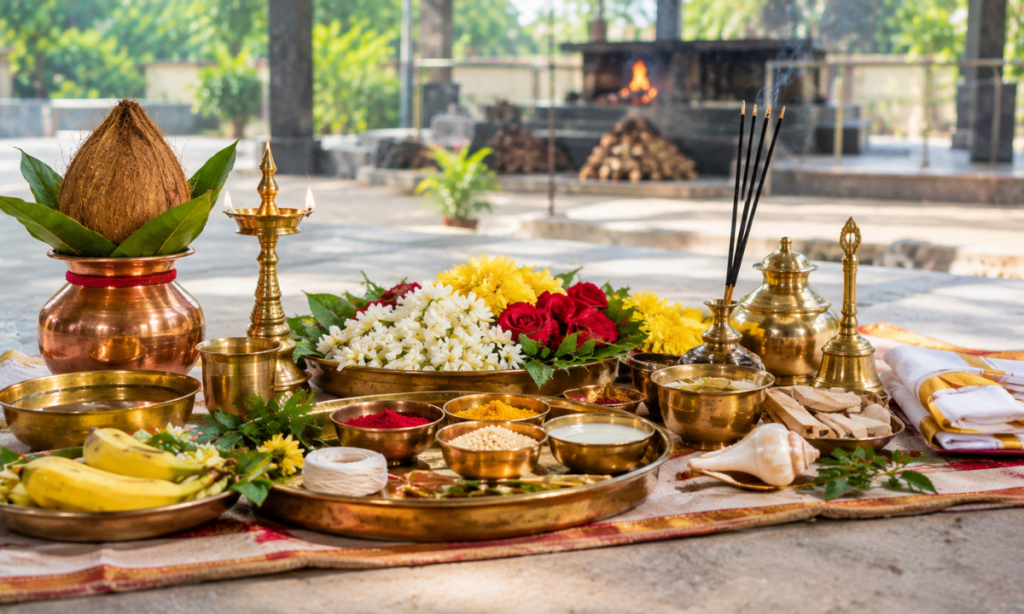
Conducting the Dahana Vidhi without interruptions requires a comprehensive collection of pure, unadulterated puja materials. Having all ritual items arranged beforehand ensures that priests and family members can maintain continuous Vedic recitations:
- Pure Cow Ghee & Camphor (Karpur): Essential oblations used for invoking and sustaining the sacred fire (Agni Deva) during final offerings.
- Black Sesame Seeds (Kala Til) & Barley (Jau): Sacred grains offered by the chief mourner (Karta) to appease ancestral spirits (Pitrus) and invoke divine grace.
- Earthen Pitcher (Ghatam) & Kusha Grass: Used during circumambulation and libation rituals, with Darbha (kusha grass) serving as a spiritual purifier.
- Sacred Woods & Herbal Incense (Havan Samagri): Sandalwood chips, samidha sticks, and fragrant herbal blends offered to purify the surrounding air and elevate the ceremony’s sanctity.
Kaashimukthi provides pre-assembled, pure Vedic samagri kits directly at the crematorium gates, ensuring families do not have to search for individual items across local markets during their hour of grief.
3. Vedic Mantrocharana and Pre-Cremation Prayers
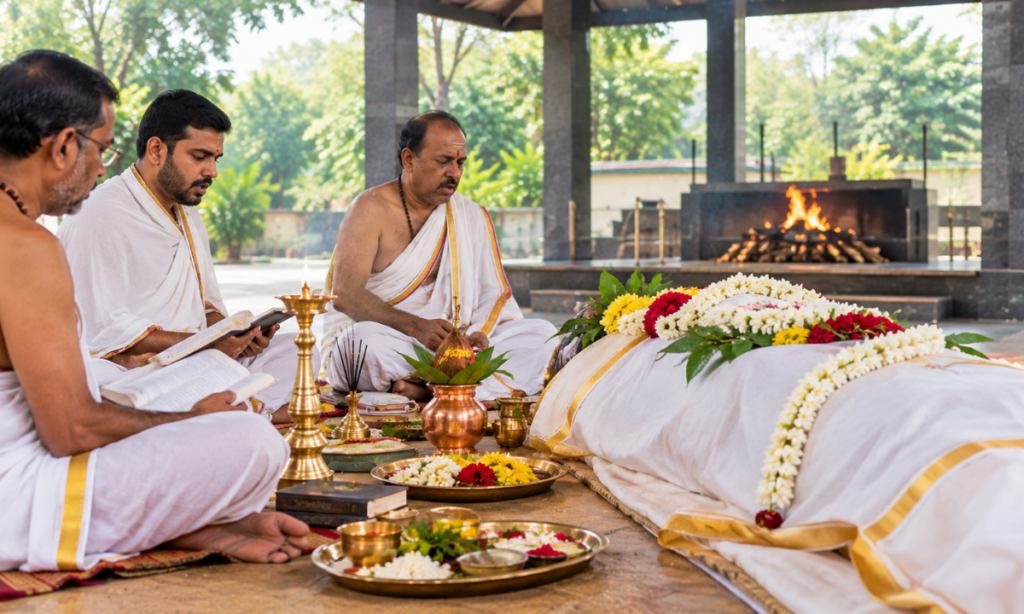
Led by certified Vedic purohits, the family participates in solemn prayers that invoke divine blessings and express heartfelt gratitude to the departed:
- The Sacred Sankalpa: The Karta recites the formal vow stating the lineage (Gotra), name of the departed, time, and sacred location to formally dedicate the rites.
- Pinda Daanam & Tarpanam: Small rice-flour balls (Pindas) and water mixed with black sesame seeds are offered on kusha grass mats to sustain the soul during its initial spiritual transition.
- Community-Specific Chanting: Chanting tailored Vedic passages including the Purusha Sukta, Narayana Sukta, or Garuda Purana verses aligned with North Indian, Kannada Smartha, Tamil/Telugu Iyer, Iyengar, or Madhwa traditions.
These sacred chants provide deep solace to the grieving family, creating an uplifting spiritual vibration that envelops the entire gathering.
4. Agni Sparsha, Dahana Sanskar & Ghatasphota
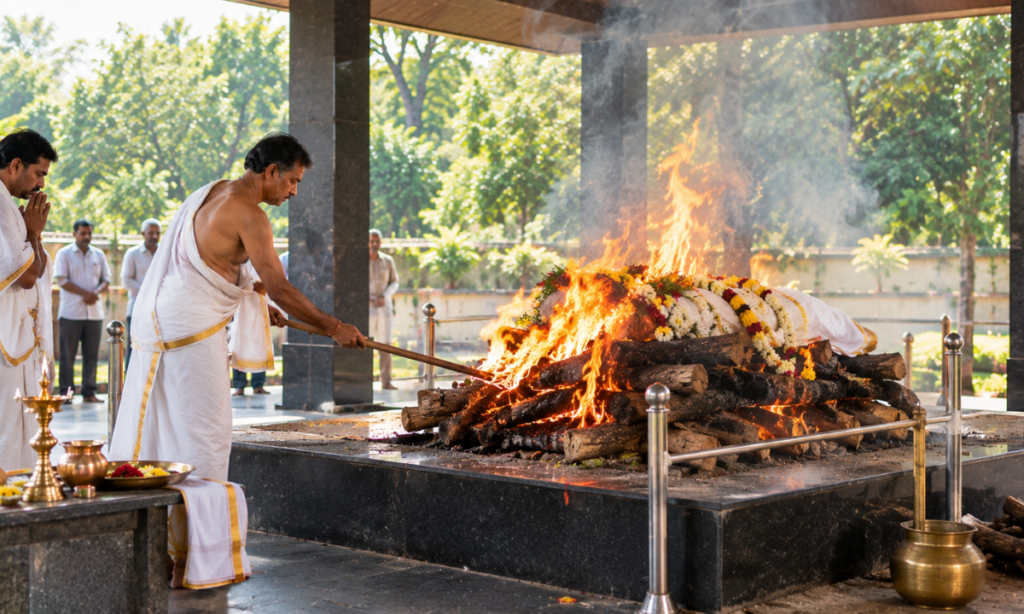
The concluding phase of the crematorium ceremony marks the physical release of the departed soul through the transformative power of Agni:
- Sacred Circumambulation (Pradakshina): The Karta walks around the bier three times in a counter-clockwise direction (Apavya), carrying an earthen water pot with a continuous stream of water pouring from a small puncture.
- Breaking the Earthen Pot (Ghatasphota): At the completion of the third round, the earthen pot is dropped and shattered behind the Karta, symbolising the definitive severance of all physical and worldly ties.
- Agni Sparsha & Entry into the Pyre/Furnace: The Karta places sacred fire near the head or lips while reciting final mantras before the casket is reverently guided into the electric furnace or wood pyre.
Once the furnace doors close or the pyre is lit, family members offer their final folded-hands salutation (Pranam) and depart quietly to perform purificatory washing (Achamana), concluding the day’s solemn observances with peace and reverence.
Asthi Sanchayana & Sacred Immersion Rites (Asthi Visarjan)
Following the conclusion of the cremation fire, the spiritual journey enters its next vital phase: Asthi Sanchayana (the gathering of sacred bone relics and ashes) and Asthi Visarjan (immersion in sacred river waters).
In accordance with the Garuda Purana and Vedic scriptures, returning the consecrated remains into holy running waters dissolves worldly karma, granting the departed soul (Jiva) lasting spiritual peace and safe transit towards the realm of the ancestors (Pitru Loka).
1. Collection Protocol at the Facility
Collecting the holy ashes from the municipal crematorium requires adherence to specific administrative timings and reverent procedures:
- Next-Morning Collection Window: For modern electric and gas furnaces, the collection of sacred ashes is typically scheduled the following morning between 6:30 AM and 9:30 AM, ensuring adequate time for cooling and respectful gathering.
- Verification of Administrative Receipts: The chief mourner (Karta) must present the original BBMP cremation acknowledgement slip and official gate receipt to the facility supervisor to access the secure locker holding the sacred urn.
- Preliminary Sanctification Prayers: The Karta recites brief purificatory mantras and sprinkles holy water or unboiled milk over the collected relics before transferring them into the ceremonial vessel.
Coordinating the collection early in the morning guarantees that the remains are handled in a calm, undisturbed setting prior to regular daytime crematorium operations.
2. Traditional Urn Packaging and Preservation Guidelines
Securing the sacred ashes in appropriate ceremonial vessels protects their purity during regional travel or long-distance pilgrimage:
- Natural and Sacred Urn Materials: Placing the consecrated remains inside traditional unbaked clay pots (Mitti Kalasha), polished copper (Tamra), or brass vessels in accordance with family traditions.
- Ceremonial Shrouding and Sealing: Covering the mouth of the vessel with sacred red or yellow cloth (Pavitra Vastram), tying it securely with sacred cotton thread (Mauli), and adorning the urn with fresh flower petals and sandalwood paste.
- Temporary Home Preservation Rules: If immediate immersion is delayed due to travel arrangements, the sealed urn should never be kept inside the main living quarters; scriptures prescribe hanging the urn from a tree branch outside or keeping it safely in a clean, shaded outdoor enclosure.
Ensuring proper packaging maintains the sanctified integrity of the urn, ensuring full compliance with airline cargo rules or interstate railway guidelines for travelling family members.
3. Sacred River Immersion Destinations (Asthi Visarjan Tirthas)
Immersing the holy ashes into sanctified running rivers completes the final dissolution of the physical elements:
- Paschima Vahini, Srirangapatna (Cauvery River): Located near Mysuru, this is the most revered sacred immersion destination in Karnataka, where the Cauvery river uniquely flows westward, creating an auspicious spiritual confluence for ancestral rites.
- Sangama & Mekedatu (Arkavathi–Cauvery Confluence): A sacred nearby river junction situated south of Bengaluru, ideal for families seeking local day-trip river immersions guided by Vedic priests.
- National Teerth Kshetras (Kashi, Prayagraj, Haridwar & Gaya): For families undertaking traditional pilgrimages to northern holy tirthas, performing immersion along the sacred ghats of Varanasi (Ganga) or the Triveni Sangam in Prayagraj bestows immense spiritual merit (Punya).
- Rameswaram (Agni Theertham): Performing immersion rites along the southern ocean shores of Tamil Nadu, renowned for dispelling ancestral afflictions (Pitru Dosha).
Kaashimukthi coordinates complete turnkey pilgrimage support for families travelling to Srirangapatna, Varanasi, Prayagraj, and Gaya managing boat bookings, verified local teerth purohits, and sacred puja samagri so that ancestral rites are fulfilled with complete devotion and peace of mind.
Essential Pre-Cremation Document & Readiness Checklist
Before departing for the crematorium or burial grounds in North Bengaluru, gathering all mandatory medical, municipal, and identity records into a single file prevents distressing interruptions at the entrance gates. BBMP administrative officials and facility supervisors require clear, authenticated documents prior to assigning furnace slots or allocating burial grounds.
Use this practical checklist to verify that your family’s documentation and ceremonial kit are complete:
1. Medical & Statutory Death Paperwork
- Medical Certificate of Cause of Death (MCCD): Form 4 issued by the hospital for clinical deaths, or Form 4A signed by a registered medical practitioner (RMP) for natural home passing.
- Hospital Summary / Death Intimation Note: Original hospital records confirming the date, clinical diagnosis, and exact time of passing.
- Police No Objection Certificate (NOC) & Post-Mortem Report: Mandatory for sudden, accidental, or unnatural passing, issued by the local jurisdictional police station and civil hospital mortuary.
2. Identity Proofs & Legal Consents
- Original Photo ID of the Departed: Aadhaar Card, Passport, or Voter ID card to verify full name, age, and permanent residential address.
- Original Photo ID of the Chief Mourner (Karta): Government photo identification of the primary family member authorising and conducting the rites.
- Next-of-Kin Authorisation Letter: A signed consent declaration required when distant relatives or appointed representatives coordinate the cremation on behalf of immediate family.
3. Municipal BBMP & Ground Essentials
- BBMP Token / Administrative Acknowledgement Slip: Issued at the crematorium registration counter upon presenting medical certificates and identity proofs.
- Sacred Vedic Samagri Kit: Complete ritual materials, including pure cow ghee, black sesame seeds (kala til), camphor, kusha grass, earthen pots, and fresh floral garlands.
- Ceremonial Urn (Kalasha) & Red Cloth: Traditional earthen, copper, or brass vessel prepared with holy red cloth (Mauli/Vastram) for collecting sacred ashes the following morning.
Keeping both original documents and multiple photocopies readily accessible ensures that municipal registrars, security personnel, and facility supervisors can verify records immediately without delaying sacred Vedic rites.
Why Families Across Bengaluru Trust Kaashimukthi?
Managing the departure of a loved one requires a partner who combines flawless administrative execution with deep spiritual sensitivity. Families across Yelahanka, Hebbal, Sahakara Nagar, and greater Bengaluru turn to Kaashimukthi during their hours of loss because we assume the complete logistical and procedural burden, providing grieving relatives with the quiet space needed for prayer and remembrance.
- Complete Single-Window Bereavement Logistics: Rather than leaving families to coordinate separately with hospital mortuaries, hearse van drivers, municipal BBMP counters, and puja item vendors, Kaashimukthi manages every step through a single dedicated coordinator.
- Multilingual Vedic Purohits Across Traditions: We provide certified, scholarly Acharyas and Purohits well-versed in diverse community traditions including Kannada Smartha, Madhwa, Tamil/Telugu Iyer and Iyengar, North Indian, and Bengali customs ensuring strict scriptural authenticity.
- Rapid Hearse & Cold-Storage Support: Our fleet of sanitised hearse vans, air-conditioned transport vehicles, and portable freezer boxes is stationed across North Bengaluru, guaranteeing rapid arrival at hospitals or private residences within 30 to 45 minutes.
- Pure Vedic Samagri Delivered on Site: We assemble authentic, high-grade puja kits containing pure cow ghee, unadulterated camphor, holy Ganga jal, and unstitched vastram, ensuring that no essential ceremonial item is missing.
- 100% Upfront Price Transparency: Grief must never be compounded by commercial exploitation. We offer clearly defined, itemised packages with fixed rates, guaranteeing complete financial clarity with zero hidden surcharges.
- Turnkey Asthi Visarjan & Teerth Pilgrimage Coordination: Beyond the cremation day, our team organises complete sacred river immersion pilgrimages to Srirangapatna (Paschima Vahini), Kashi (Varanasi), Prayagraj (Triveni Sangam), and Gaya, managing boat bookings, local purohits, and sacred rites seamlessly.
Entrusting your loved one’s final journey to Kaashimukthi guarantees that every statutory requirement, vehicle transit, and sacred Vedic vidhi is fulfilled with profound devotion, dignity, and absolute peace of mind.
Conclusion
Bidding farewell to a beloved family member is an emotional and sacred responsibility. Performing final rites across North Bengaluru whether choosing the modern, eco-friendly electric furnaces at Yelahanka or the traditional burial and pyre facilities in Jakkur demands balancing heartfelt grief with necessary Bruhat Bengaluru Mahanagara Palike (BBMP) civic procedures.
Securing medical cause-of-death certificates in advance, understanding token registration workflows, and preparing authentic Vedic samagri, families can ensure their loved one’s final journey is conducted smoothly, hygienically, and with profound spiritual sanctity. Entrusting these multi-faceted arrangements to a dedicated bereavement care provider allows relatives to set aside logistical anxiety and devote themselves entirely to sacred remembrance, prayer, and family solace.
Reach Out for Immediate 24/7 Bereavement Assistance
If you require immediate support with crematorium slot bookings, hearse transit, freezer box arrangements, or end-to-end Antim Sanskar Vedic ceremonies across North Bengaluru, our compassionate care team is available round-the-clock.
- 24/7 Emergency Support Desk: +91 98458 19660
- Official Website: kaashimukthi.com
Service Coverage: Yelahanka New Town, Yelahanka Old Town, Jakkur, Sahakara Nagar, Hebbal, Vidyaranyapura, Thanisandra, and greater Bengaluru.

Madhu is an Entrepreneur, a Mentor, a Writer and an Aspiring Car Race Driver. He is Deeply passionate about leveraging Technology and Human Centred Design to make complex care and End of Life Planning easier. With the ultimate aim of Improving the quality of Life in the Twilight years. Madhu is highly educated and Alumni of IIM-Bangalore, Sikkim Manipal University and Bangalore University besides a Rich Industry Experience in the field of Product Management, Design, Supply chain, Finance, Commercial Management and Funeral Services.