

Have you ever wondered how a loved one can be safely and respectfully transported across cities or even countries after their passing? During such painful moments, understanding why embalming is important becomes crucial, especially when families require dead body transportation in Bangalore or beyond.
When we lose someone dear, we want every step to be handled with dignity, safety, and care. Long-distance transfer involves legal rules, hygiene standards, and preservation needs that cannot be ignored.
In this blog, we will gently walk you through the reasons, process, and benefits of embalming and why it plays such an essential role in ensuring a peaceful final journey.
Key Points at a Glance
- Embalming preserves the body during long-distance transfer.
- It ensures compliance with airline and international regulations.
- It prevents odor, leakage, and health risks.
- It maintains a dignified and natural appearance.
- It provides families time for funeral planning.
- It is often mandatory for air transport and repatriation.
- It supports smooth coordination with funeral service providers.
What is Embalming?
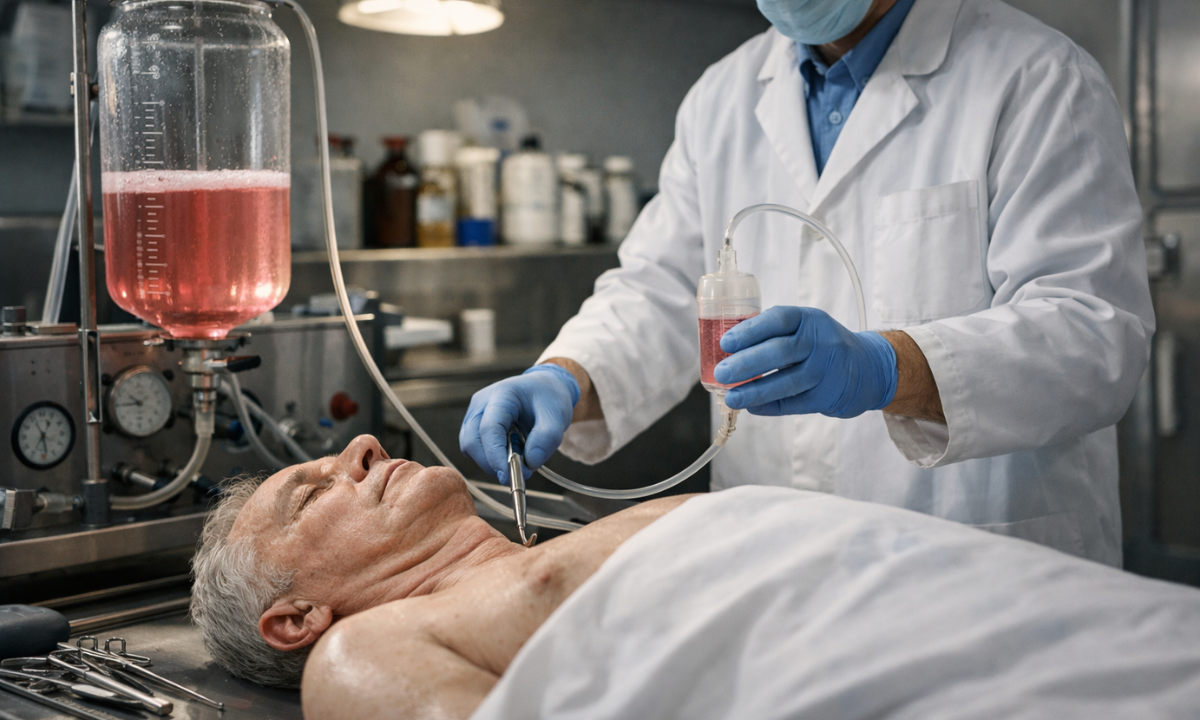
Embalming is a scientific preservation process that slows down natural decomposition. It involves replacing body fluids with preservative chemicals to maintain hygiene and appearance.
When long-distance transportation is involved, simple refrigeration may not be enough. That is where embalming becomes a necessary and practical solution.
Why Embalming is Important for Long-Distance Transfer
Let us understand this in simple terms.
When a body is transported over long distances, whether by road or air, it may take hours or even days to reach its destination. Temperature changes, handling, and time can accelerate natural decomposition.
Here are the main reasons why embalming becomes essential:
1. Legal and Transportation Compliance
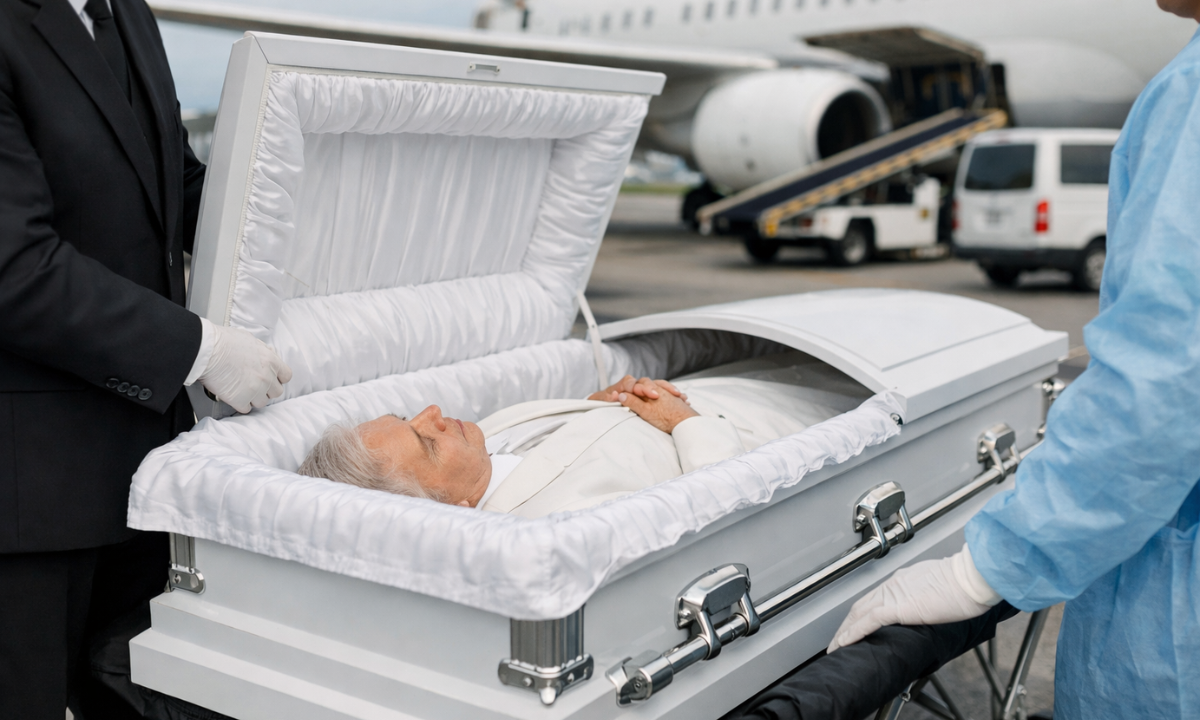
Many airlines and countries require embalming before transporting human remains.
| Requirement | Why It Matters |
|---|---|
| Airline Regulations | Prevents odor during air cargo transport |
| International Rules | Required for repatriation across borders |
| Documentation | An embalming certificate is needed for official clearance |
| Zinc-lined Coffin | Often mandatory for sealed and safe air transport |
Without embalming, authorities may deny transport permission. An embalming certificate acts as proof that the body has been properly prepared.
2. Physical Preservation and Hygiene

The body naturally begins decomposing after death. Embalming slows this process significantly.
| Benefit | Explanation |
|---|---|
| Slows Decay | Preservative fluids delay decomposition |
| Disinfection | Reduces bacteria and infection risks |
| Prevents Leakage | Minimizes fluid release during transit |
| Controls Odor | Maintains hygiene during transport |
This is especially important when travel takes longer than 24 hours or involves multiple transit points.
3. Maintaining Dignity and Appearance

For many families, a final viewing provides emotional closure. Embalming helps maintain a peaceful and natural look.
During long-distance transfers, changes in temperature and time can affect the body’s natural appearance. With proper preservation, we can ensure that our loved one is presented in a calm and respectful manner when family and friends gather.
- Restores facial color.
- Sets facial features gently.
- Maintains body firmness.
- Supports open-casket viewing if planned.
When families gather at the destination, the preserved appearance offers comfort and respect.
4. Allowing Time for Logistics
When families are grieving, managing paperwork, travel coordination, and ritual planning can feel overwhelming. By slowing the natural process of decomposition, embalming gives us the necessary time to organize everything calmly and respectfully without feeling rushed. Funeral arrangements often take time.
Embalming extends the window for:
- Gathering relatives from different cities.
- Completing paperwork and documentation.
- Coordinating with funeral services in Bangalore.
- Booking cremation or burial slots.
This additional time reduces stress during an already overwhelming situation.
Understanding the Embalming Procedure
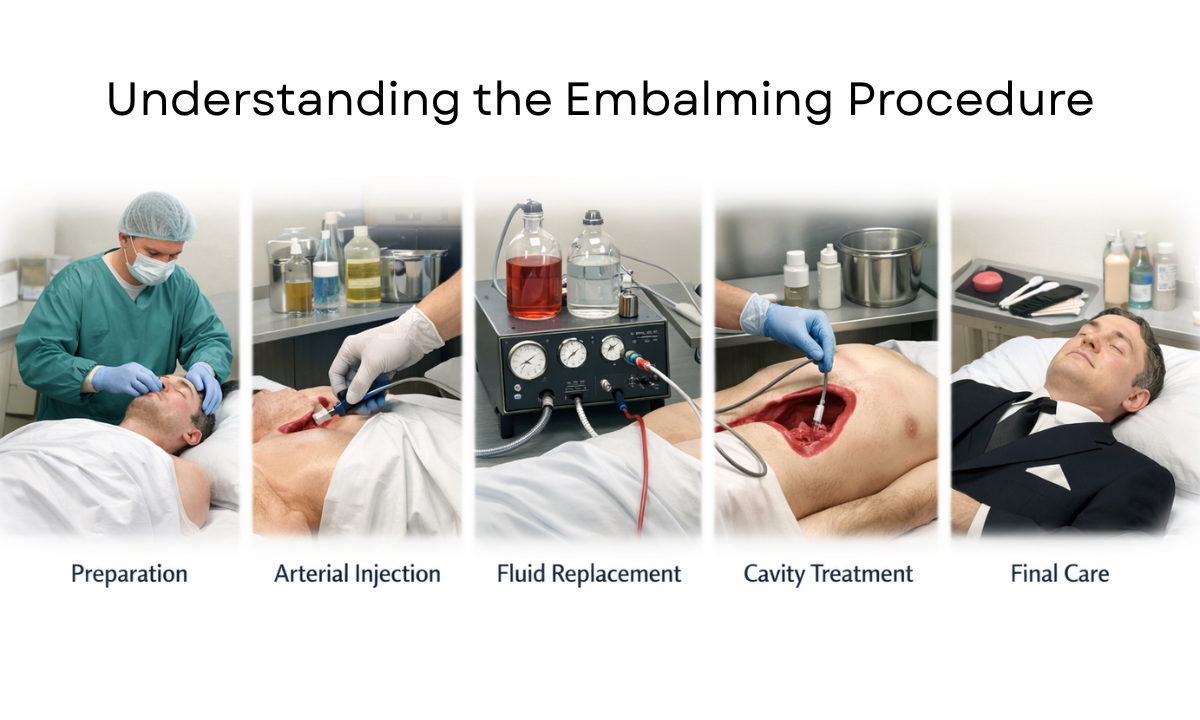
Many families feel anxious because they do not know what happens during the embalming procedure. It is a structured medical process designed to preserve the body temporarily while maintaining hygiene and dignity.
Understanding these steps can help families feel more informed and reassured during long-distance transfer arrangements.
Let us explain.
| Step | Description |
|---|---|
| Preparation | The body is cleaned and disinfected |
| Arterial Injection | Preservative chemicals are injected into the arteries |
| Fluid Replacement | Blood is replaced with embalming solution |
| Cavity Treatment | Internal organs are treated for preservation |
| Final Care | The body is dressed and prepared respectfully |
The entire process is done by trained professionals in a controlled environment. It is handled with utmost dignity and care.
Different Types of Embalming
There are different types of embalming depending on the requirement.
The method chosen usually depends on the condition of the body, the duration of transportation, and whether viewing is planned. Professionals carefully assess these factors to ensure the most appropriate preservation approach is used for safe and dignified transfer.
| Type | Purpose |
|---|---|
| Arterial Embalming | The most common method for full preservation |
| Cavity Embalming | Treats internal organs |
| Hypodermic Embalming | Used in specific areas if needed |
| Surface Embalming | Applied externally to damaged areas |
For long-distance travel, arterial embalming combined with cavity treatment is generally recommended.
Common Embalming Methods Used for Transport
When preparing for long-distance transfer, professionals select suitable embalming methods based on duration and mode of transport.
Each transportation method comes with its own safety guidelines and regulatory requirements. By choosing the correct preservation technique, we can ensure smooth clearance, hygienic handling, and a respectful journey without unexpected complications.
| Transport Mode | Recommended Method |
|---|---|
| Air Cargo | Full arterial embalming + zinc-lined coffin |
| Interstate Road | Arterial embalming |
| International Repatriation | Full embalming + sealed casket |
These methods ensure safety, compliance, and dignity throughout the journey.
Role of Hearse Van Services in Safe Transport

After embalming, transportation must be handled carefully. Even after proper preservation, the journey requires specialized vehicles and trained personnel to maintain dignity and safety. The right transport arrangement helps avoid delays, ensures respectful handling, and provides peace of mind to grieving families.
These services are designed to manage sensitive transfers smoothly, whether it is within the city or to an airport for long-distance travel. Every detail is handled with care so that families do not have to worry during such an emotional time.
Professional hearse van services ensure:
- Temperature-controlled vehicles.
- Proper placement of the casket.
- Respectful handling.
- Timely delivery to the airport or final destination.
When road transfer is involved within the city, trained staff manage everything smoothly.
Why Professional Funeral Service Providers Matter
Coordinating documentation, embalming, transport, and rituals requires experience. During such emotional moments, even small procedural mistakes can lead to delays or complications.
Reliable funeral service providers understand legal formalities, health regulations, and cultural customs, ensuring everything is handled smoothly and respectfully. Their expertise reduces stress for families and allows them to focus on prayers, remembrance, and emotional healing.
Reliable Funeral Service Providers:
- Arrange embalming and certificates.
- Manage airport cargo procedures.
- Coordinate with hospitals and authorities.
- Provide complete cremation services in Bangalore.
- Offer end-to-end support.
When families are grieving, professional guidance truly makes the process easier, more organized, and dignified.
Practical Tips for Families
Here are some gentle suggestions to help you prepare:
- Confirm if embalming is legally required for your transfer.
- Ask for a copy of the embalming certificate.
- Check airline cargo guidelines.
- Coordinate early with funeral service teams.
- Keep identification documents ready.
Planning ahead reduces unexpected delays.
Final Thoughts
In moments of loss, our priority is to ensure our loved one’s final journey is handled with dignity and care. Understanding why embalming is important helps us make informed decisions, especially when arranging dead body transportation in Bangalore or across long distances.
At Kaashimukthi, we understand the emotional and logistical challenges families face. With compassionate guidance, professional coordination, and complete funeral support, we stand beside you during life’s most difficult moments, ensuring respect, safety, and peace every step of the way.
Frequently Asked Questions
1. Is embalming legally mandatory for all transfers?
Embalming is not legally mandatory for every type of transfer, especially for short-distance road transportation within the same city. However, it is commonly required for air travel, interstate transfers, and international repatriation.
Airlines and certain state or country regulations insist on embalming to ensure hygiene, prevent leakage, and comply with cargo safety standards before granting transport clearance.
2. How long does embalming preserve the body?
Embalming can preserve the body for several days to a few weeks, depending on environmental conditions such as temperature and humidity. While it does not stop decomposition permanently, it significantly slows the natural process.
This extended preservation period provides families with sufficient time to arrange travel, complete documentation, and plan funeral or cremation ceremonies without feeling rushed.
3. Is refrigeration enough for long-distance transfer?
Refrigeration can temporarily slow decomposition and may be suitable for short durations or local transfers. However, for long-distance travel, especially by air or across states, refrigeration alone may not be sufficient.
Embalming offers stronger preservation, reduces health risks, and ensures compliance with transport regulations, making it a more reliable and practical solution for extended journeys.
4. Does embalming affect cremation?
No, embalming does not interfere with cremation procedures. The chemicals used during embalming do not prevent or delay the cremation process. Crematoriums are fully equipped to handle embalmed bodies safely and respectfully.
Families can proceed with cremation rituals without concern, knowing that embalming was done only to ensure safe transport and dignified preservation before the final rites.
5. Is embalming safe?
Yes, embalming is safe when performed by trained and licensed professionals who follow proper medical and hygiene guidelines.
The procedure is conducted in a controlled environment using regulated chemicals and equipment. It not only preserves the body but also disinfects it, reducing health risks during handling and transportation, thereby ensuring safety for both families and service personnel.
Reference:
1. From Google
2. https://www.globalfuneralrepatriation.co.uk/blog/is-embalming-necessary-for-repatriation

Madhu is an Entrepreneur, a Mentor, a Writer and an Aspiring Car Race Driver. He is Deeply passionate about leveraging Technology and Human Centred Design to make complex care and End of Life Planning easier. With the ultimate aim of Improving the quality of Life in the Twilight years. Madhu is highly educated and Alumni of IIM-Bangalore, Sikkim Manipal University and Bangalore University besides a Rich Industry Experience in the field of Product Management, Design, Supply chain, Finance, Commercial Management and Funeral Services.