
Losing a loved one brings a period of profound sorrow and deep emotional transition. When searching for reliable Funeral services in Bangalore, families often seek not just logistical support but also spiritual guidance to ensure every ritual is performed correctly.
As a dedicated funeral service provider, we understand that navigating the complexities of Vedic traditions during a time of grief can be incredibly overwhelming.
Have you ever wondered how a departed soul finds its way to the ancestral realm? Are you unsure about the specific steps required to complete the Shradh Vidhi with absolute scriptural accuracy? Do you feel anxious about missing a crucial element in the final spiritual journey of your family member?
These questions weigh heavily on the minds of grieving families. The journey of the soul is intricate, and the ancient rituals designed to guide it are equally profound.
To help you find clarity and peace of mind during this difficult time, this comprehensive guide explores what sapindikarana is, detailing its vital role in the Shradh Vidhi and how it ensures the spiritual liberation of the departed.
Key Points at a Glance
- Understanding Sapindikarana, A clear explanation of this vital ritual and how it formally unites the departed soul with their ancestral lineage.
- The 12th Day Ceremony explores the scriptural reasons why this specific day marks the most pivotal transition in the soul’s journey away from the earthly realm.
- The Power of Pind Daan, Uncovering the deep symbolic meaning behind the offering of rice balls and how it provides essential spiritual nourishment for the departed.
- Mantras and Prayers in Funeral Rites: How specific Vedic chants act as a vibrational guiding light, helping the soul navigate its path toward liberation.
- Expert Vedic Guidance, The profound peace of mind that comes from allowing a professional funeral service provider to manage the intricate logistics of every after-death ritual with absolute scriptural accuracy.
What is Sapindikarana? The Union with Ancestors
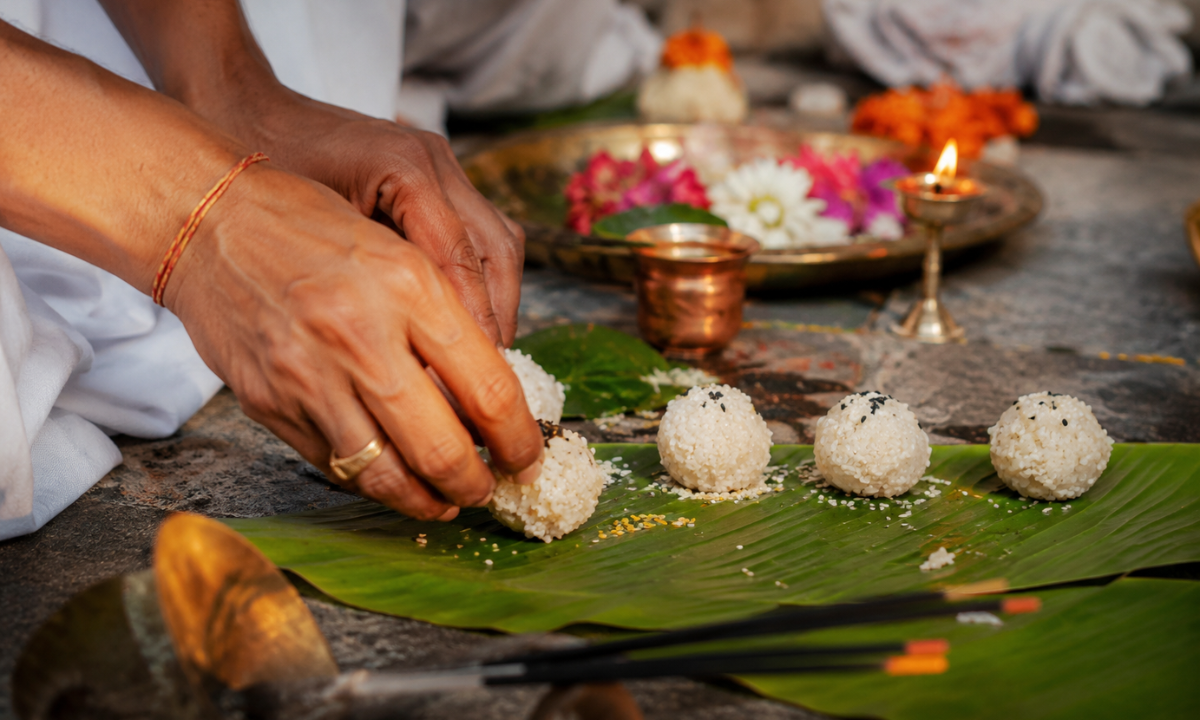
To truly understand the spiritual journey of a departed loved one, we must first answer a fundamental question: What is Sapindikarana? According to ancient Vedic scriptures, this is arguably the most crucial milestone in the entire sequence of Hindu funeral rites. It is the specific ceremony that elevates the soul from a state of wandering to a state of permanent ancestral belonging.
When a person passes away, Hindu philosophy dictates that their soul does not immediately reach the divine abode. Instead, it enters a transitional, temporary state known as a Preta.
In this form, the spirit is disconnected from its physical body but has not yet found its place in the afterlife. It relies entirely on the prayers and offerings of its living relatives for sustenance and direction. The Sapindikarana ritual is the spiritual bridge that allows the soul to safely cross over from this wandering state into the realm of the ancestors, known as the Pitru Loka.
The word itself holds the key to its meaning. “Sapinda” translates to sharing the same pinda (the symbolic offering made of cooked rice, black sesame seeds, and ghee), and “Karana” refers to the act of doing or making. The ceremony involves a highly specific, deeply symbolic physical action performed by the chief mourner, or Karta, under the strict guidance of a Vedic pandit.
During the ritual, four distinct pindas are carefully prepared. One cylindrical pinda represents the recently departed soul. The other three spherical pindas represent the immediate three preceding generations of ancestors, specifically the father, the grandfather, and the great-grandfather of the deceased.
The end of the ceremony occurs when the pinda belonging to the departed is respectfully divided into three equal portions. The Karta then takes these three parts and seamlessly blends them into the three ancestral pindas. This physical mixing of the rice offerings is a profound, visual representation of the soul merging with its lineage.
Through this singular act, the spiritual transformation is complete. The soul sheds its identity as a Preta and is officially welcomed as a Pitru. From this moment onward, the departed loved one is no longer considered a wandering spirit but a revered ancestor who can now bestow blessings upon the family. Furthermore, they are now eligible to receive future offerings during the annual Shradh ceremonies.
Understanding this beautiful transition brings a tremendous amount of comfort and closure to grieving families, knowing they have successfully guided their loved one home.
The 12th Day Ceremony
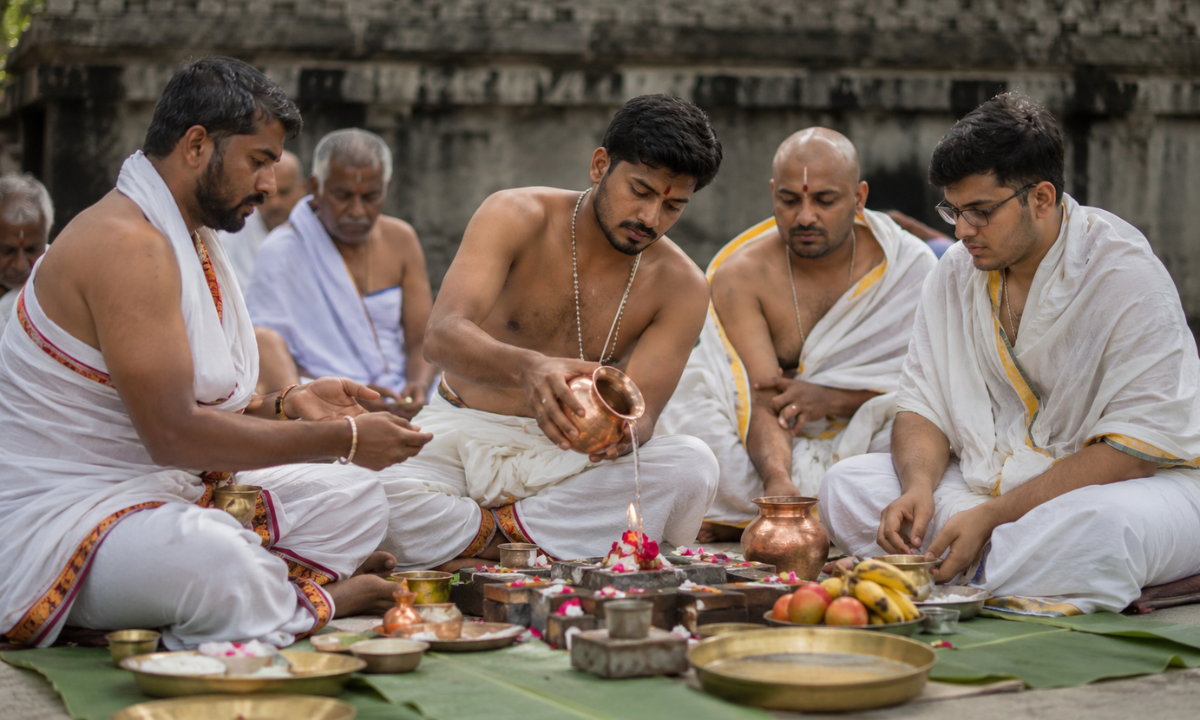
In the framework of Hindu traditions, the days immediately following a passing are marked by strict observance and quiet reflection. The 12th-day ceremony, which encompasses the Sapindikarana, is not an arbitrarily chosen date. It represents the exact moment when the soul has completed its immediate earthly attachments and is fully prepared for its onward journey.
According to the Garuda Purana, the spirit undergoes a profound transition during these twelve days. To understand the gravity of this specific after-death ritual, it is helpful to look at how the scriptures map the journey of the departed soul day by day:
| Day Following Passing | Spiritual Significance | Purpose of the Daily Rituals |
|---|---|---|
| Days 1 to 3 | The soul remains close to the physical home, experiencing confusion and attachment to its former life. | Offerings are made to pacify the spirit and provide basic nourishment as it realises its separation from the physical body. |
| Days 4 to 9 | The soul begins to gather the subtle elements required to form an ethereal body for its onward travel. | Continuous prayers help the spirit detach from worldly sorrow and focus on the path ahead. |
| Day 10 | The period of intense mourning, known as Sutak, begins to conclude with vital purification rituals. | The family undergoes physical and spiritual cleansing to prepare themselves for the final rites. |
| Day 11 | The soul’s ethereal body is fully formed, making it ready to leave the earthly plane. | Specific rituals are performed to release the soul from its remaining worldly bonds. |
When the twelfth day arrives, the spirit is standing at the threshold of the ancestral realm. This makes the 12th day ceremony incredibly significant for several reasons:
- The End of the Wandering State: It marks the definitive end of the soul’s phase as a Preta. Without this ceremony, scriptures suggest the soul remains trapped between worlds, unable to find peace or move forward.
- The Lifting of the Mourning Period: For the family, this day signifies the end of the strict impurity period. The household is spiritually cleansed, paving the way for regular prayers and auspicious activities to eventually resume in the home.
- The Final Act of Earthly Duty: Performing this ceremony is considered the highest spiritual duty a family member can fulfil. It repays the karmic debt owed to the deceased and ensures their favourable passage into the afterlife.
Observing this important timeline with devotion, families ensure that their loved one is honoured correctly, transforming a period of deep sorrow into a beautifully orchestrated spiritual departure.
The Sacred Role of Pind Daan in the Transition
Among all the profound acts of devotion performed during the mourning period, the offering of pind daan is perhaps the most deeply symbolic and spiritually necessary. To a person observing the ritual, it may appear as a simple offering of food. However, in the context of Vedic scriptures, it is a vital act of creation and sustenance that directly aids the soul in its vulnerable state.
The word pinda refers to a carefully prepared spherical offering. Under the strict guidance of a Vedic pandit, the chief mourner constructs these offerings using a specific mixture of cooked white rice, black sesame seeds, pure cow’s ghee, honey, and milk.
Every single ingredient carries a distinct spiritual weight. The rice acts as a symbol of growth and sustenance, the black sesame seeds are invoked to protect the soul from negative energies, and the ghee represents absolute purity.
According to the Garuda Purana, the cremation of the physical body leaves the soul without a physical vessel. Before it can successfully journey to the ancestral realm, it must acquire a subtle, ethereal body. The consecutive offerings of pindas over the mourning days are believed to literally build this new form for the departed spirit.
Understanding the deeper mechanics of this ritual highlights why it is so critical for the family to perform it with absolute devotion:
Scriptural texts detail that the offering on the first day helps form the head of the subtle body, the second day forms the neck and shoulders, and so on. By the tenth day, the ethereal body is fully assembled and ready to receive nourishment.
The journey to the Pitru Loka (the realm of the ancestors) is described as arduous. The essence of the food offered through this ritual provides the exact spiritual energy and nourishment the soul requires to complete its travel without distress.
Newly departed souls often struggle to let go of their earthly attachments and physical cravings. Receiving these sacred offerings satisfies those lingering earthly desires, allowing the spirit to peacefully accept its transition away from the mortal world.
In Hindu philosophy, every individual is born with a debt to their ancestors. By performing this duty for a parent or family member, the chief mourner fulfils this karmic obligation, ensuring blessings for the living lineage.
Families provide the ultimate final gift to their loved one. It is a profound gesture of care, ensuring the departed are neither hungry nor lost as they navigate the unseen path toward liberation.
Understanding Mantras and Prayers in Funeral Rites
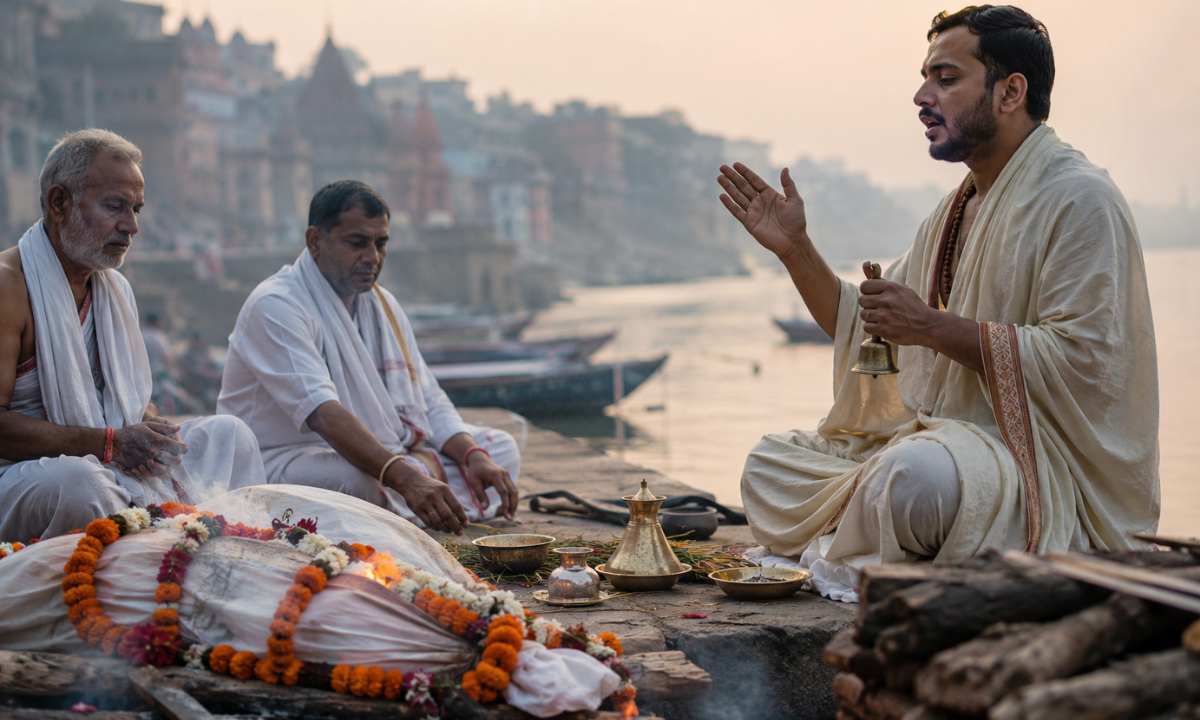
Sound holds a profoundly sacred place in ancient Indian philosophy. During the final rites, the atmosphere is often filled with a heavy silence, respectfully broken only by the rhythmic chanting of the officiating pandit.
To an observer, these might seem like traditional recitations to mark the occasion. However, the mantras and prayers in funeral ceremonies are far more than mere words. They are highly specific acoustic formulas designed to create a precise vibrational frequency that directly assists the transitioning soul.
When a person leaves their physical body, they step into an unfamiliar spiritual dimension. Just as a traveller relies on a compass in an unknown land, the departed spirit relies on the resonance of these sacred chants for direction.
The phonetic structures of Sanskrit mantras act as a spiritual beacon, cutting through the confusion of the afterlife and illuminating a safe path toward liberation.
Understanding the deep purpose behind these chants reveals the immense care embedded in Vedic traditions:
1. Specific verses, often drawn from the Vedas and the Garuda Purana, are recited to gently instruct the soul.
These prayers serve as a loving reminder for the spirit to release its grip on the mortal world, to leave behind earthly attachments, and to walk confidently towards the divine light of the ancestral realm.
2. The transition phase is considered a highly vulnerable time for the newly formed ethereal body. Chanting specific protective verses summons the divine presence and grace of deities such as Lord Shiva and Lord Yama.
This spiritual shield ensures the soul’s journey remains undisturbed by negative energies or obstacles.
3. Beyond assisting the departed, the rhythmic and repetitive nature of these prayers offers a powerful psychological anchor for the grieving family.
Focusing on the deep, resonant sound of the chants helps to calm a distressed mind, bringing a much-needed sense of grounding and shared peace amidst the heavy emotional sorrow.
As these chants function as precise vibrational tools, their true power lies entirely in their correct pronunciation and rhythmic metre.
A mispronounced syllable alters the energy and intent of the offering. This highlights exactly why having an experienced, verified Vedic scholar to lead the Shradh Vidhi is of paramount importance.
Their years of rigorous study ensure that every prayer reaches the heavens exactly as intended, providing the ultimate spiritual support for your loved one.
The Step-by-Step Shradh Vidhi
To the uninitiated, the elaborate rituals of the final rites can seem overwhelming. However, when guided by a learned Vedic pandit, the ceremony unfolds as a deeply logical, step-by-step process of spiritual elevation.
Every single action within the Shradh Vidhi serves a distinct purpose, moving the soul progressively closer to its final liberation.
While the exact customs may vary slightly depending on regional traditions and specific family lineages, the foundational structure of the ceremony remains consistent. Here is a clear, sequential breakdown of what families can expect during the performance of these sacred rites:
The Preparatory Phase: Before the main rituals begin, the environment and the individuals participating must be spiritually prepared.
1. Sankalpa (The Vow of Intent):
The ceremony always begins with a formal declaration. The chief mourner, holding water, sesame seeds, and sacred Kusha grass, states their name, their lineage, the exact astrological time, and their clear intent to perform the Shradh for the spiritual benefit of the departed. This acts as a spiritual anchor for the entire ceremony.
2. Purification of the Space and Participants:
The pandit chants specific mantras while sprinkling holy water from the Ganges to cleanse the environment of any negative energies. The Karta also undergoes purification to ensure they are in the correct state of mind and body to make offerings to the divine.
3. Invocation of the Vishwedevas:
The Vishwedevas are the universal deities tasked with overseeing the Shradh ceremony. They are respectfully invited into the space to witness the offerings and ensure that the spiritual nourishment reaches the intended soul safely.
The Core Rituals of Transition Once the space is sanctified, the primary focus shifts to the physical and spiritual merging of the soul.
4. The Offering of Pindas:
As discussed earlier, the Karta prepares the sacred rice balls. These are meticulously placed on a bed of Kusha grass, pointing southwards, which is considered the direction of Yama, the Lord of Death.
5. The Act of Sapindikarana:
This is the absolute climax of the 12th-day ceremony. The specific pinda representing the recently departed is respectfully divided into three precise portions. These parts are then physically integrated into the three larger pindas that represent the father, grandfather, and great-grandfather. This visually and spiritually completes the union with the ancestors.
6. Tarpan (The Water Offering):
Following the solid offerings, the Karta offers water mixed with black sesame seeds. This act is intended to quench the spiritual thirst of the entire ancestral lineage, bringing them immense satisfaction and peace.
The Concluding Acts of Gratitude: The ceremony concludes with acts of charity, which are essential for generating positive karma for the departed soul.
7. Feeding the Brahmins (Brahmin Bhojan):
It is a core Vedic belief that feeding learned pandits during a Shradh is equivalent to directly feeding the ancestors. The priests are offered a pure, sattvic meal with immense respect.
8. Daan (Charitable Giving):
The Karta offers gifts to the presiding priests. This typically includes items like clothing, fresh produce, grains, and Dakshina (a financial offering). The scriptures state that whatever is donated on this day with a pure heart is received abundantly by the soul in the afterlife.
The ceremony officially ends with the family seeking forgiveness for any unknown errors made during the rituals and asking the newly transitioned ancestor to shower their continuous blessings upon the entire household.
Why Choose Kaashimukthi for Sacred Rites?
Organising a funeral and the subsequent mourning rituals requires immense emotional fortitude. When a family is dealing with a profound loss, the burden of arranging logistics, sourcing authentic ritual items, and finding a knowledgeable priest can feel incredibly overwhelming. At Kaashimukthi, we believe that your only responsibility during this time should be to mourn, reflect, and support your family.
We step in to shoulder the entire logistical and spiritual burden, serving as a compassionate and reliable funeral service provider. Families trust us to manage their most sensitive moments for several vital reasons:
- Verified Vedic Scholars: The sanctity of the Sapindikarana relies entirely on the precise execution of the Shradh Vidhi.
We exclusively partner with deeply experienced, verified pandits who possess a rigorous understanding of the Garuda Purana. This ensures that every mantra is chanted with flawless pronunciation and every offering is made exactly as the scriptures dictate.
- Comprehensive End-to-End Logistics: We handle every practical requirement seamlessly.
From arranging dignified ambulance transport and well-maintained freezer boxes to booking crematorium slots and gathering the exhaustive list of specific samagri (ritual items), we ensure you never have to negotiate with multiple vendors during your time of grief.
- The Sanctity of Kashi, Brought to You: Varanasi is the spiritual heart of the Hindu final rites. Our profound connection to this holy city allows us to bring that exact level of spiritual authenticity to our funeral services in Bangalore.
For families who wish to perform the Asthi Visarjan or further rituals directly in Varanasi, we also manage complete domestic and international repatriation services.
- Absolute Transparency and Empathy: The unorganised nature of the funeral industry often leaves grieving families vulnerable to hidden costs. We operate with complete financial transparency and deep empathy, ensuring that you are treated with the utmost respect and dignity from the first phone call to the final prayer.
Entrusting us with the physical arrangements, you create a calm, undisturbed space for your family to focus entirely on the spiritual departure of your loved one.
The Way Forward
The passing of a loved one alters the landscape of a family forever. Navigating the days that follow is undoubtedly painful, yet the ancient Vedic traditions offer a profoundly beautiful roadmap for healing. These rituals are not merely a list of obligations; they are a final, loving act of care designed to guide a cherished soul from a state of earthly attachment to ultimate divine liberation, known as Mukthi.
Understanding the deep significance behind the 12th-day ceremony and the act of merging the ancestral pindas brings a unique sense of solace. It reassures the living that they have successfully fulfilled their highest spiritual duty. Ensuring the transition is completed correctly, you grant your loved one the peaceful onward journey they deserve, while simultaneously bringing Shanti, or lasting peace, to your own heart and home.
If you are currently navigating a loss or wish to understand more about pre-planning the final rites with dignity and scriptural accuracy, Kaashimukthi is here to support you. Reach out to our empathetic team today, and let us guide you through these sacred traditions with the reverence and care your family deserves.
Frequently Asked Questions (FAQs)
1. Why must the Sapindikarana specifically take place on the twelfth day?
Traditional texts such as the Garuda Purana outline that it takes precisely eleven days for the departed soul to form its subtle ethereal body and detach from its earthly life. By the twelfth day, the spirit is fully prepared to cross over into the ancestral realm. Performing the ritual on this exact day aligns with the soul’s readiness, ensuring it does not remain trapped in a distressing, wandering state.
2. Must our family travel to Kashi to perform this ceremony correctly?
While Varanasi remains the ultimate spiritual destination for Hindu final rites, you do not necessarily need to travel there to perform the Sapindikarana validly. A reputable funeral service provider can facilitate the exact level of scriptural authenticity in cities like Bangalore by employing verified, deeply learned pandits to oversee the Shradh Vidhi.
3. What happens if the Pind Daan is missed or performed with incorrect mantras?
The Pinda offerings and the accompanying chants are not merely symbolic. They provide literal spiritual sustenance and navigational guidance for the soul’s arduous journey. If these steps are missed or performed incorrectly, scriptures suggest the spirit may remain restless, confused, and unfulfilled. Engaging an experienced Vedic scholar guarantees these vital steps are executed flawlessly, ensuring a peaceful and liberated transition for your loved one.

Madhu is an Entrepreneur, a Mentor, a Writer and an Aspiring Car Race Driver. He is Deeply passionate about leveraging Technology and Human Centred Design to make complex care and End of Life Planning easier. With the ultimate aim of Improving the quality of Life in the Twilight years. Madhu is highly educated and Alumni of IIM-Bangalore, Sikkim Manipal University and Bangalore University besides a Rich Industry Experience in the field of Product Management, Design, Supply chain, Finance, Commercial Management and Funeral Services.