
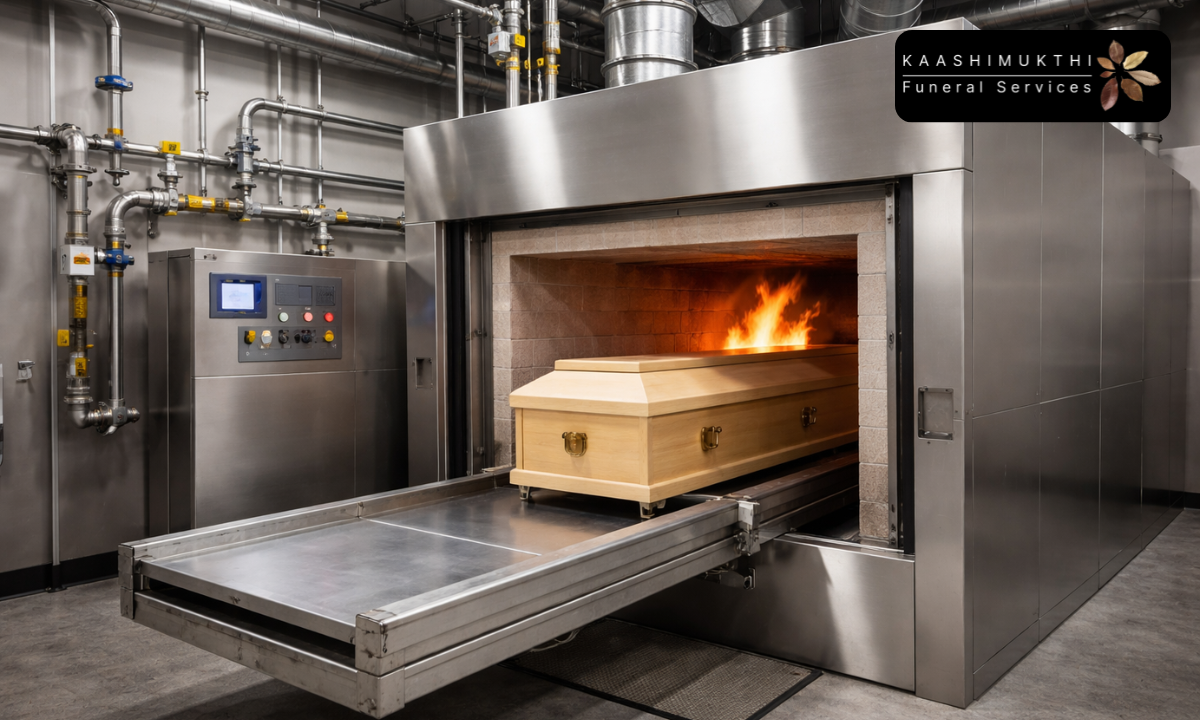
When we face the loss of a loved one, understanding the final rites can bring a sense of clarity and peace during a difficult time. Today, many families are exploring modern options, and learning about how gas crematoriums work helps us make informed and respectful decisions.
With the growing demand for efficient and eco-friendly methods, many people now turn to cremation services in Bangalore for guided support and seamless arrangements.
As we move forward, let’s take a closer look at how gas cremation works and why it is becoming a preferred choice for many families. Could this modern method be the right balance between tradition, dignity, and sustainability?
Key Points to Remember
- A gas crematorium uses natural gas or LPG for cremation
- The process is faster and more controlled than traditional methods
- A gas cremation furnace ensures uniform temperature
- The entire process usually takes 1–2 hours
- Advanced systems reduce smoke and environmental impact
- Only one body is cremated at a time for dignity and respect
- A professional funeral service provider helps manage the entire process
What Is a Gas Crematorium?
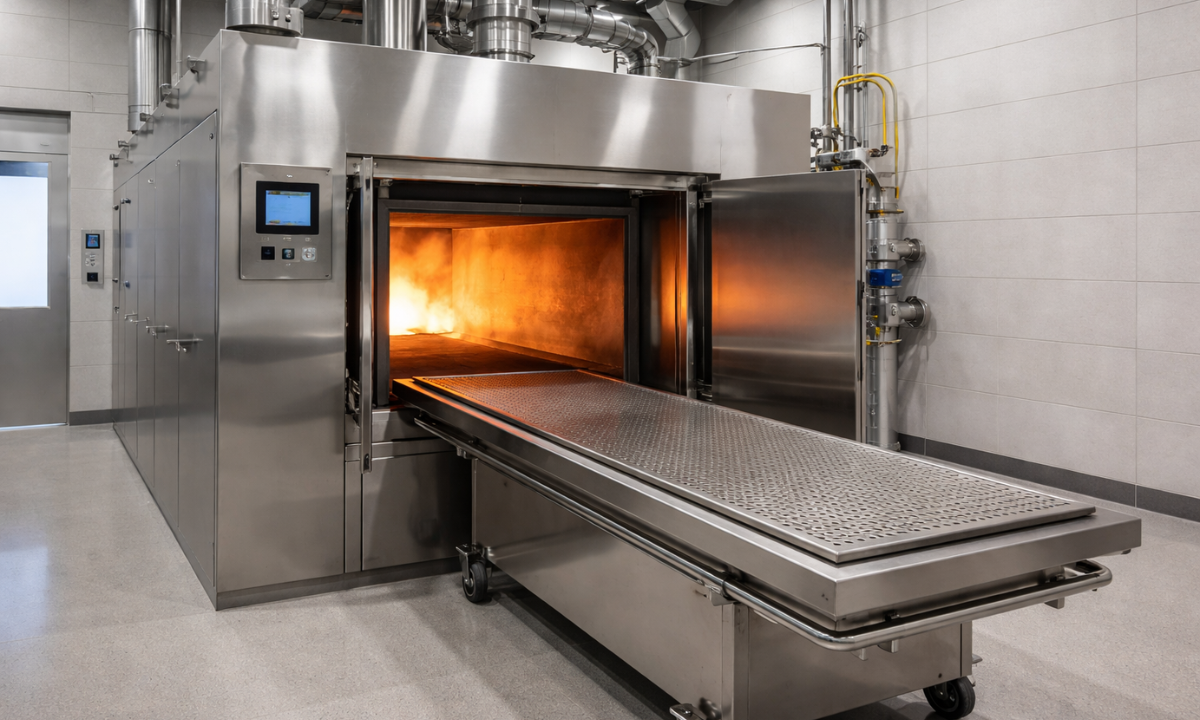
A gas crematorium is a specialised facility where cremation is carried out using a gas-powered furnace. Instead of using wood, this method uses natural gas or LPG to generate the high temperatures needed for cremation.
This form of gas cremation is considered more efficient and environmentally friendly. It is designed to provide a cleaner and more controlled cremation process while maintaining respect for the departed.
How Does a Gas Cremation Furnace Work?
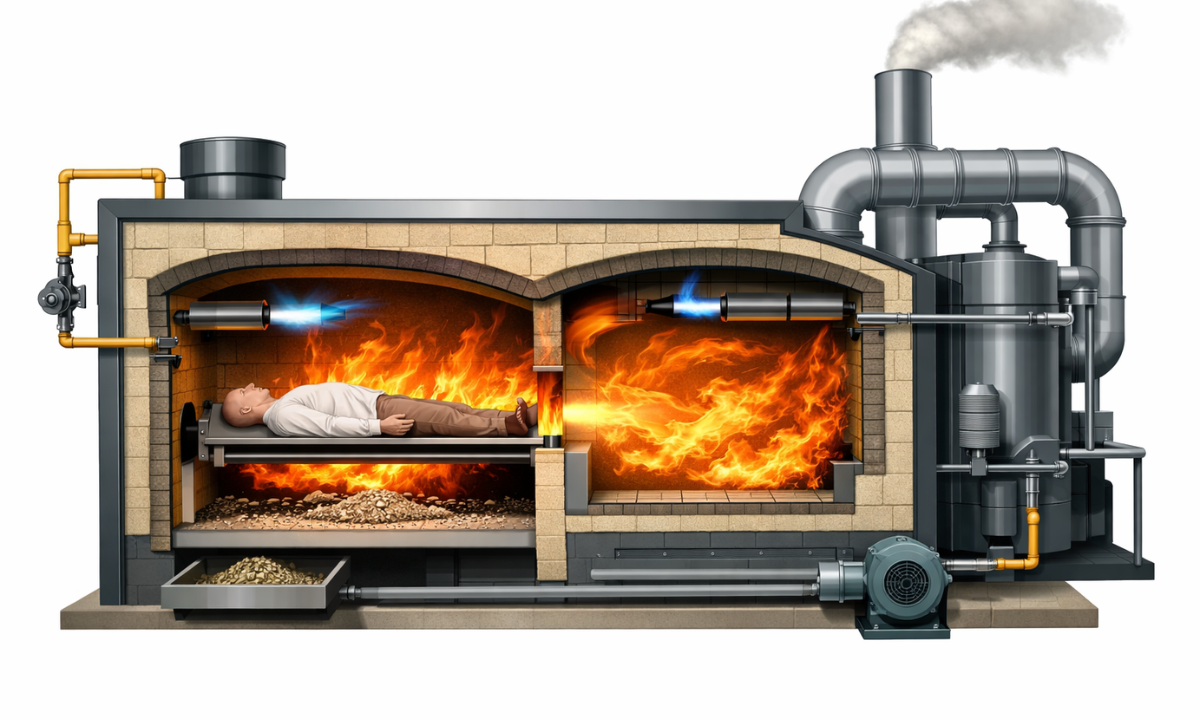
To understand how a cremation furnace works, it helps to break the process into simple stages. The system is designed with precision to ensure safety, efficiency, and dignity.
Overview of the Process
| Stage | What Happens | Key Feature |
|---|---|---|
| Preheating | The furnace is heated to a high temperature | Ensures quick ignition |
| Placement | The body was placed in the chamber | Minimal handling |
| Combustion | High heat reduces the body | Controlled burning |
| Afterburning | Gases are re-burnt | Reduces pollution |
| Cooling | Remains are cooled | Safe handling |
| Processing | Ash is collected and refined | Final remains given |
Step-by-Step Gas Cremation Process
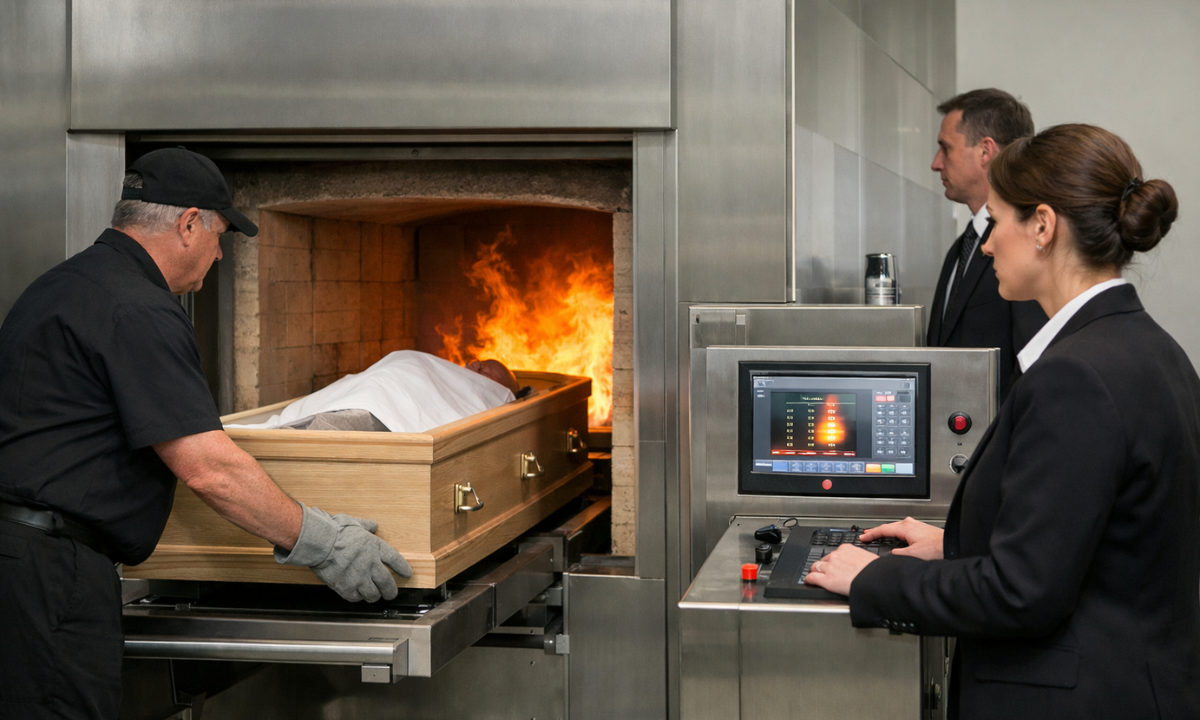
Let us understand the process in a more detailed yet simple way. Each step is carefully designed to ensure safety, efficiency, and dignity throughout the cremation journey.
1. The Retort (Cremation Chamber)
The cremation takes place inside a chamber called a retort. It is made of fire-resistant bricks and is built to withstand extremely high temperatures without damage. This chamber is fully enclosed, ensuring that the process is controlled, safe, and respectful at all times.
2. Preheating the Furnace
The gas cremation furnace is preheated to a high temperature, typically between 700°C and 900°C. Preheating is important because it allows the cremation to begin immediately and prevents delays once the body is placed inside. It also ensures uniform heat distribution for a consistent process.
3. Placement of the Body
The body, usually placed in a combustible casket, is carefully inserted into the chamber using a mechanised system or stretcher. This reduces direct handling and maintains hygiene standards. The process is conducted with utmost care, ensuring dignity and respect for the departed.
4. Combustion and Reduction
The intense heat generated by gas flames reduces the body to skeletal fragments. During this stage, all organic material is vaporised, leaving only bone remains. The controlled environment of the furnace ensures that the process is efficient and completed within a predictable timeframe.
5. Secondary Chamber (Afterburner)
Modern systems include an afterburner that operates at temperatures above 850°C. This chamber burns off smoke, gases, and fine particles produced during cremation. It plays a crucial role in reducing emissions, controlling odour, and ensuring that the process is environmentally responsible.
6. Cooling and Processing
After cremation, the remains are allowed to cool for safe handling. Any metal objects, such as medical implants or fittings, are carefully removed. The remaining bone fragments are then processed into fine ash, which is respectfully collected and handed over to the family in an urn.
This entire process is carried out with precision and care, ensuring both environmental safety and a dignified farewell.
Key Features of Gas Crematoriums
Gas crematoriums are designed with advanced technology to ensure safety and efficiency.
| Feature | Benefit |
|---|---|
| Controlled temperature | Consistent and efficient cremation |
| Faster process | Takes only 1–2 hours |
| Low emissions | Environment-friendly |
| Single-body system | Maintains dignity |
| Modern filtration | Reduces smoke and odour |
These features make gas cremation a reliable and practical choice for many families today.
Benefits of Gas Cremation
Choosing gas cremation offers several advantages that go beyond convenience. It combines modern technology with thoughtful processes, helping us ensure that the final rites are carried out in a clean, respectful, and efficient manner.
Let us look at these benefits in a little more detail:
Environmental Benefits
- Reduced air pollution compared to wood cremation, as controlled burning limits smoke release
- Lower carbon emissions due to efficient fuel usage and advanced systems
- The use of afterburners and filtration systems helps minimise harmful gases
- Less dependence on wood, which helps conserve natural resources
Practical Benefits
- Faster process, usually completed within 1–2 hours
- Less waiting time, which is helpful during emotional and urgent situations
- Cleaner surroundings with minimal smoke, ash, or residue
- Consistent temperature control ensures a smooth and predictable process
- Better facility management with organised systems and trained staff
Emotional Benefits
- Maintains dignity and respect through a structured and private process
- Smooth and organised arrangements reduce confusion during difficult times
- Less stress for families, as the process is quicker and more manageable
- Allows families to focus on rituals and remembrance rather than logistics
Overall, gas cremation offers a balanced approach that supports both emotional needs and environmental responsibility.
Role of a Funeral Service Provider
During emotional times, handling arrangements alone can feel overwhelming. A professional funeral service provider plays an important role in simplifying the process.
They assist with:
- Booking the crematorium
- Coordinating transportation
- Managing documentation
- Guiding rituals and procedures
With their support, we can focus more on remembering our loved ones rather than managing logistics.
Choosing the Right Gas Cremation Service
Selecting the right gas cremation service is an important step. Not all facilities offer the same level of care and efficiency.
Here is what we should consider:
- Clean and well-maintained facility
- Trained and compassionate staff
- Transparent process
- Proper safety and environmental measures
- Easy accessibility
Making the right choice ensures a peaceful and respectful experience.
Practical Tips for Families
Here are a few simple tips that can help us during the process:
- Keep all necessary documents ready
- Choose a trusted service provider in advance
- Ask about the cremation process beforehand
- Stay informed about timelines
- Take emotional support from close ones
Even small steps can make the experience smoother and less stressful.
Final Thoughts
Understanding how a gas crematorium works helps us make informed choices during one of life’s most difficult moments. With modern facilities and professional support, the process becomes more organised, respectful, and environmentally conscious.
Choosing reliable cremation services in Bangalore can provide much-needed guidance and peace of mind during such times.
At Kaashimukthi, the focus is on offering compassionate and professional support, ensuring that every farewell is handled with dignity, care, and respect.
FAQs
1. What is a gas crematorium?
A gas crematorium is a modern facility that uses a gas-powered furnace to cremate human remains in a controlled environment. Unlike traditional wood-based methods, it relies on natural gas or LPG to generate consistent high temperatures. This ensures a cleaner, faster, and more efficient process while maintaining dignity and respect. It is widely preferred today for its eco-friendly approach and well-managed system.
2. How long does gas cremation take?
Gas cremation typically takes about 1 to 2 hours for the actual cremation process. However, the total time may vary depending on factors such as documentation, waiting time at the facility, and post-cremation procedures. Since the system uses controlled heat, the process is faster and more predictable compared to traditional methods, helping families complete the final rites without long delays during an already emotional time.
3. Is gas cremation environmentally friendly?
Yes, gas cremation is considered more environmentally friendly than traditional methods. It produces significantly lower emissions due to controlled combustion and advanced filtration systems. Many facilities also use afterburners to reduce smoke, odour, and harmful gases. Additionally, it reduces the need for firewood, helping conserve natural resources while ensuring a cleaner and more sustainable cremation process for future generations.
4. Is the gas cremation process safe?
Yes, modern gas crematoriums are designed with strict safety standards in mind. They use advanced systems to control temperature, manage emissions, and ensure safe operation throughout the process. The equipment is regularly maintained, and trained professionals handle every step carefully. This ensures not only operational safety but also a respectful and dignified experience for families during the cremation process.
5. Can rituals still be performed?
Yes, families can still perform rituals during gas cremation, although some practices may be adapted based on facility guidelines. Most crematoriums allow essential rites to be carried out in a respectful manner while maintaining safety and efficiency. Families can focus on meaningful customs and prayers, and in some cases, additional ceremonies or memorial services can be आयोजित later when it is more convenient for everyone to gather.
Reference

Madhu is an Entrepreneur, a Mentor, a Writer and an Aspiring Car Race Driver. He is Deeply passionate about leveraging Technology and Human Centred Design to make complex care and End of Life Planning easier. With the ultimate aim of Improving the quality of Life in the Twilight years. Madhu is highly educated and Alumni of IIM-Bangalore, Sikkim Manipal University and Bangalore University besides a Rich Industry Experience in the field of Product Management, Design, Supply chain, Finance, Commercial Management and Funeral Services.