

When someone dies away from home, arranging international transportation can feel overwhelming. International funeral shipping, also known as repatriation of mortal remains, involves coordinating documentation, funeral preparation, airline cargo arrangements, official clearances and handover at the destination.
Beleiv Repatriation helps families coordinate international repatriation arrangements, including documentation support, preparation coordination, airline cargo arrangements and destination handover. The process depends on the country, airline, circumstances of death and the family’s wishes.
Families arranging the return of a loved one to India can learn more about international repatriation services and discuss the requirements for their specific case.
Quick Answer: How Does International Funeral Shipping Work?
International funeral shipping generally involves:
- Confirming the next of kin’s instructions and authorisation.
- Obtaining death and medical documentation.
- Arranging any required police, hospital, embassy or consular clearances.
- Preparing the deceased according to applicable requirements.
- Arranging a compliant coffin or transport container.
- Coordinating airline cargo booking and the Air Waybill.
- Completing departure, transit and destination-country procedures.
- Arranging handover to the receiving funeral provider or authorised representative.
Requirements differ by country, airline, route and circumstances. The necessary documents and approvals should be confirmed before transportation is arranged.
What Is International Funeral Shipping?
International funeral shipping is the organised transportation of a deceased person’s remains from one country to another. It may involve transporting remains from India to another country, bringing them to India from abroad, or coordinating transportation through a transit country.
People may also search for this service as international dead body transport, human remains transport by air or repatriation of mortal remains.
Unlike ordinary cargo, the transportation of human remains involves specific documentation, preparation, airline acceptance procedures and compliance with applicable national and international requirements.
Depending on the family’s wishes and local rules, alternatives may include arranging a funeral in the country where the death occurred or transporting cremated ashes instead of mortal remains.
Who Coordinates the Process?
Several parties may be involved in international repatriation.
- Family or legal next of kin: Provides instructions, consent and identification documents.
- Repatriation coordinator: Helps organise documentation, logistics and communication.
- Hospital, mortuary or local authority: Issues or assists with death and medical documentation.
- Police or investigating authority: May be involved in accidental, unnatural or investigated deaths.
- Embassy or consulate: May provide guidance or assist with applicable consular procedures.
- Funeral service provider: Coordinates preparation and related arrangements.
- Airline cargo provider: Reviews the booking and supporting documents before accepting the shipment.
- Customs and public-health authorities: Handle applicable entry, transit and health requirements.
The responsibilities of each party depend on the country and circumstances. Not every case requires every authority or procedure.
Step-by-Step International Repatriation Process
Step 1: Contact a Repatriation Coordinator
The first step is to contact a repatriation coordinator and share the available details of the case.
These details usually include the current location, intended destination, available documents and the family’s preferred arrangements. The coordinator can explain what information is needed next.
Families do not need to wait until every document is available before asking for guidance.
Step 2: Confirm the Route and Requirements
The departure country, destination country and any transit locations affect the process. The coordinator should identify the relevant requirements and confirm which authorities or service providers need to be involved.
The family should also clarify who will receive the deceased at the destination and whether a funeral provider has already been selected.
Step 3: Collect Required Documents
The documents required for international funeral shipping vary by country and case. They may include:
- Death certificate or medical death report.
- Passport and relevant identification documents.
- Consent or authorisation from the next of kin.
- Police report or investigation-related documentation, where applicable.
- Embalming certificate, where required.
- Coffin or transport-container certificate, where required.
- Health, quarantine or non-infectious-disease documentation, where applicable.
- Embassy, consular, customs or other official clearances.
- Airline cargo documentation.
The Indian Ministry of External Affairs provides guidance on documents that may be needed when bringing mortal remains to India, including death documentation, next-of-kin consent and passport details. Additional documents may be required depending on the circumstances. Families should confirm the exact checklist for their route.
Step 4: Arrange Preparation and a Compliant Transport Coffin

The deceased may need to be prepared according to applicable health regulations, airline requirements and destination-country rules.
Depending on the case, this may involve embalming, specific sealing procedures and a suitable coffin or transport container. The requirements should be confirmed before arrangements are finalised.
Step 5: Obtain Applicable Official Clearances
Depending on the route and circumstances, documentation or clearance may be required from an embassy, high commission, consulate, police authority, hospital, health department or local administration.
Cases involving an accidental or unnatural death may require additional investigation or documentation. This can affect the order of the steps and the time needed to obtain approvals.
Step 6: Coordinate Airline Cargo Booking
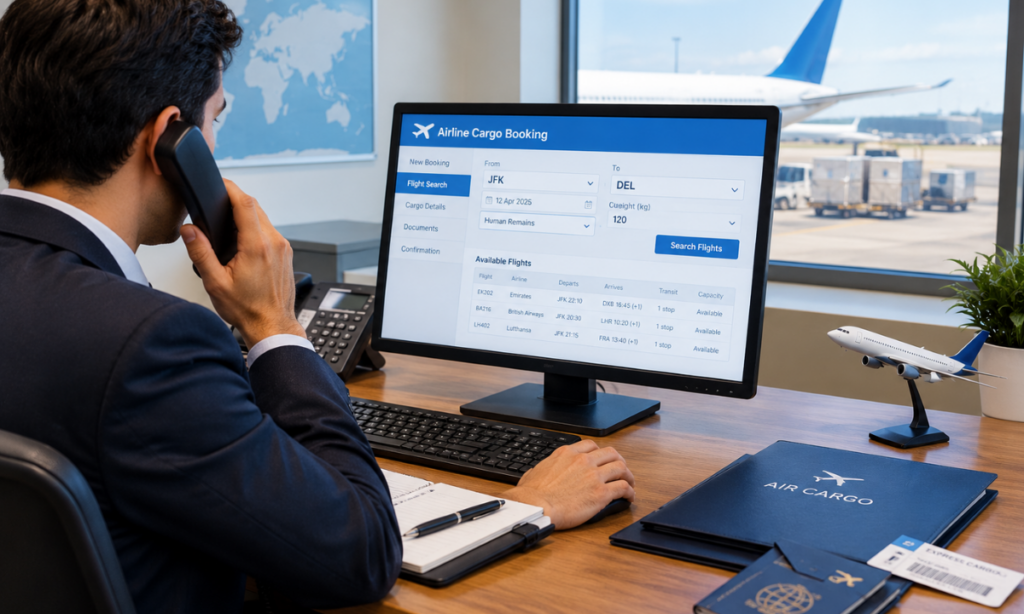
Once the required documents, preparation and applicable clearances are in place, transportation can be coordinated with an airline cargo provider.
The airline or its cargo agent reviews the booking, packaging and supporting documents before acceptance. The Air Waybill is the airline cargo document used to record the shipment and route details.
Flight availability, transit arrangements and airline-specific requirements can affect the booking.
Step 7: Complete Departure, Transit and Arrival Procedures
The shipment must follow the applicable procedures at departure, transit and arrival. These may include document checks, customs procedures, public-health requirements and coordination with the receiving provider.
The family or receiving representative should know who will handle the handover and what arrangements are needed at the destination.
Step 8: Arrange Destination Handover

After arrival and completion of applicable procedures, the deceased is handed over to the receiving funeral provider or authorised representative.
The next steps may include local transportation, funeral arrangements, burial or other arrangements selected by the family.
How Long Does International Funeral Shipping Take?
There is no single timeline that applies to every international repatriation case.
The duration can depend on:
- The country where the death occurred.
- The availability and completion of documents.
- Medical, police or legal investigations.
- Embalming and transport-container requirements.
- Embassy or consular procedures.
- Airline cargo availability and flight routing.
- Transit and destination-country clearance.
- Weekends and public holidays.
Some cases progress once the necessary documentation and arrangements are complete, while others take longer because of official procedures or investigations.
Beleiv Repatriation can discuss the expected steps and estimated timing once the case details and applicable requirements are known. Any estimate should be treated as an estimate, not a guarantee.
What Affects the Cost of International Funeral Shipping?
International funeral shipping costs vary according to the case. A case-specific estimate should explain the services included and any charges that may be separate.
Factors that may affect the cost include:
- Departure city and destination country.
- Airline route and cargo availability.
- Preparation and embalming requirements.
- Coffin or transport-container specifications.
- Documentation, translation and attestation needs.
- Police, legal or consular procedures.
- Airport handling and local transportation.
- Receiving funeral provider or destination-agent charges.
- Family-specific or religious arrangements.
Before proceeding, ask which services are included in the estimate and whether any third-party or destination charges may be billed separately.
For assistance with the process, visit the international repatriation services page.
Repatriation From India and Repatriation to India
Repatriation From India
When a family needs to transport mortal remains from India to another country, arrangements may involve local death documentation, preparation, applicable clearances, airline cargo booking and destination handover.
The requirements depend on the destination country’s rules and the airline handling the shipment.
Repatriation to India
When a loved one dies abroad and the family wishes to bring the deceased to India, procedures may include documentation from the country of death, next-of-kin consent, passport-related formalities, embalming documentation, consular coordination and applicable health or customs clearances.
The Indian Ministry of External Affairs explains that procedures differ by country and that cases involving unnatural deaths may take longer when investigations are required.
Families can review the official Government of India guidance on the transfer of mortal remains and consult the relevant Indian mission or consulate.
For route-specific assistance, see repatriation services from the USA to India.
Information to Have Ready When You Call
If available, prepare the following information before speaking with a repatriation coordinator:
- Full name and nationality of the deceased.
- Current city and country.
- Hospital, mortuary or authority contact details.
- Intended destination country and city.
- Passport details, if available.
- Name and contact details of the authorised next of kin.
- Whether the death is under police, medical or legal investigation.
- Any religious or cultural requirements.
- Receiving funeral provider details, if already selected.
Do not delay contacting a coordinator if some details are unavailable. The team can explain what information is needed next.
Transporting Cremated Ashes Internationally
Some families choose cremation in the country where the death occurred and arrange transportation of the ashes instead of the deceased’s body. Documentation, container, airline and destination-country requirements may still apply.
Before travelling with or shipping cremated ashes, confirm the applicable requirements with the airline and relevant authorities. Rules can differ between countries and carriers.
Beleiv Repatriation also provides information about asthi repatriation, which may be relevant to families arranging the transportation of ashes.
Religious and Cultural Considerations
Families may have religious, cultural or personal preferences concerning preparation, timing, burial, cremation and final rites.
These preferences should be discussed at the beginning of the process so that appropriate arrangements can be considered. However, all arrangements remain subject to applicable legal, health, airline and destination-country requirements.
How Beleiv Repatriation Supports Families
International repatriation can involve several organisations and administrative steps. Beleiv Repatriation helps families coordinate the practical arrangements according to the circumstances of the case.
Support may include:
- Explaining the process and the information needed.
- Coordinating documentation requirements.
- Liaising with relevant service providers and authorities, as applicable.
- Coordinating preparation and airline cargo arrangements.
- Helping organise destination handover.
- Explaining the next steps as the case progresses.
The support available depends on the route, local regulations, airline availability and the family’s chosen arrangements.
For details, visit the international repatriation services page or contact Beleiv Repatriation.
Frequently Asked Questions
What is international funeral shipping?
International funeral shipping is the transportation of a deceased person’s remains from one country to another. It typically involves documentation, preparation, airline cargo arrangements and destination handover.
Can human remains be transported by air internationally?
Yes, international air transportation may be possible when the relevant documentation, preparation, packaging and airline acceptance requirements are met. Requirements vary by route and carrier.
What documents are required to transport mortal remains internationally?
Documents may include a death certificate, medical report, next-of-kin consent, passport details, embalming certificate and applicable police, health, customs or consular clearances. The exact requirements depend on the country and circumstances.
Is embalming always required for international repatriation?
Not necessarily. Whether embalming is required depends on applicable regulations, airline requirements and the destination country’s rules. Confirm the requirements for the specific route before making arrangements.
How long does international funeral shipping take?
The timeline depends on documentation, official clearances, airline availability, routing and the circumstances of death. A case-specific estimate is more useful than a universal timeframe.
Can Beleiv Repatriation arrange repatriation from India to another country?
Beleiv Repatriation can discuss the arrangements relevant to the requested route and explain the available support. Confirm the destination and circumstances when making an enquiry.
Can a loved one be brought to India after death abroad?
Repatriation to India may be possible once the applicable documentation, clearances and transportation arrangements are completed. Families should consult the relevant authorities and confirm the requirements for the country where the death occurred.
What happens if the death was accidental or under investigation?
Police or other authorities may need to complete investigations or issue additional documents before transportation can proceed. This can affect the timeline and required approvals.
Can a family transport cremated ashes instead?
This may be an option, depending on the family’s wishes and local rules. Airline, container and destination-country requirements should be checked before travel or shipment.
Can religious or cultural preferences be considered?
Families can explain their preferences at the beginning of the process. Arrangements can be considered where possible, subject to applicable legal and transportation requirements.
Who receives the deceased at the destination?
The receiving party may be a funeral provider, local coordinator or authorised representative. This should be arranged before transportation so the handover process is clear.
How is the cost of international repatriation calculated?
Costs depend on the route, airline, preparation, coffin or container, documentation, handling, local transportation and destination arrangements. Ask for a case-specific estimate and clarify what is included.
What should I do first if a loved one dies abroad?
Contact the relevant local authorities and the appropriate embassy or consulate where necessary. Then speak with a repatriation coordinator to understand the documentation, preparation and transport arrangements required for the case.
Official Resources
For current requirements and route-specific guidance, families may consult:
- Ministry of External Affairs, Government of India: Transfer of Mortal Remains
- International Air Transport Association (IATA): Compassionate Transportation Manual
- The relevant embassy, high commission or consulate.
- The airline cargo provider handling the route.
- The destination country’s customs and public-health authorities.
These resources provide general guidance. The requirements applicable to an individual case should be confirmed with the relevant authorities and service providers.
Contact Beleiv Repatriation
Need assistance with international funeral shipping or repatriation of mortal remains?
Contact Beleiv Repatriation to discuss the current location, intended destination, available documentation and next steps.
Contact form: https://beleivrepatriation.com/contact-us/
For a quicker response, use the company’s verified phone number or email address published on its official website.
Important Information
International repatriation requirements vary by country, airline, cause of death and local authority procedures. This article provides general information and does not replace advice from relevant embassies, consulates, airlines, health authorities or legal authorities. Documentation, acceptance and timing must be confirmed for each individual case.