
When a loved one passes away, obtaining a death certificate is an important administrative step for the family. The certificate may be needed for legal and financial formalities, insurance claims, bank accounts, property-related procedures and certain transportation or international repatriation arrangements.
In Hyderabad, the process generally involves the Greater Hyderabad Municipal Corporation (GHMC) when the death falls within its registration jurisdiction. The procedure depends on whether the death occurred in a hospital, at home or under circumstances requiring police investigation.
This guide explains how to obtain a death certificate in Hyderabad, which documents may be needed, where to apply and how to check a digitally signed certificate.
Quick Answer: How Do You Get a Death Certificate in Hyderabad?
To obtain a death certificate in Hyderabad:
- Confirm whether the death has already been registered.
- If the death occurred in a hospital, ask the hospital whether the details have been submitted for registration and whether verification is pending.
- If the death occurred at home, contact the relevant GHMC registration authority or a MeeSeva centre to confirm the applicable procedure and documents.
- For an already-registered death, use the official GHMC Death Certificate service or enquire at a MeeSeva centre.
- If a digitally signed certificate has been issued, use the official Telangana MeeSeva verification or certificate-search process and enter the application details requested by the portal.
The process may differ for unregistered deaths, late registration, record corrections and cases involving police investigation. Confirm the current requirements with the relevant authority before applying.
Table of Contents
- Why a Death Certificate Is Important
- Who Registers a Death?
- Death Registration and Certificate Services in Hyderabad
- Documents Usually Needed
- What to Do if the Death Occurred at a Hospital
- What to Do if the Death Occurred at Home
- What If the Death Has Not Yet Been Registered?
- What Happens in an Accidental or Unnatural Death?
- How to Verify a Death Certificate
- Using a Death Certificate for Transportation or Repatriation
- Frequently Asked Questions
- Official Resources
Why a Death Certificate Is Important
A death certificate is an official record of a person’s death. It records details such as the deceased person’s name, date of death, place of death and registration information.
Families may need it for several reasons:
- Legal and financial formalities: Banks, insurance companies and other institutions may request a death certificate to process claims or update records.
- Property and inheritance matters: It may be needed as part of the documentation for succession and related legal procedures.
- Government records: The certificate may be required when updating records or completing administrative formalities.
- Transportation of the deceased: Transport providers and airlines may request death-related documentation before accepting a transportation or cargo arrangement.
- International repatriation: Authorities, airlines and consulates may require the certificate along with other documents.
The exact documents accepted by an institution depend on its rules and the purpose for which the certificate is being submitted.
Who Registers a Death?
The death must be registered with the appropriate local registration authority for the place where it occurred. For deaths within GHMC’s jurisdiction, GHMC’s Birth and Death registration system is a key point of contact.
The process may involve different parties depending on the circumstances:
- Hospital: Hospitals may report institutional deaths through the applicable registration process.
- Family or close relative: For a death at home or another non-institutional location, the family may need to contact the local registrar or follow the applicable application process.
- Medical professional: Medical documentation may be required to establish the details of the death.
- Police and other authorities: Where a death is accidental, unnatural, suspicious or under investigation, additional procedures may apply.
GHMC’s official Birth and Death section provides information about institutional and non-institutional death registration and links to the relevant certificate services.
Death Registration and Certificate Services in Hyderabad
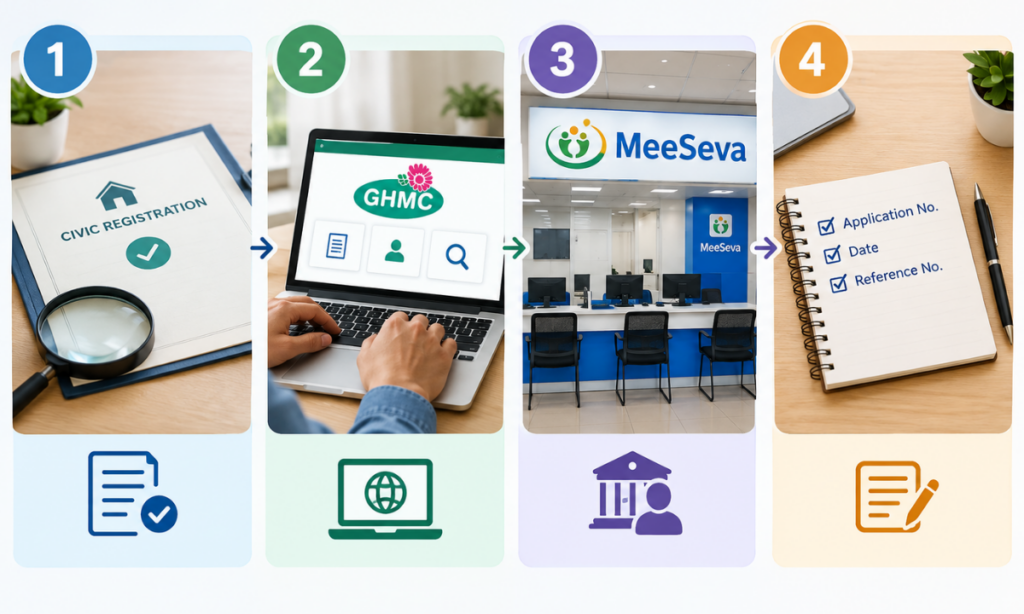
There are two main situations to consider: obtaining a certificate for a death that has already been registered, and arranging registration where the record is not yet available.
Step 1: Check whether the death is registered
Before making a fresh application, ask the hospital or relevant registration authority whether the death has been entered into the official records.
If the death is already registered, you may be able to request a copy of the certificate without repeating the registration process.
Step 2: Use the official GHMC death-certificate service
Visit the GHMC Death Certificate service.
GHMC’s Birth and Death section also provides information about certificate requests, hospital reporting and the process for deaths at home.
Check the available options and follow the current instructions on the official service.
Step 3: Visit a MeeSeva centre if needed
GHMC’s published guidance identifies MeeSeva centres as a route for requesting death certificates and making enquiries about relevant documentation.
A MeeSeva centre can help you understand the applicable application process. Before visiting, confirm which documents are needed for your specific case.
The official Telangana MeeSeva portal provides citizen services, application-status facilities and certificate-related options.
Step 4: Keep your application details
Retain the application receipt, application number and any acknowledgement provided by the service centre or registration authority. These details may be needed to check the status of your request or verify a digitally signed certificate.
Important: The process for an already-registered death may differ from the process for a death that has not been registered. Late registration, record corrections and non-availability of a record may involve additional requirements.
Documents Usually Needed
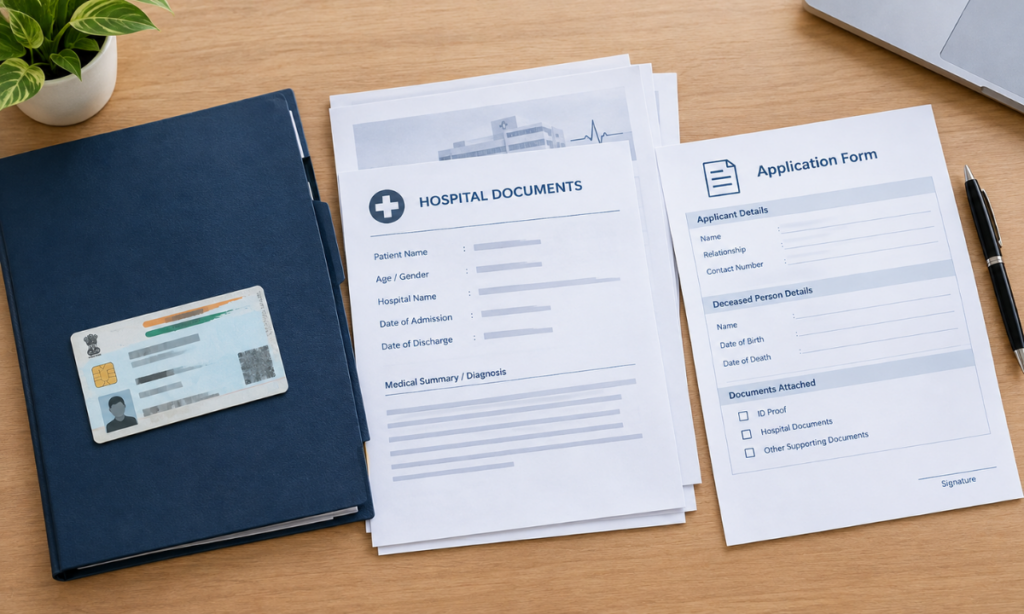
The documents required depend on whether the death occurred in a hospital or at home, whether it has already been registered and whether the case involves police investigation.
The following is a general preparation checklist, not a universal list of mandatory documents.
| Document or detail | When it may be needed | Important note |
| Details of the deceased | Most applications | Name, date of death and place of death should be accurate |
| Applicant’s identification | Where requested | Confirm which identity documents are accepted |
| Hospital death documentation | Death in a hospital | Ask the hospital which records are issued and submitted |
| Medical certificate or applicable form | Depending on the circumstances | The required form depends on the death and registration procedure |
| Burial- or cremation-related records | If requested by the registration authority | Confirm the current GHMC or MeeSeva checklist |
| Police or post-mortem documents | Applicable medico-legal cases | Follow the instructions of the authorities handling the case |
| Existing registration or application details | When requesting a copy or checking a record | Helps the authority locate the existing entry |
| Supporting documents for late registration or corrections | Where applicable | Additional evidence or approval may be required |
Do not assume that every document in this table is mandatory for every application. Confirm the current checklist with GHMC or the relevant MeeSeva centre.
What to Do if the Death Occurred at a Hospital
Hospitals may report institutional deaths through the applicable registration process. Ask the hospital whether the information has been submitted, whether verification is pending and which authority issues the official certificate.
A practical sequence is:
- Ask the hospital for the applicable death-related medical documentation.
- Confirm whether the hospital has submitted the death information for registration.
- Keep the deceased person’s details and any reference number provided by the hospital.
- Check the registration status with the hospital or relevant GHMC authority.
- Once the death is registered, follow the official instructions for obtaining the certificate through GHMC or MeeSeva.
GHMC’s official Birth and Death section describes the institutional-death process and links to the certificate services.
If the certificate is not available, first confirm whether registration is pending or whether any details need correction. The next step depends on the reason the record cannot be found.
What to Do if the Death Occurred at Home
A death at home may require additional steps because the family may need to contact the appropriate medical professional and registration authority.
GHMC’s published guidance states that relatives of a person who dies at home should approach a MeeSeva centre with the required documents. It also refers to burial-ground documentation or registration of the deceased’s details through the applicable burial-ground process. Confirm the current procedure with GHMC before applying.
Families should:
- Contact the appropriate medical professional or authority to establish the documentation required for the death.
- Confirm which death-related form or medical record is applicable.
- Ask the relevant GHMC registration authority or MeeSeva centre which supporting documents are needed.
- Keep burial- or cremation-related records if requested by the registration authority.
- Follow the official application process and retain the acknowledgement.
Form 4A may be relevant for certain natural deaths occurring outside hospitals. The correct form, issuing medical professional and registration procedure should be confirmed with GHMC, MeeSeva or the relevant registrar. Do not assume that Form 4A applies to every death at home.
The exact requirements can differ depending on the circumstances and whether the death has already been reported or registered.
What If the Death Has Not Yet Been Registered?
If the death record cannot be found, ask the registration authority whether the death is pending registration or whether a late-registration procedure is necessary.
Do not submit a duplicate application without first checking the existing record. The authority can advise whether additional documents, an enquiry or an approval process is required.
GHMC provides information and application forms for death registration and non-availability certificates through its official services. Start with the GHMC Births and Deaths FAQs or the GHMC application forms page.
What is a non-availability certificate?
A non-availability certificate may be issued when the registration authority confirms that a search of the relevant records did not locate a death entry. The authority can explain whether this process, late registration or record correction is appropriate.
GHMC’s official FAQs describe a separate application process and supporting documents for non-availability certificates, including additional documents for certain medico-legal cases. See the GHMC Births and Deaths FAQs.
What Happens in an Accidental or Unnatural Death?
An accidental, unnatural, suspicious or otherwise investigated death may involve police procedures and a post-mortem examination.
In these circumstances, the family should follow the instructions of the police, hospital and other competent authorities. Medical and police documentation may be needed before the death can be registered or before a certificate can be issued.
GHMC’s official FAQs describe separate procedures for certain cases involving medico-legal documentation. Depending on the case, supporting records may include an FIR, post-mortem report and a form issued by the concerned police authority. These are examples for particular procedures and should not be treated as a universal checklist for every death-registration application.
If the death is under investigation:
- Follow the instructions of the authorities handling the case.
- Ask which medical and police documents will be provided.
- Confirm with the registration authority what is needed to register the death.
- Do not move the deceased until the competent authorities have authorised release.
The registration process and the release of the deceased for transportation are separate matters. Completing one does not automatically replace the requirements of the other.
How to Verify a Death Certificate
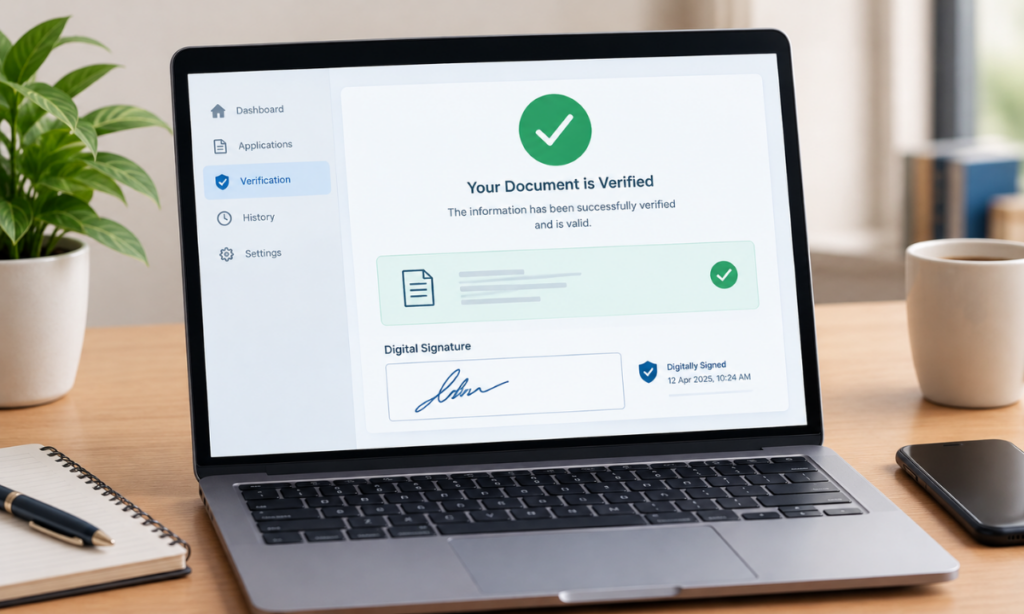
If you already have a death certificate, check that the details are correct and use the official verification facility where applicable.
Check Through the Official GHMC Service
Visit the GHMC Birth and Death section and look for the death-certificate verification option.
Follow the instructions provided by the official portal. Depending on the service, you may need information from the certificate or registration record.
Verify a Digitally Signed Certificate Through Telangana MeeSeva
The Telangana MeeSeva portal provides application-status and certificate-related facilities. The GHMC death-certificate format available through the Telangana portal states that the certificate is digitally signed and can be verified using the application number shown on the certificate.
To check a certificate:
- Open the official Telangana MeeSeva portal.
- Locate the certificate-verification, certificate-search or relevant application-status facility.
- Enter the application number or other details requested by the portal.
- Follow the instructions to check the record.
The precise options may change as the portal is updated. Use the official portal rather than relying only on a screenshot or an unofficial copy.
What If the Details Are Incorrect?
If the name, date of death, place of death or another detail appears incorrect, contact the registration authority responsible for the record and ask about the correction procedure.
Do not alter the certificate yourself. The authority can explain what evidence and application are needed for an official correction. GHMC also lists a Corrections in Death Register form among its application forms.
Using a Death Certificate for Transportation or Repatriation

A death certificate may be one of the documents required when arranging transportation of a deceased person from Hyderabad to another Indian city or another country.
However, a death certificate alone may not be sufficient. Depending on the route, transport method and circumstances of death, additional documents may be required.
Domestic transportation
For transportation by road or air within India, the provider or airline may request death-related medical documentation, identification and applicable release or police documents.
Read the guide to documents required for dead body transportation from Hyderabad and the service information for dead body transportation in Hyderabad.
International repatriation
International transportation may require an accepted death certificate, medical documentation, embalming and coffin or packaging certificates, passport-related documents, consular clearances and other route-specific paperwork.
Requirements vary by airline and destination. Confirm the current checklist with the airline, cargo handler, relevant authorities and destination-country embassy or consulate before making arrangements.
For more information, read Repatriation of Mortal Remains: Process and Challenges.
Frequently Asked Questions
1. Where can I apply for a death certificate in Hyderabad?
For a death registered within GHMC’s jurisdiction, start with the official GHMC Death Certificate service. You can also consult the GHMC Birth and Death section or a MeeSeva centre for the current application procedure.
2. Can I obtain a death certificate if the death occurred in a hospital?
Hospitals may report institutional deaths through the applicable registration process. Ask the hospital whether the information has been submitted, whether verification is pending and which authority issues the official certificate. Once the death is registered, follow the official procedure for obtaining the certificate.
3. How do I obtain a death certificate if the death occurred at home?
Contact the relevant GHMC registration authority or MeeSeva centre to confirm the current process and required documents. Medical documentation and burial- or cremation-related records may be requested, depending on the circumstances.
4. What should I do if the death certificate record is not found?
First confirm whether the death has been registered and whether the details entered in the search are correct. If the record is unavailable, ask the registration authority whether registration is pending, a correction is needed or a non-availability or late-registration procedure applies.
5. Can I verify a death certificate online?
GHMC provides a death-certificate verification option through its Birth and Death section. Digitally signed certificates available through Telangana MeeSeva can also be checked using the application details requested by the official portal.
6. Is a death certificate required for transporting a deceased person?
Death-related documentation is commonly requested for transportation, particularly for air cargo and international repatriation. The exact accepted document and any additional certificates depend on the carrier, destination and circumstances of death.
7. Can a death certificate be corrected if the name or date is wrong?
Contact the registration authority responsible for the record and ask about the official correction procedure. The authority may request supporting documents before amending the registered details.
8. How long does it take to obtain a death certificate in Hyderabad?
The time can vary depending on whether the death is already registered, whether the record requires verification and whether additional documentation is needed. Check the current status with GHMC or MeeSeva rather than relying on a fixed turnaround-time estimate.
9. What is the difference between a death certificate and a non-availability certificate?
A death certificate records a registered death. A non-availability certificate may be issued when the registration authority confirms that a search of the relevant records did not locate a death entry. The authority can explain whether this process, late registration or record correction is appropriate.
Official Resources
Use these official resources to check the applicable procedure:
- GHMC Birth and Death section — information about registration, certificate requests and verification options.
- GHMC Death Certificate service — official death-certificate service.
- GHMC Births and Deaths FAQs — guidance on certificate requests and non-availability certificates.
- GHMC application forms — forms for death certificates, corrections and non-availability certificates.
- Telangana MeeSeva portal — citizen services, application status and certificate-related facilities.
Procedures, available online options and document requirements may change. Confirm the current instructions directly with GHMC or MeeSeva.
Need Help With Transportation After a Death?
Obtaining the death certificate is one part of the process. Families arranging transportation may also need to coordinate with the hospital, the relevant authorities and the transport provider to establish which additional documents are required.
Kaashimukthi provides information about dead body transportation in Hyderabad and international repatriation of mortal remains.
For enquiries, contact the team through the Kaashimukthi contact page.
Phone: +91 98458 19660
Important: This article provides general information only. It does not replace instructions from GHMC, MeeSeva, the local registrar, hospital, police or other competent authority. Registration procedures, document requirements and online options can change. Confirm the current process for the specific case before applying.

Madhu is an Entrepreneur, a Mentor, a Writer and an Aspiring Car Race Driver. He is Deeply passionate about leveraging Technology and Human Centred Design to make complex care and End of Life Planning easier. With the ultimate aim of Improving the quality of Life in the Twilight years. Madhu is highly educated and Alumni of IIM-Bangalore, Sikkim Manipal University and Bangalore University besides a Rich Industry Experience in the field of Product Management, Design, Supply chain, Finance, Commercial Management and Funeral Services.