
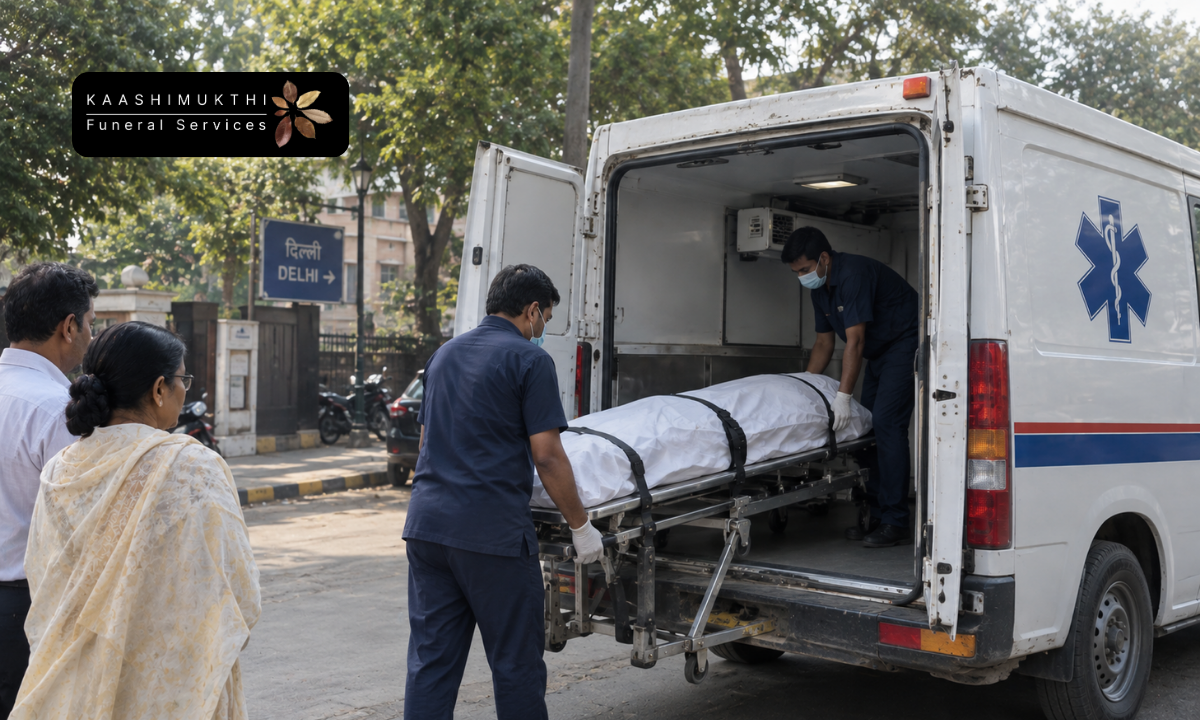
Losing a loved one is one of life’s most difficult moments, leaving families to navigate immense grief alongside urgent logistical responsibilities. In the bustling capital, booking a reliable dead body transport ambulance Delhi ensures your loved one’s final journey is conducted with the utmost dignity, hygiene, and reverence.
Whether coordinating a local transfer to a neighborhood crematorium or arranging long-distance transit to an ancestral hometown, securing professional assistance for dead body transportation in Delhi provides vital peace of mind during a critical time.
Navigating end-of-life transport in the National Capital Region (NCR) involves several operational challenges that require prompt and experienced coordination:
- Extreme Weather and Preservation Needs: Delhi’s climate marked by severe summer heat waves accelerates natural biological breakdown, making specialized temperature-controlled refrigeration essential even for moderate distances.
- Urban Congestion and Route Planning: Dense traffic corridors across central Delhi, Ring Roads, and inter-state border crossings demand experienced drivers who know optimal transit routes to avoid painful delays.
- Municipal and Regulatory Approvals: Ensuring proper medical cause-of-death certification, Municipal Corporation of Delhi (MCD) registration, and crematorium slot coordination at historic grounds like Nigambodh Ghat or Lodhi Road.
Addressing these logistical hurdles while observing sacred funerary traditions can be overwhelming for grieving relatives. At Kaashimukthi, we bridge modern mortuary logistics with timeless Vedic reverence.
Our team coordinates specialized transport vehicles, essential documentation, and ritual requirements across Delhi NCR, ensuring that your loved one is honoured with absolute compassion and respect.
Types of Deceased Transport Ambulances Available in Delhi
Selecting the appropriate vehicle is crucial to ensuring your loved one is transported safely, hygienically, and with complete dignity.
As patient ambulances are legally restricted from carrying deceased individuals, families must arrange an authorized mortuary vehicle. Depending on transit distance, preservation requirements, and weather conditions across the capital, different vehicles cater to specific transport needs.
1. Standard Hearse Vans for Local Transit
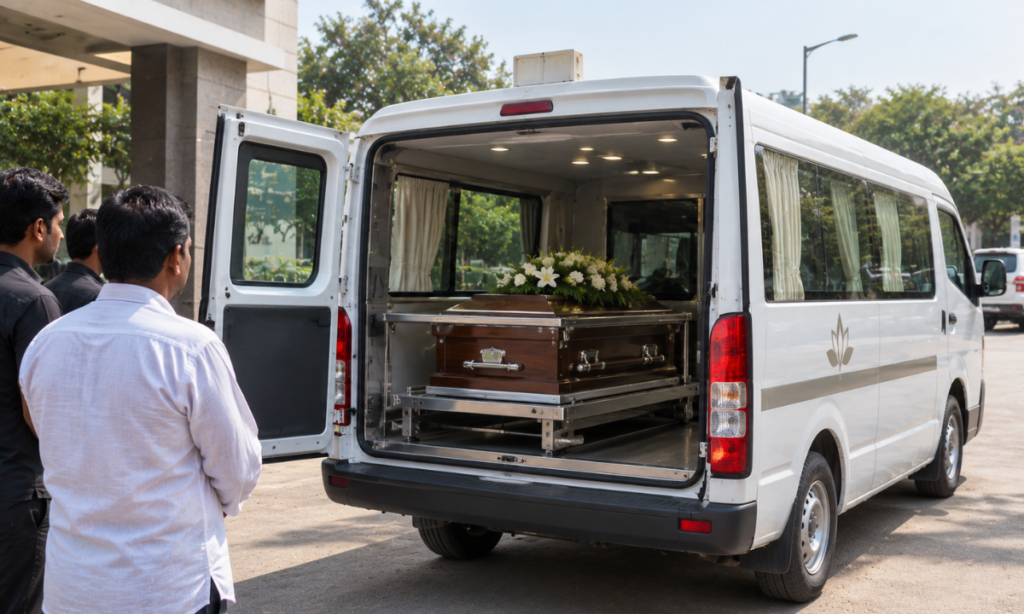
For short-distance travel within the National Capital Territory such as moving from a home or hospital mortuary to a nearby cremation ground standard hearse vans offer a dignified local option:
- Clean and Dedicated Cabins: Purpose-built vehicles featuring sanitized metal stretcher platforms, separate driver partitions, and respectful interiors.
- Neighborhood Accessibility: Designed to navigate narrow residential lanes and congested inner-city routes across Old Delhi, South Delhi, and East Delhi with ease.
- Direct Destination Transit: Ideal for direct trips to prominent cremation grounds such as Nigambodh Ghat, Lodhi Road Crematorium, Punjabi Bagh, or Green Park.
Choosing a dedicated funeral transport Delhi hearse ensures that immediate family members can conduct local final journeys smoothly and without unexpected transit delays.
2. Air-Conditioned Mortuary Ambulances
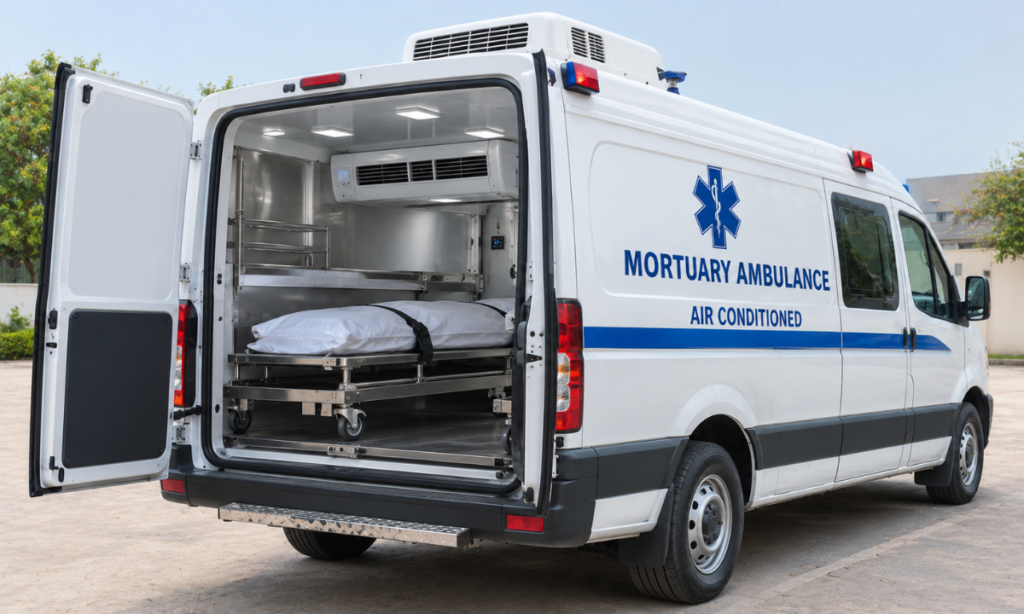
Delhi’s intense summer heat can accelerate biological changes rapidly. AC mortuary ambulances provide a temperature-buffered cabin environment during intra-city and NCR transit:
- Climate-Controlled Cabin Space: Keeps the internal ambient temperature significantly cooler than outside conditions during peak summer months.
- Extended City Transit: Suitable for transfers between distant NCR hubs, such as moving a loved one between Gurugram, Noida, Faridabad, or Ghaziabad and central Delhi hospitals.
- Comfort for Family Escorts: Provides air-conditioned seating space for two to four close relatives to accompany the deceased with dignity.
These vehicles serve as an effective middle ground for daytime transfers across the NCR when refrigeration is not strictly mandatory, but basic thermal protection is necessary.
3. Refrigerated Freezer Box Ambulances
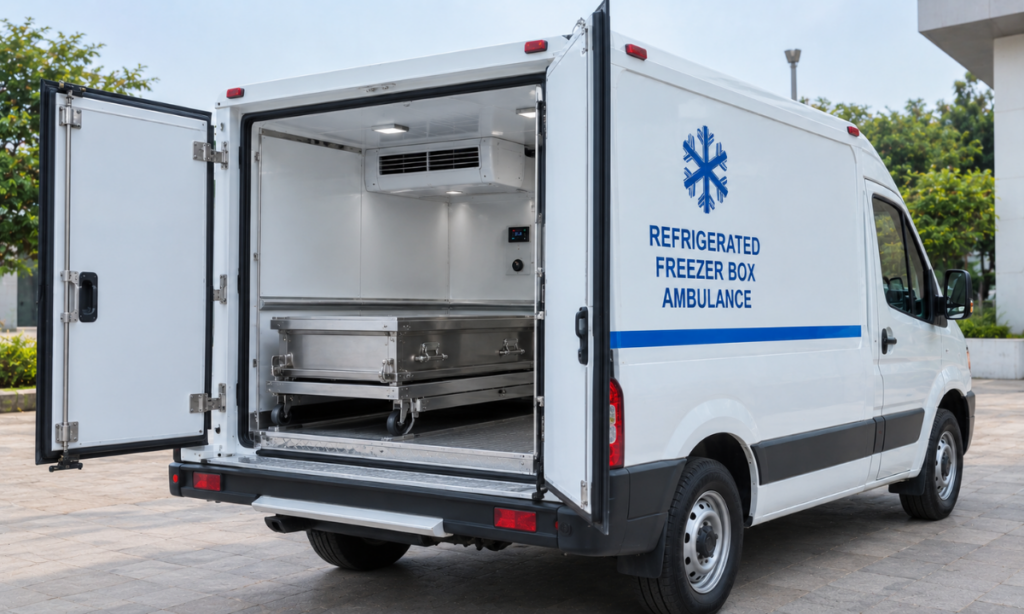
When transporting a deceased person from Delhi to ancestral towns across Uttar Pradesh, Haryana, Punjab, Rajasthan, Uttarakhand, or Bihar, specialized refrigeration is an absolute necessity:
- Sub-Zero Cold-Cabin Preservation: Equipped with built-in cold storage units maintaining a constant temperature between 0°C and 4°C to arrest tissue breakdown across journeys lasting 6 to 36 hours.
- Mobile Ice-Box Systems: Heavy-duty portable freezer boxes powered by the vehicle’s electrical inverter, keeping the body preserved during overnight halts or extended travel.
- Continuous Long-Haul Logistics: High-grade shock absorption and dual-driver capacity ensure continuous highway travel without unnecessary stops.
Opting for an advanced ambulance service for dead body transit with built-in cold storage gives families the time and assurance needed to reach distant villages and ancestral lands safely.
4. Ceremonial Glass Hearse Procession Vehicles
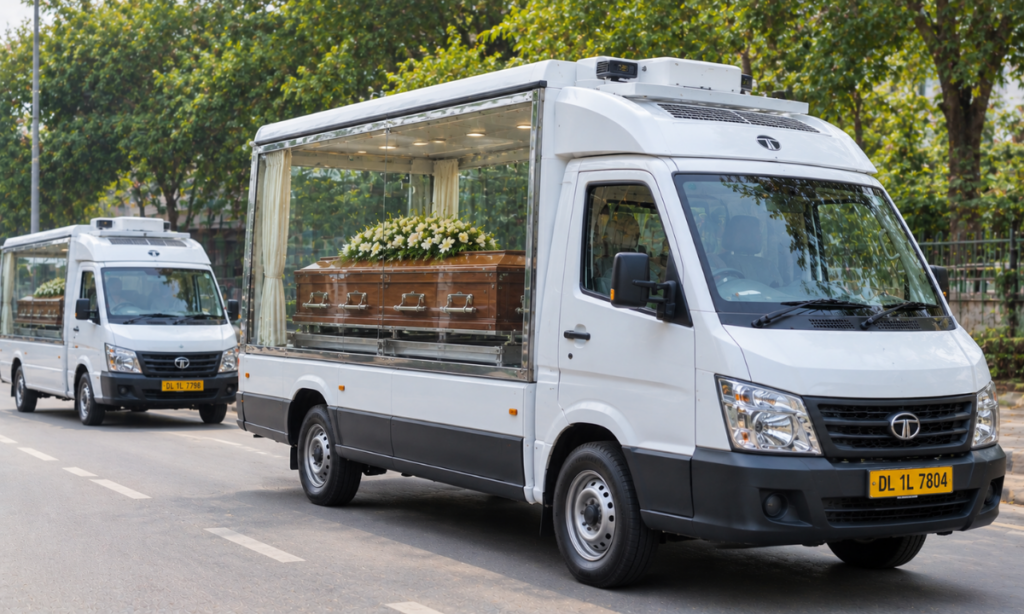
For families wishing to conduct a traditional and public final farewell procession, ceremonial glass hearse vehicles offer a grand, respectful setting:
- All-Round Glass Viewing Windows: Specially customized transparent enclosures that allow mourners and relatives to pay their respects during the final procession.
- Floral Tribute Deck: Reinforced rooftop and side mounting spaces designed to carry elaborate floral wreaths and sacred garlands.
- Dedicated Ritual Setup: Ample space inside the cabin to place holy samagri, earthen lamps (diyas), and sacred banners in alignment with traditional Vedic customs.
Ceremonial vehicles allow communities to honour prominent individuals, elders, and leaders with a visually dignified and memorable tribute.
Deceased Transport Ambulance Selection Guide
| Ambulance / Vehicle Type | Cooling Mechanism | Ideal Transit Range | Escort Seating | Best Suited For |
|---|---|---|---|---|
| Standard Hearse Van | Ambient / Basic Ventilation | Local Delhi city (0–30 km) | 2 to 4 Persons | Short trips from home/hospital to local crematoriums |
| AC Mortuary Ambulance | Cabin Air Conditioning | Intra-NCR transfers (30–80 km) | 2 to 4 Persons | Transfers between Delhi, Noida, Gurugram, and Ghaziabad |
| Freezer Box Ambulance | Built-in Cold Storage (0°C to 4°C) | Interstate road transit (80–1,200 km) | 2 to 3 Persons | Long-distance transit to UP, Bihar, Punjab, Rajasthan, etc. |
| Ceremonial Glass Hearse | Ambient / AC Viewing Cabin | Procession routes within city limits | 4 to 6 Persons | Traditional community farewell processions and floral tributes |
Matching your family’s travel distance, the time required before final rites, and prevailing weather conditions against this comparison will help you select the most appropriate vehicle for your loved one.
Essential Factors to Evaluate Before Booking
During moments of sudden loss, making decisions under severe emotional stress can leave families vulnerable to misinformation or logistical delays. Not all transport providers offer the same operational capabilities, vehicle hygiene, or regulatory readiness.
Evaluating key criteria before confirming a booking ensures your loved one receives respectful, uninterrupted, and legally compliant transport across Delhi NCR and beyond.
1. Rapid 24/7 Availability and Fleet Proximity
In a sprawling metropolis like Delhi, emergency response times depend heavily on where the vehicle is dispatched from:
- Strategic Fleet Dispersal: Verifying whether the provider stations vehicles across multiple hubs such as South Delhi, Central Delhi, Rohini, East Delhi, Noida, and Gurugram to ensure prompt arrival times within 30 to 60 minutes.
- Round-the-Clock Dispatch Desks: Confirming that the assistance helpline is staffed 24/7 by human coordinators rather than automated answering systems, especially during late-night and early-morning emergencies.
- Hospital Mortuary Coordination: Ensuring the transport team has existing familiarity with hospital release protocols at major medical centers like AIIMS, Safdarjung, Max Healthcare, Apollo, and Fortis.
Choosing a provider with an active, geographically dispersed fleet eliminates painful waiting periods outside hospitals or homes, allowing families to commence final arrangements without anxiety.
2. Cold Chain Integrity and Vehicle Sanitation Standards
Maintaining strict sanitary standards and temperature regulation is non-negotiable for preserving bodily dignity and public health:
- Active Refrigeration Systems: Ensuring that a freezer ambulance Delhi service uses verified cooling units capable of maintaining constant temperatures between 0°C and 4°C, rather than passive or unpowered insulation.
- Backup Power Inverters: Checking that long-distance freezer units feature dual-power backup systems to maintain continuous cooling even during highway fuel stops or engine shutdowns.
- Medical-Grade Sanitization Protocols: Confirming that stretchers, vehicle cabins, and transfer equipment undergo thorough chemical disinfection between every journey to prevent biological contamination.
Inspecting these technical standards guarantees that physical preservation remains uncompromised throughout extended inter-state journeys across North India’s varied climates.
3. Transparent, Itemized Pricing Without Emergency Surcharges
Grieving families often face predatory surge pricing during nighttime hours or emotional crises:
- All-Inclusive Cost Breakdowns: Demanding an upfront quotation that clearly outlines base vehicle charges, per-kilometer rates for outstation journeys, driver allowances, and toll/inter-state tax inclusions.
- No Hidden Night or Waiting Surcharges: Ensuring that the quoted price remains fixed regardless of hospital discharge delays or night-time operational hours.
- Written Booking Confirmations: Receiving an immediate digital booking receipt or WhatsApp confirmation detailing vehicle registration, driver contact information, and payment terms.
Selecting a trustworthy ambulance service for dead body transport that maintains transparent pricing models protects your family from unexpected financial burdens during an already difficult time.
4. Driver Familiarity with NCR Border Checkpoints and Green Corridors
Inter-state transit out of Delhi requires experienced driving and familiarity with regulatory checkpoints:
- Border Toll Exemptions and Clearances: Experienced drivers know the documentation required to pass smoothly through state border toll plazas (such as Delhi–Noida DND, Delhi-Gurugram Expressway, or Kundli–Manesar–Palwal Expressway) without unnecessary halts.
- Knowledge of Green Channels: Familiarity with high-speed arterial routes, bypassing central city gridlock during peak traffic hours to reach crematoriums or airports on time.
- Dignified and Empathetic Conduct: Courteous driving staff trained to handle grieving families gently, assisting with respectful loading and unloading under family supervision.
A skilled, compassionate transport crew ensures that the journey remains dignified, safe, and free from administrative interference from start to finish.
Legal Documentation & Municipal Formalities in Delhi
Navigating administrative requirements while grieving is challenging, but securing accurate paperwork is legally required before an ambulance can transport a deceased person through Delhi or across state borders.
Whether traveling to a local cremation ground or driving an outstation via national highways, regulatory authorities, police checkpoints, and municipal crematoriums require clear, stamped documentation.
Understanding the paperwork required across different scenarios ensures a smooth transit without distress or procedural delays:
1. Medical Certificate of Cause of Death (MCCD: Form 4 vs. Form 4A)
The primary legal document required for any deceased movement is the official Medical Certificate of Cause of Death (MCCD), which establishes the clinical cause of passing:
- Form 4 for Institutional / Hospital Deaths: When a loved one passes away in a hospital or medical center, the attending doctor issues Form 4 alongside a formal discharge summary and hospital death intimation.
- Form 4A for Non-Institutional / Home Deaths: If passing occurs naturally at home under active medical supervision, a registered medical practitioner (RMP) must examine the deceased and issue MCCD Form 4A certifying natural passing.
Before leaving the hospital or medical clinic, verify that the deceased’s full name, age, gender, and residential address match their official government photo identification (such as Aadhaar Card or Passport) exactly. Discrepancies between medical records and identity cards can stall municipal registrations and gate entries.
2. Municipal Corporation of Delhi (MCD) Registration & Crematorium Slips
Every cremation and burial ground operating under the Municipal Corporation of Delhi (MCD) requires formal registration before commencing final rites:
- Cremation Ground Registration Slip: Upon reaching prominent cremation grounds such as Nigambodh Ghat, Lodhi Road Crematorium, Punjabi Bagh, or Karkardooma the administrative office checks the original MCCD and ID proofs before issuing a cremation slot and gate entry slip.
- MCD Death Registration & Official Certificate: The cremation ground forwards the entry record to the zonal MCD registrar. Family members can subsequently download the official government-issued Death Certificate online through the MCD citizen portal using the cremation slip registration number.
Having these documents compiled early ensures that the ambulance transfer team and priests can proceed directly with sacred Vedic rituals without administrative friction at the shamshan ghat.
3. Police Clearances for Medico-Legal Cases and Inter-State Transit
Certain death circumstances and long-distance transport routes require formal law enforcement verification:
- Medico-Legal & Unnatural Cases (Accidents/Suicides): In cases of sudden unattended passing, accidents, or poisoning, the local police station must be notified to file a First Information Report (FIR) or inquest report, followed by a post-mortem examination at a civil hospital (such as AIIMS or Safdarjung) before issuing a release order.
- Police No Objection Certificate (NOC) for Inter-State Transit: When an ambulance carries a deceased person out of Delhi into neighboring states (such as Uttar Pradesh, Haryana, Punjab, or Rajasthan), carrying a stamped Police NOC or formal station diary intimation prevents delays at state border toll plazas and highway checkposts.
Partnering with an experienced funeral service provider ensures that dedicated coordinators manage police verifications, mortuary releases, and municipal submissions systematically, protecting families from administrative strain.
Essential Document Checklist for Ambulance Booking & Transit
Before the dead body transport ambulance arrives at your home or hospital, compiling all mandatory paperwork in a single folder ensures that transit begins without confusion or regulatory delay. Having these documents ready prevents distressing interruptions at hospital mortuary gates, traffic checkposts, state borders, or municipal crematorium offices.
Keep this practical checklist accessible before confirming vehicle dispatch:
1. Medical & Hospital Paperwork
- Medical Certificate of Cause of Death (MCCD): Form 4 for institutional hospital deaths, or Form 4A for non-hospital home deaths signed by a registered medical doctor.
- Hospital Discharge Summary & Death Summary: Original records provided by the treating hospital detailing clinical history, date, and exact time of passing.
- Doctor’s Medical Registration Number: Verified doctor registration details clearly legible on the Form 4A certificate for home deaths.
2. Identity Verifications
- Original Photo ID of the Deceased: Aadhaar Card, Voter ID, or Passport to verify the legal identity, age, and permanent address of the departed.
- Original Photo ID of the Primary Family Member / Claimant: Aadhaar Card or Passport of the immediate relative booking the vehicle and authorizing the journey.
- Family Authorization / Consent Letter: A signed declaration stating the destination and relationship to the deceased, required for outstation or unattended transfers.
3. Municipal & Police Clearances (Where Applicable)
- Crematorium Advance Booking / Entry Slip: Advance intimation slip for designated crematoriums across Delhi (such as Nigambodh Ghat or Lodhi Road).
- Police Intimation / No Objection Certificate (NOC): Mandated for inter-state highway travel outside Delhi NCR or whenever passing involves unattended or accidental circumstances.
- Post-Mortem & Inquest Papers: Official government civil hospital autopsy reports required for all medico-legal and police-investigated cases.
Keeping multiple photocopies alongside digital copies on a smartphone guarantees that drivers, hospital security staff, and crematorium registrars can verify documents instantly without causing unnecessary transit holds.
Why Families Across Delhi NCR Trust Kaashimukthi?
Managing the departure of a loved one involves more than booking a vehicle; it requires honouring their sacred transition with compassion, spiritual reverence, and flawless logistical care.
Families across Delhi, Noida, Gurugram, Ghaziabad, and Faridabad turn to Kaashimukthi during their most vulnerable hours As we shoulder the administrative and logistical weight, allowing relatives to focus on sacred remembrance and family comfort.
- Harmonizing Modern Logistics with Sacred Vedic Rituals: At Kaashimukthi, we do not view transport as a mere mechanical transfer. We ensure every step aligns with traditional Hindu customs (Antim Sanskar), coordinating sanitized transport vehicles alongside pure puja samagri, holy Ganga jal, and sacred shrouds.
- 24/7 Rapid Dispatch Across the Entire NCR: Our fleet of sanitized hearse vans, AC mortuary ambulances, and freezer-fitted vehicles is strategically stationed across Delhi NCR. This wide network ensures prompt arrivals within 30 to 60 minutes, whether at a private residence or a major medical center.
- Experienced Vedic Purohits for End-to-End Rites: Beyond vehicle logistics, we provide verified and certified Acharyas and Purohits well-versed in diverse regional traditions (North Indian, South Indian, Bengali, Gujarati, and Maharashtrian) to guide the family through every step of cremation and 13-day mourning rituals.
- Complete Price Transparency with Zero Surcharges: Grief must never be exploited through predatory surge charges or hidden fuel fees. We maintain clear, itemized pricing shared upfront in writing, covering vehicle hire, waiting periods, interstate permits, and ritual materials.
- Complete Turnkey Support for Kashi & Teerth Yatra: For families desiring holy river immersions, we coordinate complete sacred Asthi Visarjan and Pind Daan pilgrimages to Varanasi (Kashi), Prayagraj, Haridwar, and Gaya, managing boat bookings, ghat rituals, and local lodging seamlessly.
Entrusting your loved one’s final journey to Kaashimukthi guarantees that every logistical requirement, legal formality, and Vedic ceremony is conducted with impeccable precision, genuine empathy, and deep cultural reverence.
Conclusion
Choosing the right dead body transport ambulance in Delhi is an essential step in ensuring your loved one’s final journey is conducted with total dignity, physical preservation, and statutory compliance. By assessing vehicle cooling capabilities, ensuring upfront price transparency, and compiling all mandatory medical and municipal documents in advance, families can avoid painful delays and logistical complications during an already overwhelming period of grief.
Practical Summary for Families in Delhi NCR
To ensure seamless coordination from initial dispatch to the final destination, keep these core principles in mind:
- Select the Right Cabin Environment: Use standard hearses for short intra-city trips, air-conditioned ambulances for travel across NCR traffic, and certified cold-storage freezer ambulances (0°C to 4°C) for all inter-state journeys across North India.
- Verify Identification and Cause of Death Early: Ensure that names, ages, and residential addresses on Form 4 (hospital) or Form 4A (home) certificates match official Aadhaar or Passport IDs before vehicles depart.
- Rely on Dedicated Bereavement Partners: Engaging an experienced funeral management service eliminates the stress of independently coordinating hospital mortuary releases, police station NOCs, and crematorium slot registrations.
Taking these thoughtful steps ensures that your loved one is honoured with pristine hygiene, lawful compliance, and deep Vedic reverence every step of the way.
Reach Out for Immediate 24/7 Emergency Support
If you need immediate assistance arranging dead body transport ambulances, hearse vans, freezer boxes, or complete Antim Sanskar services across Delhi NCR, our compassionate team is available 24 hours a day, 7 days a week.
- 24/7 Emergency Support Desk / Helpline: +91 98458 19660
- Official Website: kaashimukthi.com
Service Coverage: Delhi, Gurugram, Noida, Greater Noida, Ghaziabad, Faridabad, and long-distance inter-state corridors across India.

Madhu is an Entrepreneur, a Mentor, a Writer and an Aspiring Car Race Driver. He is Deeply passionate about leveraging Technology and Human Centred Design to make complex care and End of Life Planning easier. With the ultimate aim of Improving the quality of Life in the Twilight years. Madhu is highly educated and Alumni of IIM-Bangalore, Sikkim Manipal University and Bangalore University besides a Rich Industry Experience in the field of Product Management, Design, Supply chain, Finance, Commercial Management and Funeral Services.