
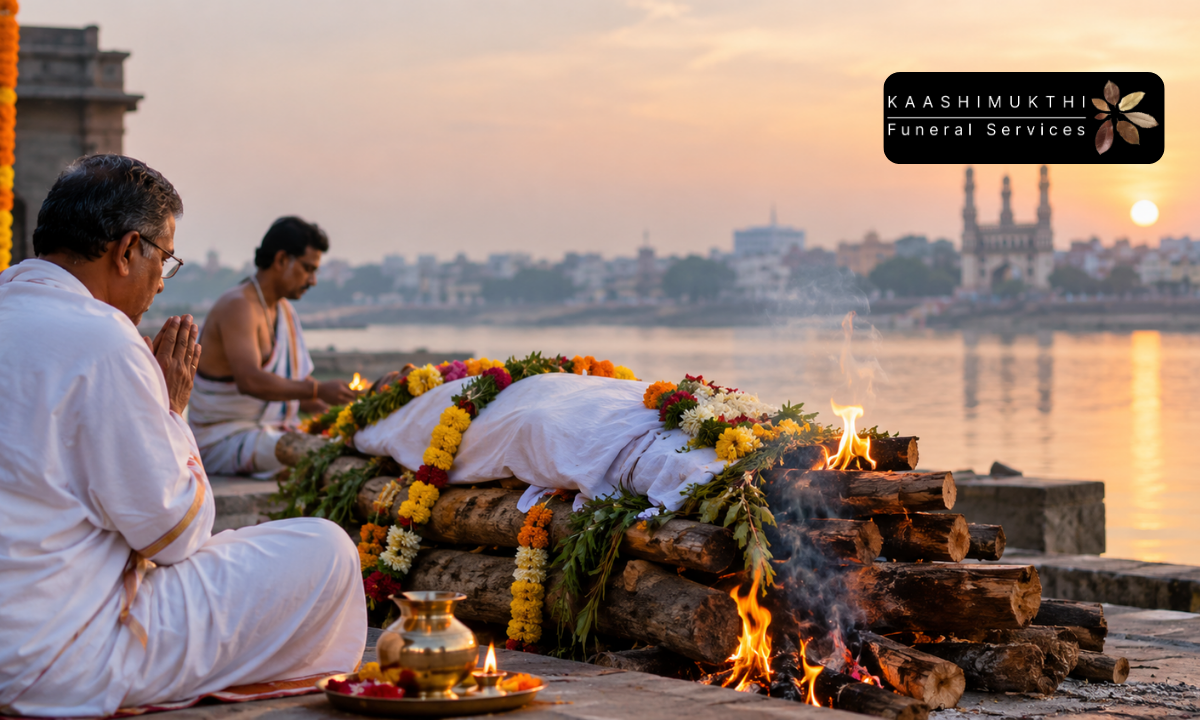
When a loved one passes away, the family has to deal with grief as well as many practical responsibilities. For Hindu families, there are several rituals and arrangements involved in the final journey of the deceased.
If you are searching for Hindu last rites services in Hyderabad, you may be wondering what needs to be arranged, what happens during the Antim Sanskar, which items are required, whether a priest is needed, how the cremation is arranged and what happens after the cremation.
The process can feel confusing, especially when everything has to be arranged within a short time.
This guide explains the main Hindu last rites and the practical arrangements families may need to make in Hyderabad.
What Are Hindu Last Rites?
Hindu last rites are traditionally known as Antim Sanskar or Antyeshti.
They are the final religious rites performed for a person after death. The exact rituals can vary depending on the family’s traditions, community, region and religious practices.
For many Hindu families, cremation is an important part of the final rites.
However, there is no single set of rituals followed by every Hindu family. Customs can be different from one family to another.
This is why it is important to tell the priest or funeral service provider about your family’s traditions before the arrangements are made.
What Needs to Be Arranged for Hindu Last Rites in Hyderabad?
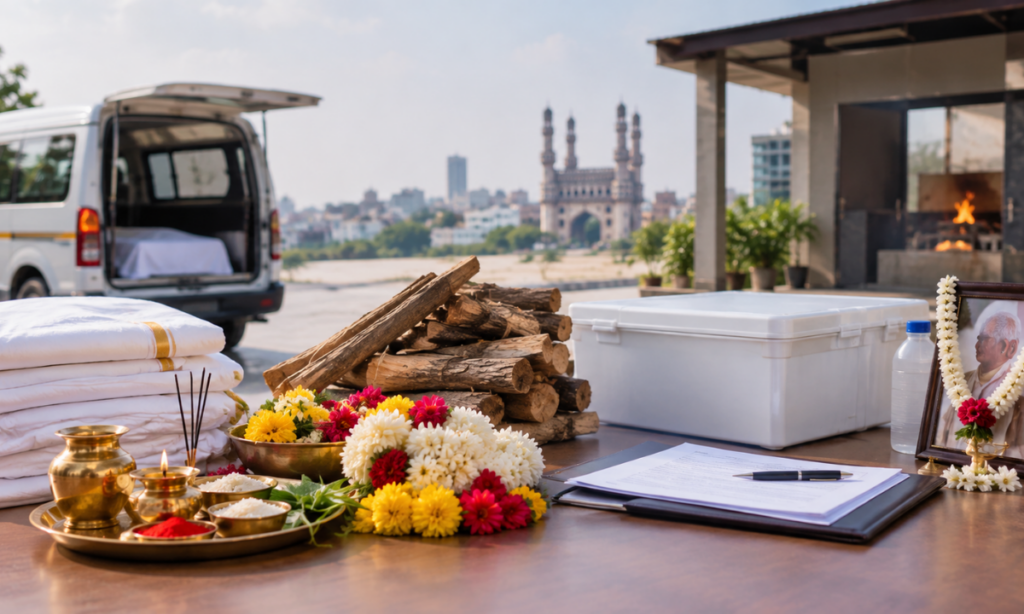
There are both religious and practical arrangements to take care of.
Depending on the family’s requirements, these may include:
- Transportation of the deceased
- Cremation ground or crematorium slot
- Priest or Pandit
- Antim Sanskar Samagri
- Wood for a traditional cremation
- Electric cremation arrangements
- Flowers and garlands
- Funeral clothing
- Freezer box if the funeral is delayed
- Required documents
- Death certificate formalities
- Post-cremation rituals
- Ash collection and immersion arrangements
Kaashimukthi’s Hyderabad funeral services currently include Antim Sanskar Samagri, priests and Pandits, wood and electric cremation options, transportation, freezer boxes, crematorium slot booking and post-cremation ritual arrangements.
Hindu Last Rites: Step-by-Step Process
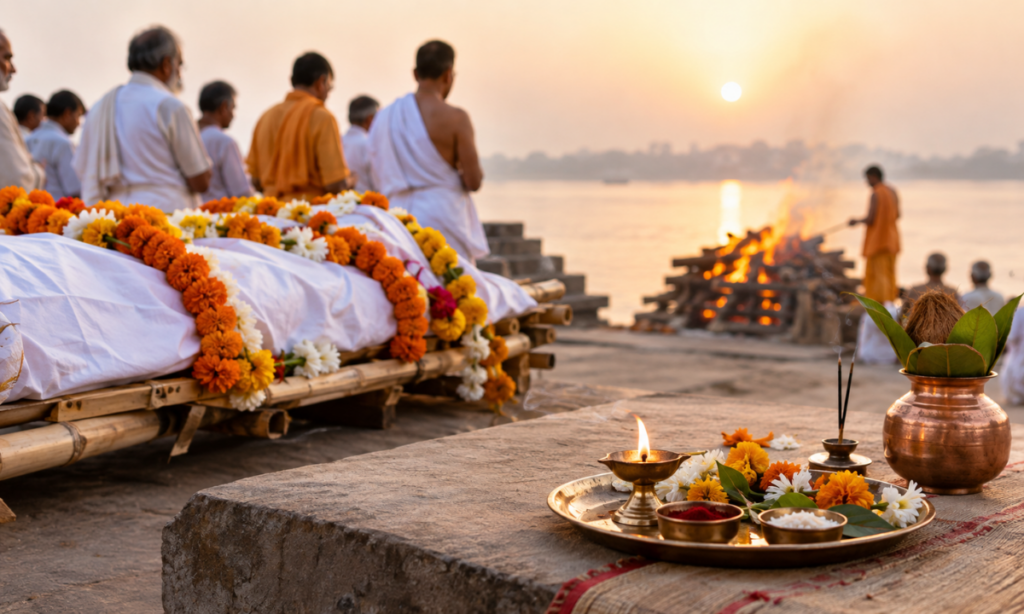
The exact sequence can vary according to family tradition. But a typical Hindu funeral may involve several stages.
1. Death Confirmation and Documentation
The first step is completing the required medical and legal formalities.
If the death occurs at home, the applicable medical documentation needs to be completed.
For a hospital death, the hospital generally provides the required death-related documents.
Kaashimukthi’s Hyderabad service page lists different documentation requirements for natural deaths at home, hospital deaths and untimely or unnatural deaths.
Families should confirm the current requirements for their particular situation before making transportation or cremation arrangements.
2. Preparing the Deceased
The deceased is traditionally prepared for the final rites.
Depending on the family’s customs, this may involve bathing or cleaning the body, dressing the deceased in appropriate clothing and placing flowers or other traditional items.
The exact practices can vary.
Some families may have specific traditions that have been followed by their parents or grandparents. Those preferences should be communicated clearly to the priest and funeral service provider.
3. Arranging the Antim Sanskar Samagri
The family may need several items for the final rites.
The exact list varies, but it can include religious and cremation-related materials.
A funeral service provider may be able to arrange the required Antim Sanskar Samagri so the family does not have to search for each item separately.
Kaashimukthi specifically lists complete arrangements for Antim Sanskar Samagri among its Hyderabad funeral services.
4. Arranging a Priest or Pandit
A priest or Pandit may guide the family through the religious rituals.
This can be particularly helpful when family members are unfamiliar with the traditional procedures.
Different communities may follow different rituals, so the family should explain its customs and preferences to the priest before the ceremony.
Kaashimukthi states that it provides priests, Pandits and guidance on traditions and practices as part of its funeral services.
5. Arranging Transportation to the Cremation Ground
The deceased may need to be transported from the home or hospital to the cremation ground.
A hearse van, ambulance van or mortuary vehicle may be used depending on the circumstances.
The family may also choose to have the vehicle decorated according to their traditions.
Kaashimukthi provides within-city dead-body transportation using ambulance, hearse and mortuary vans and can arrange vehicle decoration where required.
When arranging transportation, keep the following details ready:
- Pickup location
- Cremation ground
- Preferred timing
- Contact person’s phone number
- Any special transportation requirement
6. Booking a Cremation Ground
The cremation ground needs to be selected and, where applicable, a slot needs to be arranged.
Hyderabad has cremation facilities in different parts of the city, so families may choose based on location, availability, family preference and the type of cremation available.
Kaashimukthi states that it can assist with arrangements and booking of slots at crematoriums or ghats.
Before leaving for the cremation ground, confirm the timing and arrangements to avoid unnecessary waiting.
Wood Cremation vs Electric Cremation
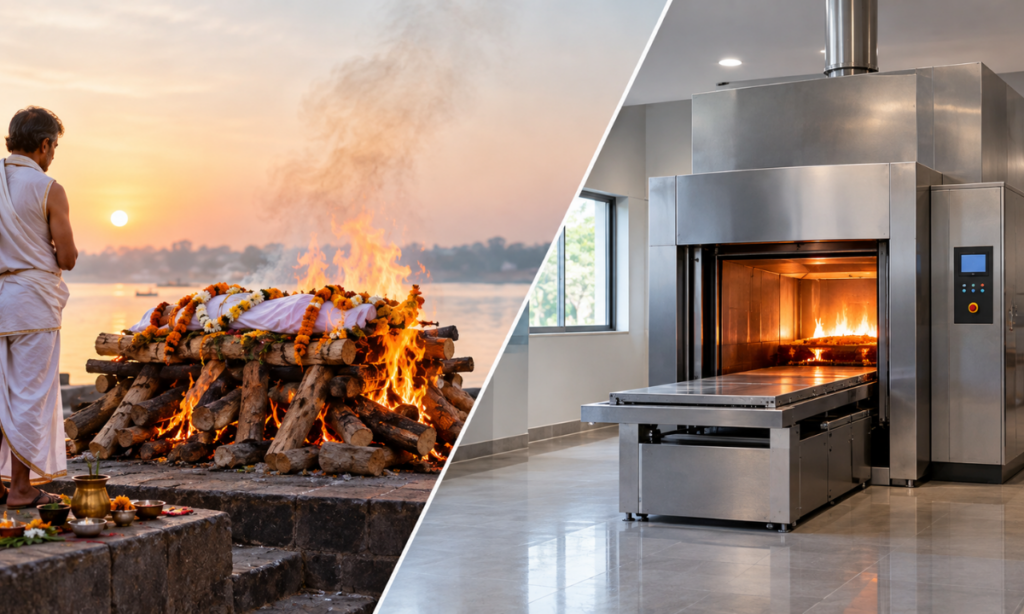
Hindu families may have a choice between traditional wood cremation and electric cremation depending on the facility and family preference.
Wood Cremation
Traditional wood cremation uses a funeral pyre.
Some families prefer this method because it follows the customs they have traditionally observed.
Electric Cremation
Electric cremation uses an electric cremation chamber.
It may be preferred by some families because the process can be different from a traditional wood pyre.
The choice depends on the family, religious customs, availability and crematorium facilities.
Kaashimukthi’s Hyderabad cremation service page lists both wood-pyre and electric cremation options.
7. Performing the Antim Sanskar
Once the deceased reaches the cremation ground, the priest guides the family through the required rituals.
The exact rituals depend on the family’s tradition.
The ceremony may involve prayers, offerings and other religious practices before the cremation.
The Karta, traditionally the person responsible for performing the principal funeral rites, may have a specific role depending on the family’s customs.
Because practices differ, it is better to follow the guidance of the family’s priest rather than assume that every Hindu funeral follows exactly the same sequence.
8. Cremation
After the required rituals are completed, the cremation takes place.
For a traditional cremation, the family and priest follow the customary procedures associated with the funeral pyre.
For electric cremation, the body is taken to the electric cremation chamber.
The family can discuss the preferred method with the cremation facility or funeral service provider beforehand.
This is also a good time to make sure the required documentation and crematorium arrangements are already completed.
What Happens After the Cremation?
The Hindu funeral process does not necessarily end with cremation.
Many families perform additional rituals after the cremation.
These can include:
- Collection of ashes
- Asthi-related rituals
- Immersion of ashes
- 12th-day rituals
- 13th-day rituals
- Shraadh
- Monthly rituals
- Other family-specific ceremonies
The exact practices vary considerably.
Kaashimukthi’s Hyderabad services include arrangements for Shraadh, 12-day, 13-day and monthly rites, as well as assistance with post-cremation rituals such as ash immersion.
What Are 12th-Day and 13th-Day Rituals?
Many Hindu families perform additional rituals after the cremation, commonly around the 12th or 13th day.
These rituals are intended to mark important stages in the traditional mourning and remembrance process.
However, the exact ceremony can differ depending on the family, community and regional tradition.
Some families may also perform Shraadh or other remembrance rituals at later intervals.
If you are unsure about what your family traditionally follows, speak with a knowledgeable priest from your community.
What If Relatives Are Coming From Another City?
Sometimes close family members cannot reach Hyderabad immediately.
They may be travelling from Bengaluru, Chennai, Mumbai, Delhi or another city.
In such situations, the family may need to plan the funeral timing carefully.
If the funeral is delayed, a freezer box may be considered for temporary preservation, depending on the circumstances.
Kaashimukthi offers freezer-box arrangements in Hyderabad and describes them as an option for preserving the body or remains overnight.
The family should discuss the expected delay with the funeral service provider and understand which preservation option is appropriate.
What If the Funeral Needs to Be Arranged Quickly?
Sometimes families need to organize the entire funeral within a few hours.
In that situation, trying to arrange every service separately can become difficult.
A funeral service provider can potentially coordinate several requirements together, such as:
- Transportation
- Cremation-ground slot
- Priest
- Antim Sanskar Samagri
- Freezer box
- Cremation arrangements
- Documentation guidance
- Post-cremation rituals
Kaashimukthi offers these types of arrangements as part of its Hyderabad funeral services.
For urgent assistance, contact Kaashimukthi at +91 99012 24122 and provide the current location, destination and required timing.
What Documents Are Required for Hindu Last Rites?
The documents depend on where and how the death occurred.
Natural death at home
The applicable medical documentation needs to be completed by an authorized doctor.
Death in a hospital
The hospital generally provides the relevant death summary or documentation.
Untimely or unnatural death
Additional police and post-mortem formalities may apply.
Kaashimukthi’s Hyderabad cremation page specifically lists Form 4A for certain natural deaths at a residence, Form 4 or a death summary for hospital deaths, and post-mortem summary and police no-objection documentation for certain untimely or unnatural deaths.
Because documentation requirements can depend on the circumstances, confirm the current requirements before moving the deceased.
Can Hindu Last Rites Be Arranged Without the Family Knowing Every Ritual?
Yes, families do not necessarily need to know every step themselves.
This is one reason many families choose to have a priest or funeral service provider guide them.
A priest can explain the religious rituals, while the funeral service team can take care of practical arrangements such as transportation, cremation booking and funeral materials.
Kaashimukthi states that its priests and Pandits provide guidance on traditions and practices.
What Does Hindu Last Rites Service Include?
There is no universal package that includes everything for every family.
The services depend on what the family needs.
A Hindu last rites service may include:
- Antim Sanskar Samagri
- Priest or Pandit
- Dead-body transportation
- Hearse or mortuary van
- Vehicle decoration
- Cremation-ground booking
- Wood cremation
- Electric cremation
- Freezer box
- Documentation assistance
- Post-cremation rituals
- Ash immersion arrangements
Kaashimukthi’s Hyderabad services cover many of these requirements and also offer funeral arrangements in other pilgrimage destinations according to family requirements.
How Much Do Hindu Last Rites Cost in Hyderabad?
There is no single fixed price for Hindu last rites.
The total cost depends on the services selected.
For example, the cost can vary depending on:
- Transportation distance
- Cremation method
- Crematorium charges
- Priest services
- Antim Sanskar Samagri
- Flowers and decorations
- Freezer box requirement
- Additional rituals
- Post-cremation arrangements
If you are booking a complete funeral package, ask for a clear breakdown of what is included.
This helps avoid confusion about additional charges.
For a current quotation from Kaashimukthi, call +91 99012 24122 and explain what arrangements you require.
Why Choose Kaashimukthi for Hindu Last Rites in Hyderabad?
Arranging Hindu last rites involves both religious and practical responsibilities.
Kaashimukthi provides support for these arrangements in Hyderabad, including priests, Antim Sanskar Samagri, cremation coordination, transportation, freezer boxes, documentation assistance and post-cremation rituals.
This can be helpful when the family needs to coordinate several services quickly.
The family can explain its traditions and requirements, and the service team can help organize the practical side of the funeral.
Hindu Last Rites Checklist
Before leaving for the cremation ground, check that the important arrangements are ready.
Documents
- Death-related documents
- Identification documents
- Hospital documents, if applicable
- Required police or post-mortem documents, where applicable
Funeral arrangements
- Transportation arranged
- Cremation ground confirmed
- Slot confirmed where required
- Priest arranged
- Antim Sanskar Samagri arranged
- Flowers and other items arranged
- Cremation method confirmed
After cremation
- Ash collection arrangements
- Asthi-related rituals
- Ash immersion plans
- 12th or 13th-day rituals
- Shraadh or other family-specific rituals
Frequently Asked Questions
What are Hindu last rites?
Hindu last rites, or Antim Sanskar, are the traditional final religious rites performed after a person’s death. The exact rituals vary according to family, community and regional traditions.
What is included in Hindu last rites services in Hyderabad?
Depending on the provider and family requirements, services may include a priest, Antim Sanskar Samagri, transportation, cremation-ground booking, wood or electric cremation, freezer box and post-cremation arrangements.
Can Kaashimukthi arrange a priest for Hindu last rites?
Yes. Kaashimukthi lists priests and Pandits among its Hyderabad funeral-service offerings.
Can Kaashimukthi arrange Antim Sanskar Samagri?
Yes. Kaashimukthi lists complete arrangements for Antim Sanskar Samagri as part of its Hyderabad funeral services.
Can I choose wood or electric cremation?
Kaashimukthi’s Hyderabad service page lists both wood-pyre and electric cremation options. Availability can depend on the crematorium.
Can Kaashimukthi arrange the cremation-ground slot?
Kaashimukthi states that it assists with arrangements and booking of slots at crematoriums or ghats.
What happens after the cremation?
Depending on the family’s traditions, post-cremation arrangements may include ash collection, immersion, Shraadh, 12th-day or 13th-day rituals and other remembrance ceremonies.
Can Hindu last rites be arranged urgently?
Kaashimukthi provides 24×7 funeral assistance in Hyderabad. For an urgent requirement, call +91 99012 24122 and explain the current location, destination and arrangements needed.
Need Hindu Last Rites Services in Hyderabad?
If you need help arranging Hindu last rites in Hyderabad, Kaashimukthi can assist with the practical and religious arrangements based on your family’s requirements.
The team can help coordinate:
- Priest or Pandit
- Antim Sanskar Samagri
- Dead-body transportation
- Cremation-ground arrangements
- Wood or electric cremation
- Freezer box
- Documentation guidance
- Post-cremation rituals
- Ash immersion arrangements
Contact Kaashimukthi
Phone: +91 99012 24122
When you call, keep these details ready:
1. Current location of the deceased
2. Whether the death occurred at home or in a hospital
3. Preferred cremation location, if any
4. Preferred cremation method, if known
5. Required funeral timing
6. Religious or family-specific requirements
This helps the team understand the situation and explain the next steps.
The family’s traditions should always remain central to the final rites. A funeral service provider’s role is to help with the practical arrangements and provide support when the family needs it.

Madhu is an Entrepreneur, a Mentor, a Writer and an Aspiring Car Race Driver. He is Deeply passionate about leveraging Technology and Human Centred Design to make complex care and End of Life Planning easier. With the ultimate aim of Improving the quality of Life in the Twilight years. Madhu is highly educated and Alumni of IIM-Bangalore, Sikkim Manipal University and Bangalore University besides a Rich Industry Experience in the field of Product Management, Design, Supply chain, Finance, Commercial Management and Funeral Services.