
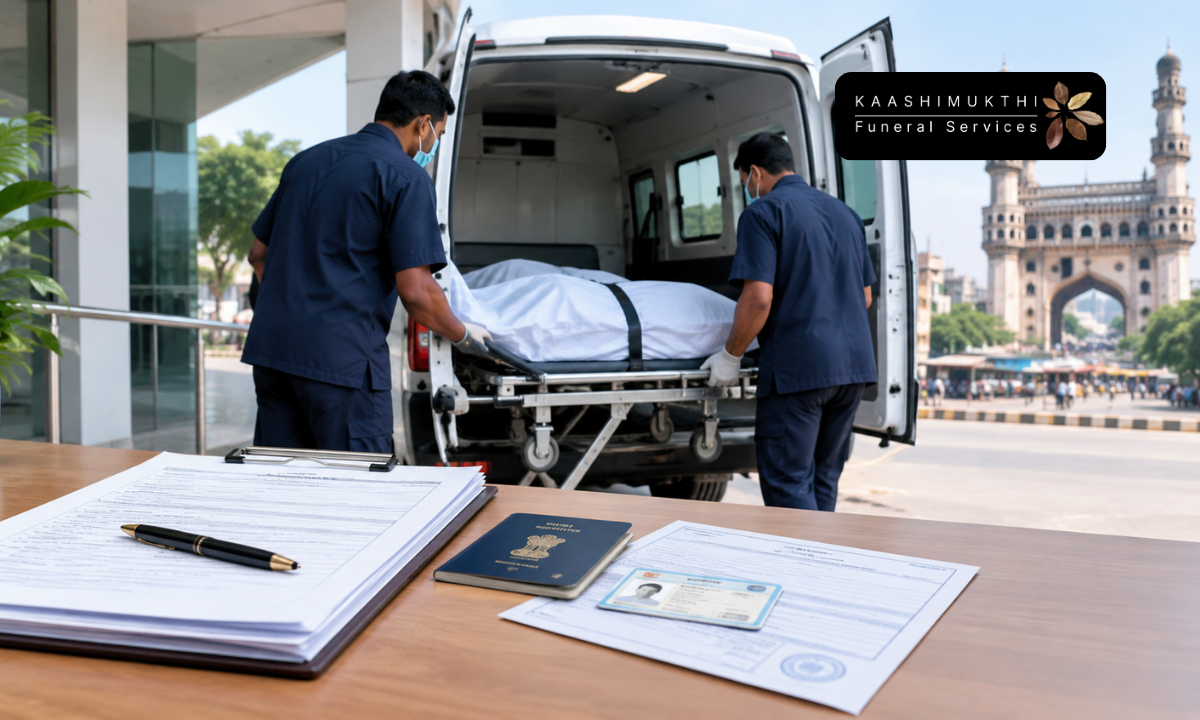
When a loved one passes away in Hyderabad and the family needs to arrange transportation to another city or country, collecting the required documents is an important first step. The paperwork may vary depending on where the death occurred, the circumstances of death, the destination and whether transportation is arranged by road or air.
For families arranging transportation of a loved one from Hyderabad, the first step is to collect the medical and official documents issued by the hospital, doctor or relevant authorities. Additional certificates may be required for air cargo and international repatriation.
Quick Answer: Which Documents Are Required?
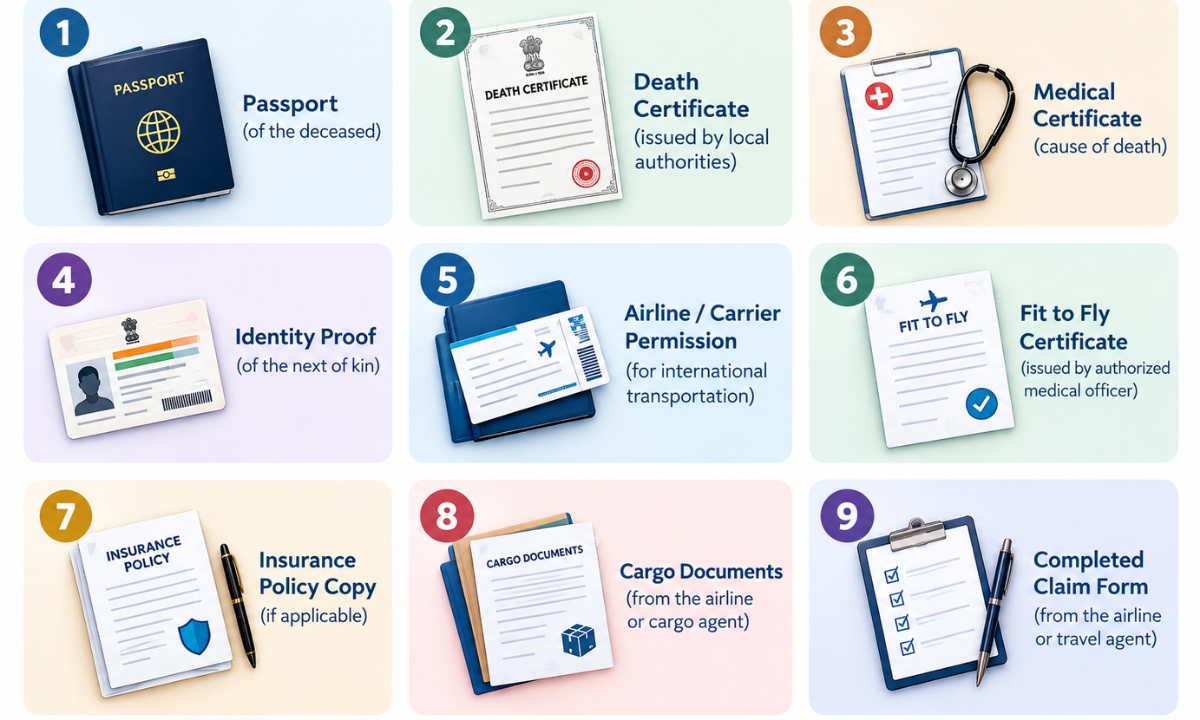
The documents commonly requested for transporting a deceased person include:
- Death certificate or accepted medical documentation confirming the death
- Hospital death summary or applicable medical form
- Government-issued identity document of the deceased, where requested
- Police clearance, post-mortem records or release documents, where applicable
- Embalming certificate for transportation in a coffin, where required
- Coffin or packaging certificate, depending on the route and carrier
- Passport-related and consular documents, including passport cancellation where required for the specific international case
- Air cargo booking documents and Air Waybill details, where applicable
- Public-health or other official clearance required for the route
Not every journey requires every document on this list. Confirm the exact requirements with the transport provider, airline and relevant authorities before making arrangements.
Table of Contents
- Documents for domestic transportation
- Documents for international repatriation
- Death certificate and medical documentation
- Embalming and coffin or packaging certificates
- Police documentation
- Passport and consular documents
- Air cargo and Air Waybill documents
- Domestic versus international document checklist
- How requirements differ by route
- Frequently asked questions
- Official resources
Why Documentation Is Required
Documentation helps authorities verify the identity of the deceased, confirm the death and its circumstances, and establish whether the proposed transportation meets applicable legal, public-health and carrier requirements.
Depending on the journey, documents may be checked by hospitals, police authorities, transport providers, airline cargo teams, airport health officials, consulates and destination authorities. Missing or inconsistent paperwork can delay transportation or prevent a shipment from being accepted.
For this reason, families should obtain a route-specific checklist rather than rely on a general list of documents.
Documents for Domestic Transportation
For transportation from Hyderabad to another location within India, the paperwork depends on the circumstances of death and the chosen transport method.
Kaashimukthi’s Hyderabad service page lists the following documents as examples that may be relevant to arranging transportation. They are not a universal legal checklist; the correct documents depend on the circumstances and the authorities involved:
- Government-issued identity document of the deceased, where requested: Confirm which identification the provider or relevant authority accepts.
- Form 4A: This may be relevant to a natural death at home, where applicable. Confirm the correct form and issuing medical professional with the relevant authority.
- Form 4 or hospital death documentation: The applicable medical record depends on the circumstances and the procedure followed by the hospital.
- Police clearance or NOC and post-mortem documentation: These may be required in accidental, unnatural, suspicious or investigated deaths, or where the carrier or authorities specify them.
The exact form and release documents depend on the circumstances and the authorities involved. Ask the hospital, doctor or relevant authority which documents must be issued before the deceased can be moved.
Domestic transportation by road
For road transportation between Hyderabad and another Indian city, the transport provider may request medical documents, identification and any police or release paperwork applicable to the case.
Before departure, confirm:
- Which original documents and copies must accompany the deceased
- Whether the hospital or police must issue a release or clearance
- Whether any additional documents are needed for the destination
- What arrangements are required for safe transportation over the distance
Read more about dead body transportation in Hyderabad.
Domestic transportation by air
Air transportation may require additional documentation and advance coordination with the airline’s cargo department. Requirements can differ between airlines and routes.
Air India’s published human-remains cargo guidance lists documents such as death documentation, a cremation certificate for ashes, an embalming certificate for coffined remains and applicable supporting documents. Confirm the current requirements directly with the airline before making arrangements.
Documents for International Repatriation
International repatriation involves crossing national borders and may require documents from the country of death, the relevant embassy or consulate, the airline cargo provider and the destination authorities.
Depending on the route and circumstances, the paperwork may include:
- Death certificate and medical documentation
- Embalming certificate for transportation in a coffin, where required
- Coffin or packaging certificate, where required
- Police clearance or post-mortem documents, where applicable
- Passport-related documents, including cancellation where required
- Consular certificate or No Objection Certificate (NOC), where required
- Public-health, quarantine or import clearance documents, where applicable
- Air cargo booking documents and Air Waybill details
For human remains arriving in India, the Ministry of Health and Family Welfare’s e-Clearance for Afterlife Remains (eCARe) portal lists documents including an embalming certificate, death certificate, NOC from the Indian Embassy, cancelled passport and packaging certificate. Additional documents may be requested depending on the case.
These requirements concern clearance for remains arriving in India. For transportation from India to another country, confirm the applicable procedures with the airline, destination authorities and relevant embassy or consulate.
Families arranging international transportation can also read Repatriation of Mortal Remains: Process and Challenges.
Death Certificate and Medical Documentation
The death certificate and related medical documents are central to many transportation arrangements. The issuing authority and type of document depend on where and how the death occurred.
Death in a hospital
The hospital may provide a death summary or other medical documentation. Ask the hospital which records are required for the next steps and which authority issues the official death certificate.
Natural death at home
Where a death occurs at home, the family should contact the appropriate medical professional and local authority to establish which medical form and registration process apply. Form 4A may be relevant in applicable circumstances, but the correct form and issuing procedure should be confirmed.
Accidental, unnatural or investigated death
If the death is accidental, unnatural, suspicious or under investigation, police involvement and post-mortem documentation may be required. Do not move the deceased until the competent authorities have authorised release.
Check the details carefully
Before submitting documents, check that the deceased’s name and identifying details are consistent across the records. Confirm whether the receiving authority requires originals, certified copies, translations or a particular format.
Embalming and Coffin or Packaging Certificates
For international transportation of a deceased person in a coffin, airlines and destination authorities may require evidence of embalming and appropriate preparation or packaging.
Embalming certificate
An embalming certificate confirms that embalming has been carried out by the relevant provider. Air India’s published human-remains cargo guidance lists an embalming certificate for a body transported in a coffin.
Whether embalming is required, and which certificate format is accepted, depends on the airline, destination and applicable public-health rules. Confirm the requirements before arranging the procedure.
Coffin or packaging certificate
A coffin or packaging certificate may be requested to confirm that the deceased has been prepared and enclosed according to the applicable requirements. The exact name and format of the certificate can vary.
For international repatriation, ask the airline or cargo handler whether it requires a specific certificate, a sealing document, a packaging declaration or any additional endorsement.
Do not assume that one certificate automatically satisfies every airline or destination authority.
Police Documentation for Accidental or Unnatural Deaths
Police documentation may be required when the death involves an accident, an unnatural cause, a suspicious circumstance or an ongoing investigation.
Depending on the case, the authorities may issue or request:
- Police clearance or NOC
- Post-mortem report or summary
- Investigation-related release documents
- Other authorisations required before transportation
The exact documents depend on the circumstances and the instructions of the authorities handling the case.
Important: Do not assume that police documentation is unnecessary simply because transportation is domestic. Air India’s published guidance lists police documentation among documents that may be required for human-remains cargo. Confirm the current requirement with the airline and the authorities handling the case.
If the death is under investigation, wait for the competent authorities to authorise release before arranging transportation.
Passport, Visa and Consular Documents for International Cases
International repatriation may require identity and consular documents to establish the deceased’s nationality and authorise the movement of the remains.
Depending on the country and case, these can include:
- The deceased’s passport or documentation for passport cancellation, where required
- A consular certificate or NOC
- Documents issued by the embassy or consulate of the deceased’s nationality
- An authorisation or consent document from the next of kin or legal heir, where required
- Other documents requested by the destination or transit authorities
A visa is not automatically required for the deceased in every repatriation case. Passport-related procedures and consular requirements vary by nationality, country and circumstances. Family members or representatives travelling separately should check their own travel-document requirements.
Ask the relevant embassy or consulate and the cargo provider to confirm the applicable documents for the exact route.
Airline Cargo and Air Waybill Documents
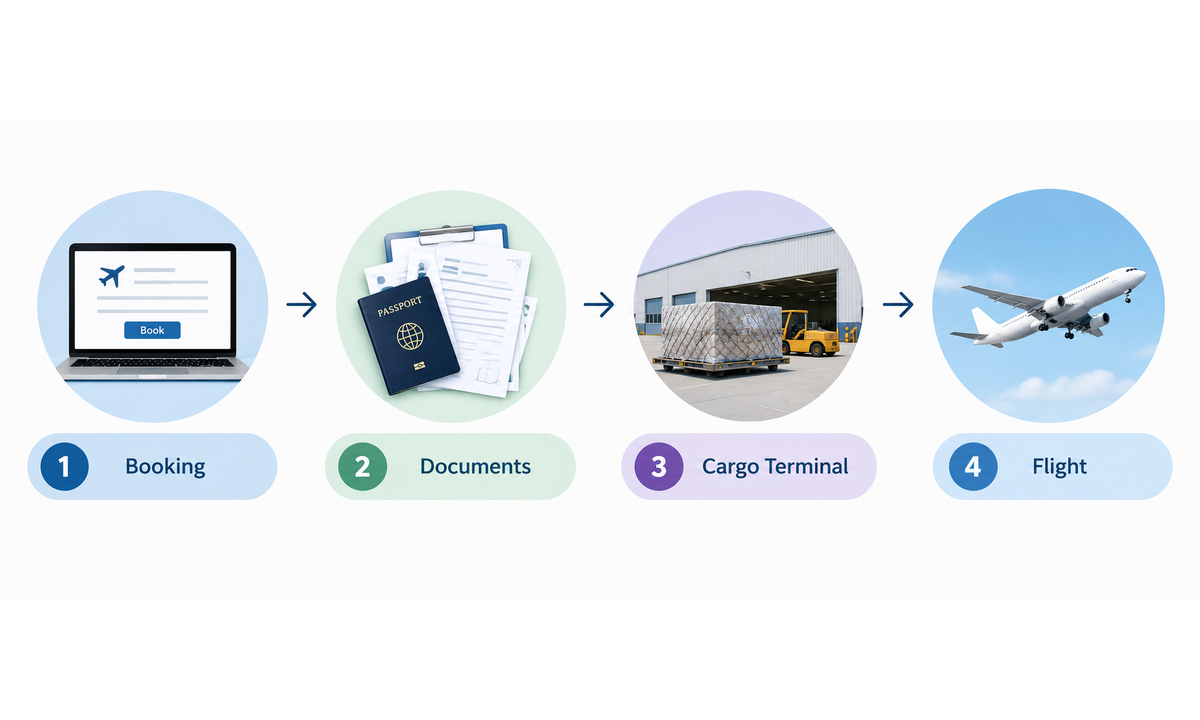
When a deceased person is transported by air as cargo, the airline or cargo handler will explain the booking and shipment documentation required for acceptance.
An Air Waybill (AWB) is a transport document used for an air cargo shipment. It records shipment details and forms part of the cargo process. It does not replace the death certificate, embalming certificate or other official clearances.
Depending on the journey, the cargo team may ask for:
- Completed cargo booking and shipment information
- Death and medical documentation
- Embalming and coffin or packaging certificates
- Police or consular clearances, where required
- Shipper and consignee details
- Additional documents required by airport health officials or destination authorities
Air India advises customers to make advance arrangements for human-remains cargo and contact its cargo team for current requirements. Consult its official human-remains cargo guidance.
Confirm the required paperwork and booking process before the coffin is delivered to the cargo terminal. Documents in a language other than English may need a complete and accurate English translation, depending on the carrier and authority.
Documents Required: Domestic vs International Transportation
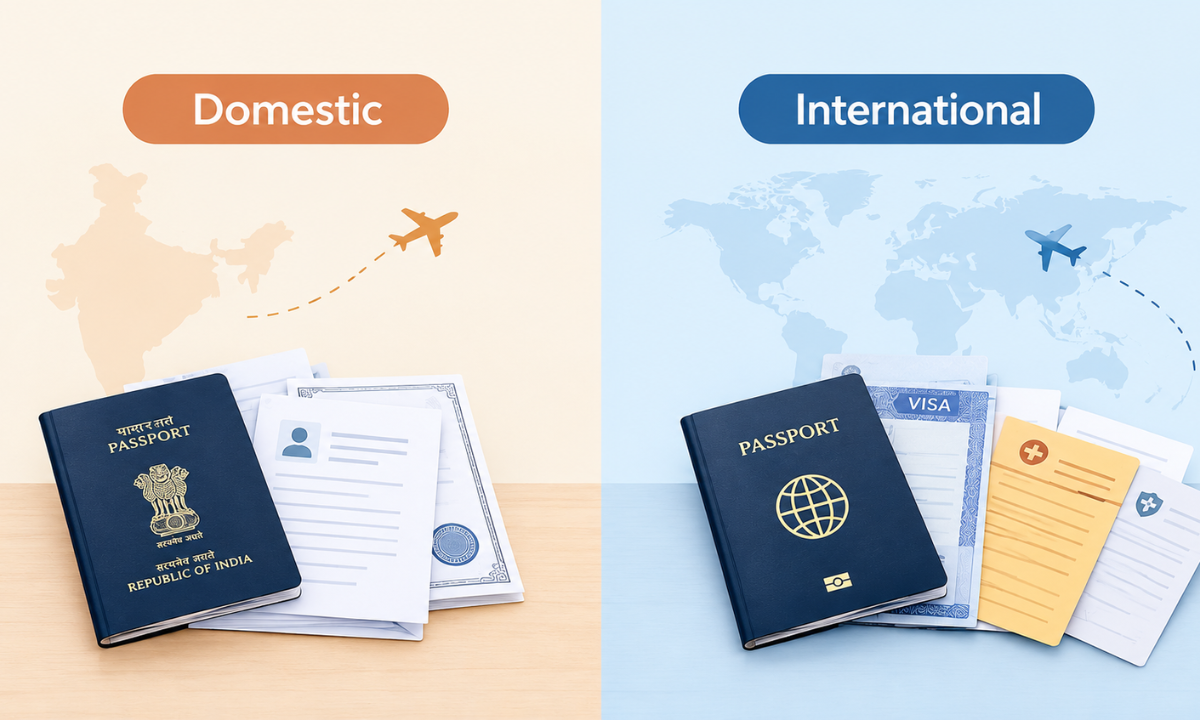
Important: This table is a planning guide, not a legal checklist. Airlines, hospitals, police authorities, airport health officials, embassies, consulates and destination authorities may require different documents depending on the case and route.
| Document | Domestic transportation | International repatriation | Notes |
| Death certificate or medical report | Commonly required; exact document varies | Commonly required | Confirm the accepted document and issuing authority |
| Hospital death summary or applicable medical form | May be required | May be required | Depends on where the death occurred |
| Embalming certificate | Route- and carrier-dependent | Often required for a body transported in a coffin | Confirm airline and destination rules |
| Coffin or packaging certificate | Route-dependent | May be required | Ask the airline or cargo handler for the accepted format |
| Police report, clearance or NOC | If applicable; some carriers may specify it | If applicable; carrier or authorities may specify it | Investigated deaths may require additional documents |
| Post-mortem report or summary | If applicable | If applicable | Depends on the circumstances of death and official instructions |
| Government-issued identity document | Where requested | May be required | Confirm accepted identification |
| Passport-related documents, including cancellation where required | Usually not applicable | May be required | Depends on nationality and route |
| Consular certificate or NOC | Usually not applicable | May be required | Depends on the countries involved |
| Public-health or quarantine clearance | Route-dependent | May be required | Confirm applicable health regulations |
| Air cargo booking documents and Air Waybill | If travelling by air cargo | If travelling by air cargo | Arranged according to the carrier’s process |
Air India’s published requirements provide one carrier-specific example; they should not be treated as the rules for every airline. Check the official Air India human-remains cargo guidance before making arrangements.
How Requirements Can Differ by Route
The documents required for transportation from Hyderabad can vary based on several factors.
Destination within India
Road transport and domestic air cargo can have different paperwork requirements. The destination, distance and carrier may affect what is requested.
International destination
The destination country may require consular approval, public-health documentation, specific coffin preparation or other clearances. Transit countries may also have requirements.
Cause of death
Natural deaths, accidental deaths and cases under investigation may involve different medical and police documentation.
Air cargo or road transportation
Air cargo usually involves advance booking and carrier-specific acceptance procedures. Road transportation may require a different set of documents, depending on the circumstances and destination.
Nationality of the deceased
For international cases, the deceased’s nationality and the country where the death occurred can affect passport, consular and repatriation procedures.
Because these factors can change the required paperwork, obtain confirmation for the exact route before finalising the arrangements.
Frequently Asked Questions
1. What documents are required for dead body transportation from Hyderabad?
Commonly requested documents include the death certificate or medical documentation, identification, and any applicable hospital, police or release records. Air transportation and international repatriation may require additional documents such as an embalming certificate, coffin or packaging certificate, passport-related documents and consular clearance.
2. Is a death certificate mandatory for transporting a deceased person?
A death certificate or other accepted death-related documentation is commonly required, especially for air cargo and international repatriation. Confirm the accepted document with the transport provider, airline and relevant authorities.
3. Is a police NOC required for domestic transportation?
It depends on the circumstances and the transport provider’s rules. Police documentation may be required for accidental, unnatural or investigated deaths. Air India’s published guidance lists police documentation among documents that may be required for human-remains cargo. Confirm the current requirement with the airline and the authorities handling the case.
4. Is an embalming certificate required for air transportation?
For a deceased person transported in a coffin, an embalming certificate is often required by the airline or destination authorities. The exact requirement depends on the route and carrier. Confirm it before booking.
5. What documents are required for international repatriation?
Depending on the route, these may include a death certificate, medical documents, embalming and coffin or packaging certificates, police clearance where applicable, passport-related documents, consular certificates or NOCs, and public-health clearances. The destination and transit countries may request additional paperwork.
6. Is a passport required for international dead body transportation?
Passport-related documents may be required, including a cancelled passport where applicable. The exact requirement depends on nationality and route. Confirm the instructions with the relevant embassy or consulate and airline.
7. What is an Air Waybill?
An Air Waybill is a transport document used for an air cargo shipment. It records shipment details and forms part of the cargo process. It does not replace official death, medical, police or consular documents.
8. Can transportation be delayed because of missing documents?
Yes. Missing, incomplete or inconsistent documents can delay booking, official clearance or cargo acceptance. Obtain a route-specific checklist before confirming transportation.
9. Can Kaashimukthi help with documentation for transportation from Hyderabad?
Kaashimukthi’s Hyderabad dead body transportation service page lists hospital paperwork, documentation and clearance among its service features. Families can contact the team to discuss the circumstances, route and documents that may need to be checked. Final acceptance and clearance remain subject to the relevant authorities and transport provider.
Get Assistance With Transportation From Hyderabad
Arranging transportation after the loss of a loved one can be difficult, particularly when several documents and authorities are involved. A route-specific checklist can help families understand which paperwork to collect and what needs to be confirmed before transportation is booked.
Kaashimukthi lists transportation support, hospital-paperwork coordination, embalming, air-cargo coordination and international repatriation among its services.
For assistance, contact the team and explain where the death occurred, the intended destination, whether transportation is by road or air, and whether the death is under investigation. This helps establish which requirements need to be checked.
Phone: +91 98458 19660
- Dead Body Transportation in Hyderabad
- Repatriation of Mortal Remains: Process and Challenges
- Contact Kaashimukthi
Official Resources
- Air India Cargo: Human Remains — published carrier guidance on documents and packaging for transporting human remains.
- Ministry of Health and Family Welfare: eCARe — public-health clearance information for human remains arriving in India.
- Ministry of External Affairs: Transfer of Mortal Remains — general information on international repatriation and related documents.
These resources provide guidance for their stated contexts and are not interchangeable. Always verify current requirements with the airline, cargo handler, relevant authorities and destination-country embassy or consulate before arranging transportation. Rules and document requirements can change.

Madhu is an Entrepreneur, a Mentor, a Writer and an Aspiring Car Race Driver. He is Deeply passionate about leveraging Technology and Human Centred Design to make complex care and End of Life Planning easier. With the ultimate aim of Improving the quality of Life in the Twilight years. Madhu is highly educated and Alumni of IIM-Bangalore, Sikkim Manipal University and Bangalore University besides a Rich Industry Experience in the field of Product Management, Design, Supply chain, Finance, Commercial Management and Funeral Services.