
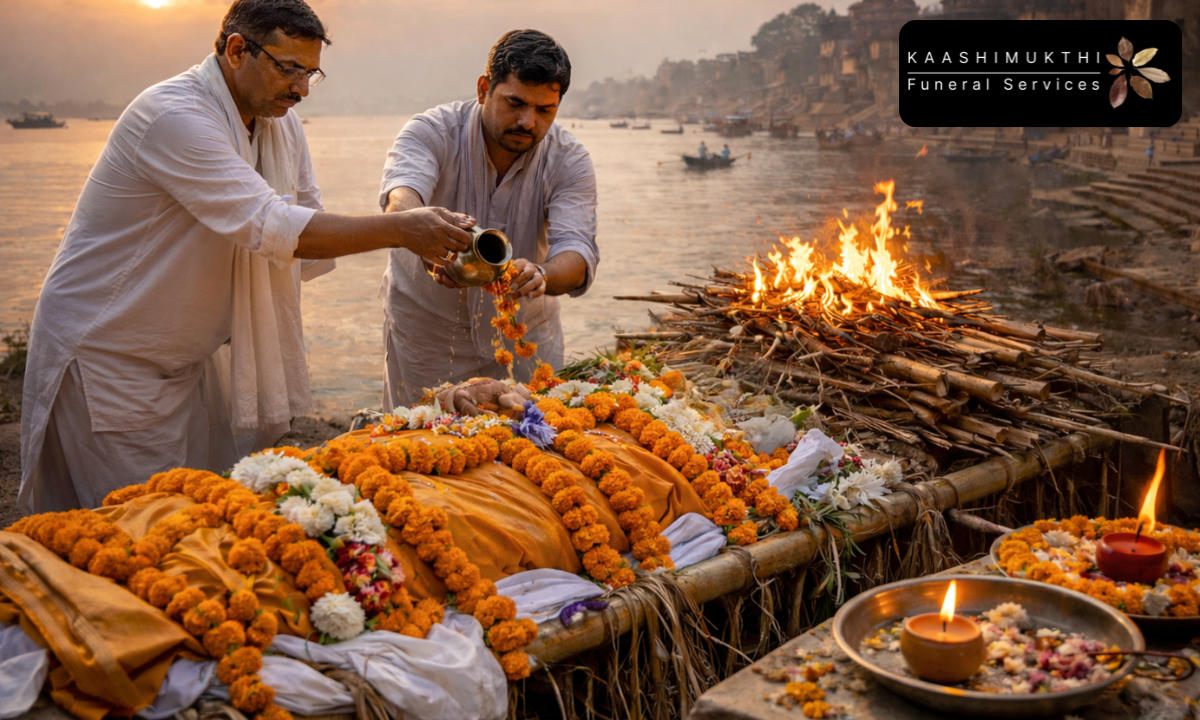
The final farewell to a loved one is one of life’s most emotional moments, often filled with questions, reflection, and the need for spiritual comfort. In Hindu traditional rituals, the final journey is guided by sacred rituals that hold deep meaning and purpose. These time-honored practices are not merely ceremonial; they are designed to support the soul’s peaceful transition while helping families find strength, acceptance, and solace during a difficult time.
When families look for guidance from funeral services in Bangalore, they often want clarity about what the last rites are and how each ritual should be performed properly. These practices, rooted in faith and devotion, are designed to bring dignity to the departed and emotional closure to the living.
In this blog, we gently walk through each step so you understand the spiritual meaning behind every ritual and why it matters.
Let us explore this sacred journey together.
Key Points at a Glance
- Hindu final rites are also known as Antim Sanskar.
- The body is purified and prepared before the final procession.
- The eldest son, or Karta, performs the cremation ritual.
- Pind daan and tarpan help nourish and guide the soul.
- Shradh rituals are performed after cremation for spiritual peace.
- Mourning lasts for 10–13 days in most traditions.
- Rituals help the soul attain peace and move toward moksha.
Understanding Hindu Final Rites
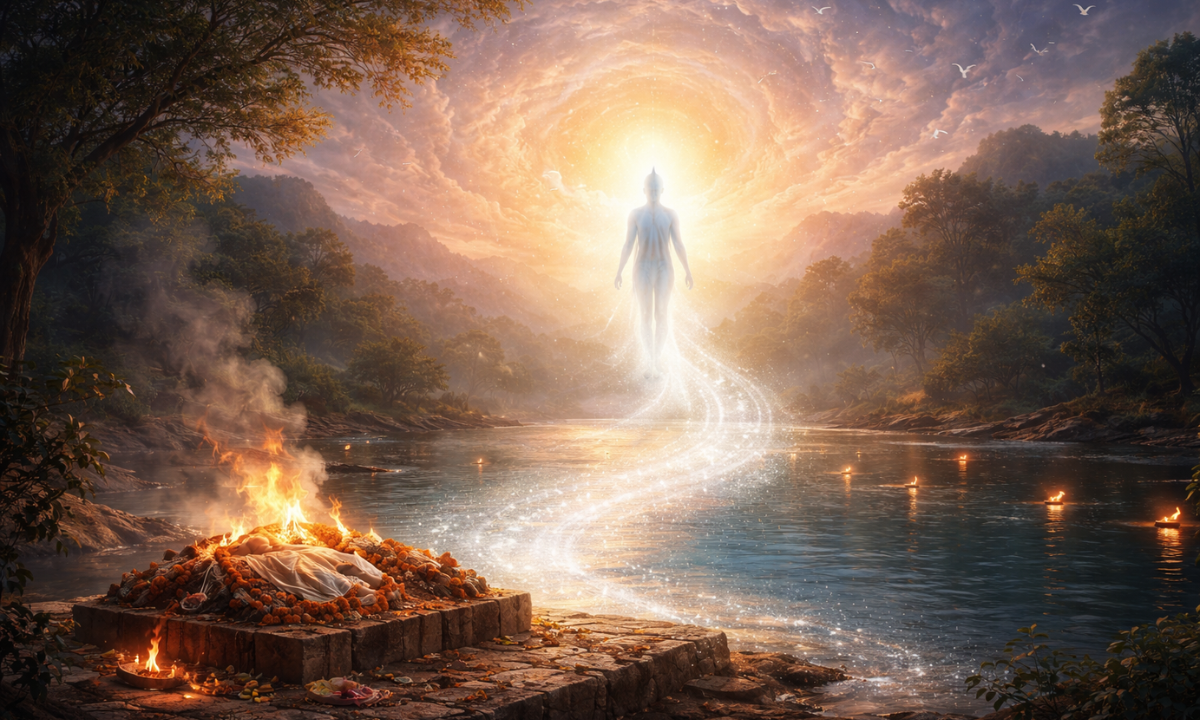
In Hindu tradition, the final rites in Hindu culture are called Antim Sanskar, meaning the last sacred rite. It is one of the sixteen samskaras (life rituals) mentioned in scriptures.
These rituals are usually performed within 24 hours of death. They symbolize purification, detachment, and returning the body to the five natural elements: earth, water, fire, air, and space.
Last rites are spiritual steps that guide the soul toward liberation while allowing the family to express love, gratitude, and farewell.
Preparation of the Body
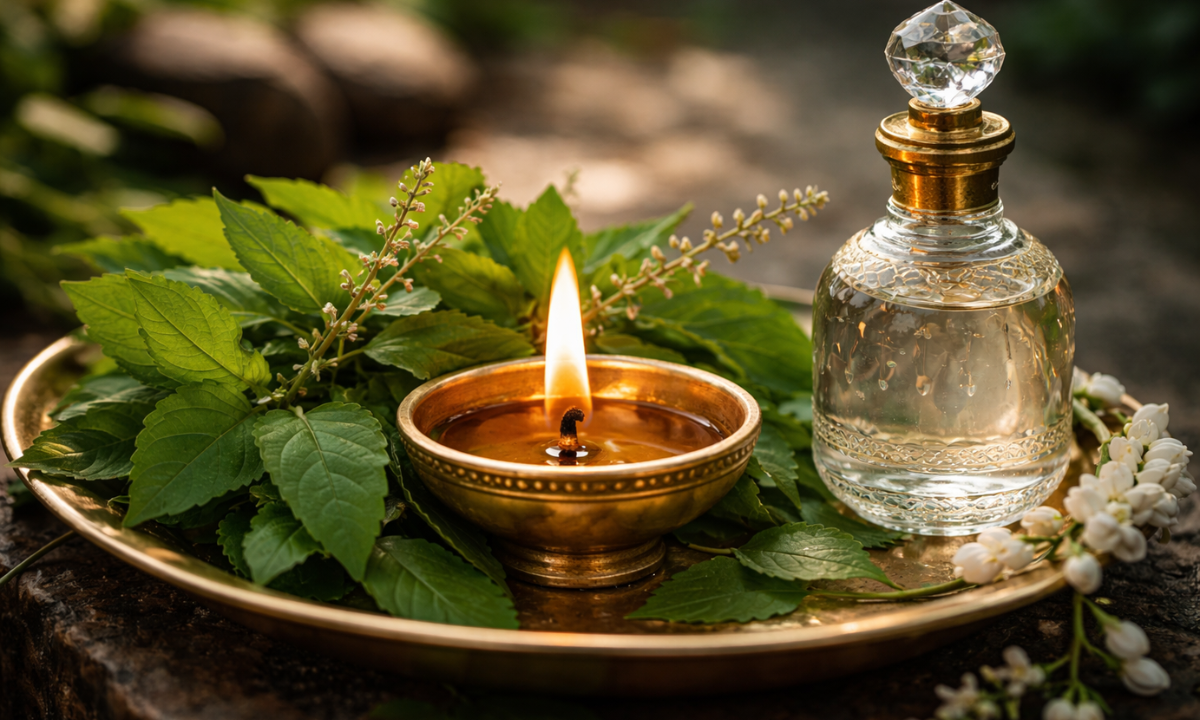
The journey begins with respectful preparation of the body. This stage represents purity and readiness for the soul’s onward path.
| Ritual Step | Meaning and Practice |
|---|---|
| Bathing the Body | Symbolizes purification |
| Dressing in Simple Clothes | White for men/widowers, sometimes red for married women |
| Placing Tulsi or Gangajal | Considered sacred and purifying |
| Tying Big Toes | Keeps the body aligned |
| Lighting a Diya | Guides the soul spiritually |
The head is usually placed facing south, which is considered the direction of Yama, the god of death. Family members gather to offer prayers and chant mantras.
The Final Procession – Antim Yatra
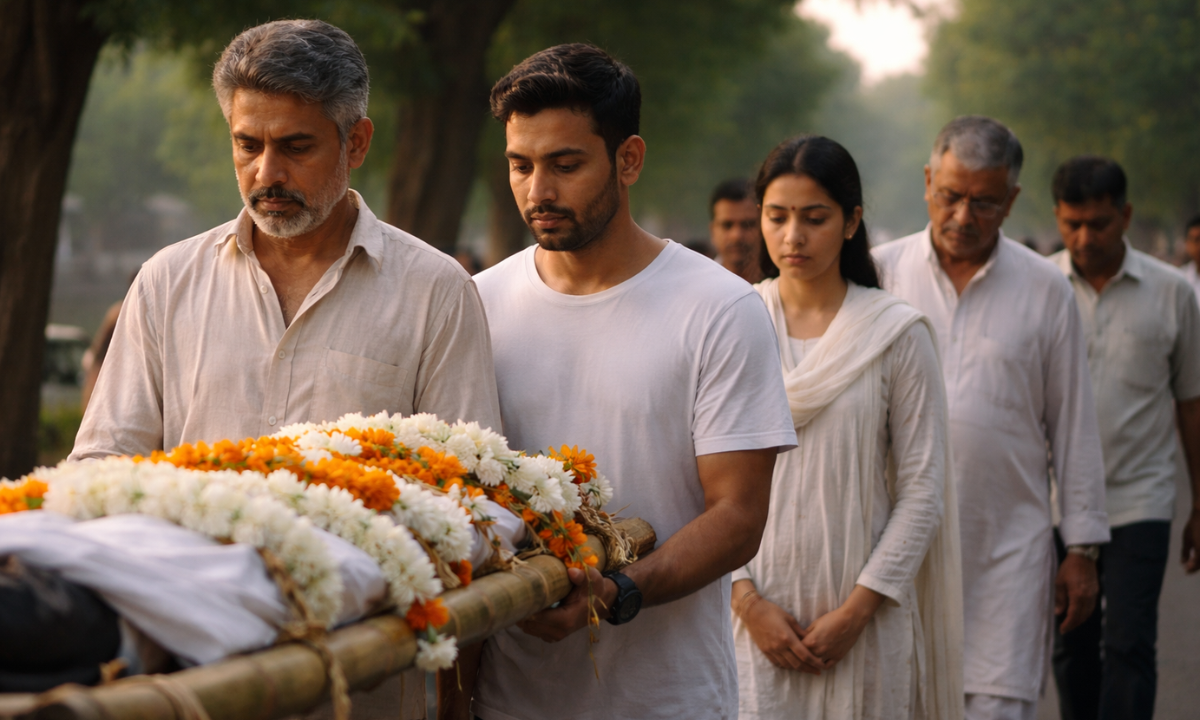
The final journey to the cremation ground is called Antim Yatra. It is a deeply emotional moment for the family. This procession symbolizes the soul’s physical departure from home and its transition toward the spiritual realm.
The body is carried on a bamboo bier to the cremation ground. Mourners chant “Ram Naam Satya Hai”, reminding everyone that truth and divinity are eternal. The rhythmic chanting creates a spiritual atmosphere, helping family members stay strong during this difficult farewell.
Traditionally, male relatives lead the procession, but in modern times, daughters and women also participate actively. Close family members often carry the bier as a final act of love and respect, expressing gratitude and bidding a heartfelt goodbye.
Cremation – The Sacred Dah Sanskar
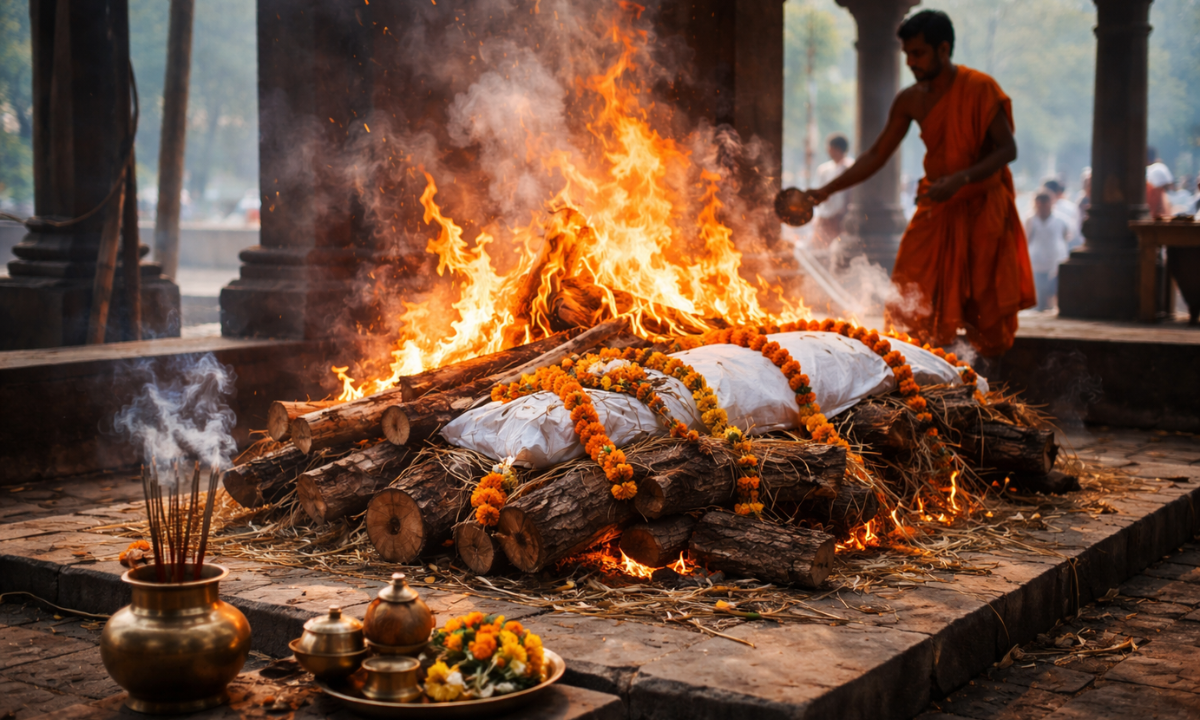
Cremation is known as Dahan Sanskar or Mukhagni. It is considered the most important part of the Hindu final rites.
| Ritual | Significance |
|---|---|
| Mukhagni (Lighting the Pyre) | Usually done by the eldest son or Karta |
| Kapal Kriya | Symbolic release of the soul |
| Offering Prayers | Seeks peace for the departed |
Fire represents purification. Through cremation, the body returns to the natural elements, allowing the soul to continue its journey.
Today, many families choose electric crematoriums for environmental reasons while maintaining the same spiritual rituals.
Those seeking cremation services in Bangalore often opt for facilities that allow both traditional and modern arrangements.
Post-Cremation Rituals
The rituals do not end at cremation. Several important ceremonies follow. These post-cremation practices are performed to ensure the soul’s smooth transition and spiritual peace.
They also help the family gradually move from intense grief toward acceptance and healing. Each ritual carries deep symbolic meaning and strengthens the connection between the living and the departed.
1. Asthi Visarjan
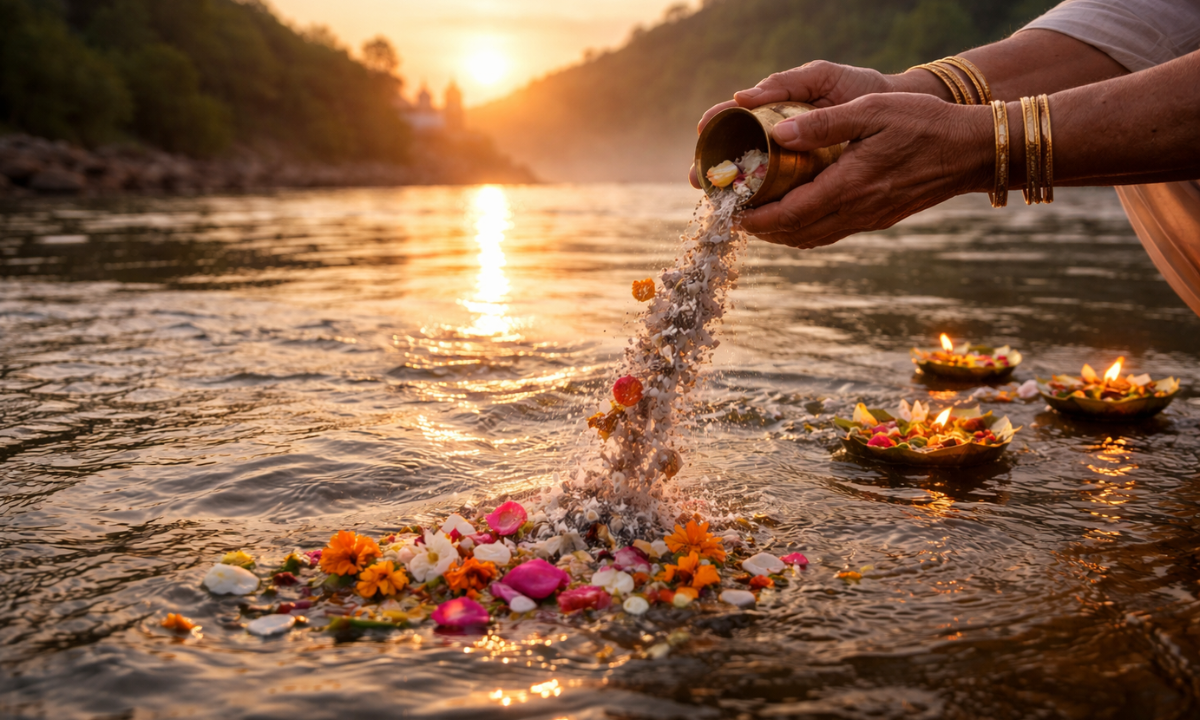
The ashes (Asthi) are collected carefully after cremation and immersed in a sacred river. Many families travel to holy rivers like the Ganges, but local rivers are also considered acceptable when travel is not possible.
The immersion is usually accompanied by prayers and mantras, seeking peace and liberation for the departed soul. This act symbolizes the final return of the physical body to nature, completing the cycle of life and reinforcing the belief in spiritual continuity.
2. Pind Daan
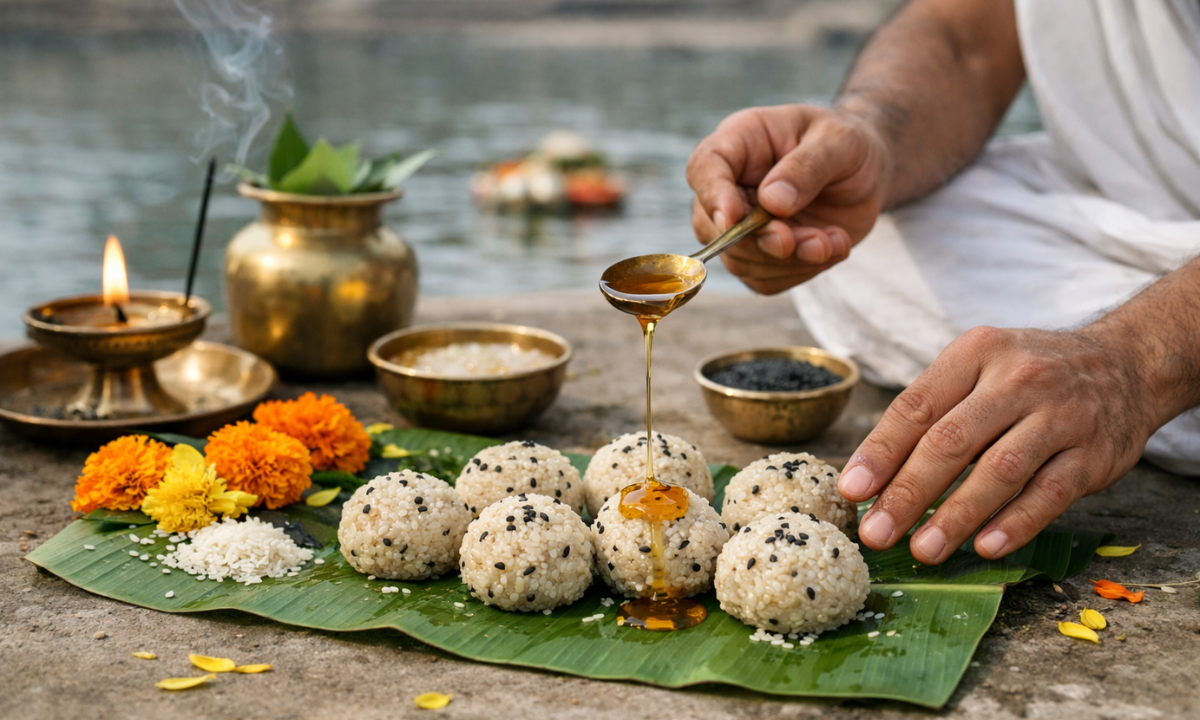
Pind daan involves offering rice balls mixed with sesame seeds and honey. It is believed that these offerings nourish the soul during its transition.
| Element Used | Symbolic Meaning |
|---|---|
| Rice | Sustenance |
| Sesame Seeds | Purification |
| Honey | Sweetness and peace |
This ritual expresses love and responsibility toward the departed.
3. Tarpan
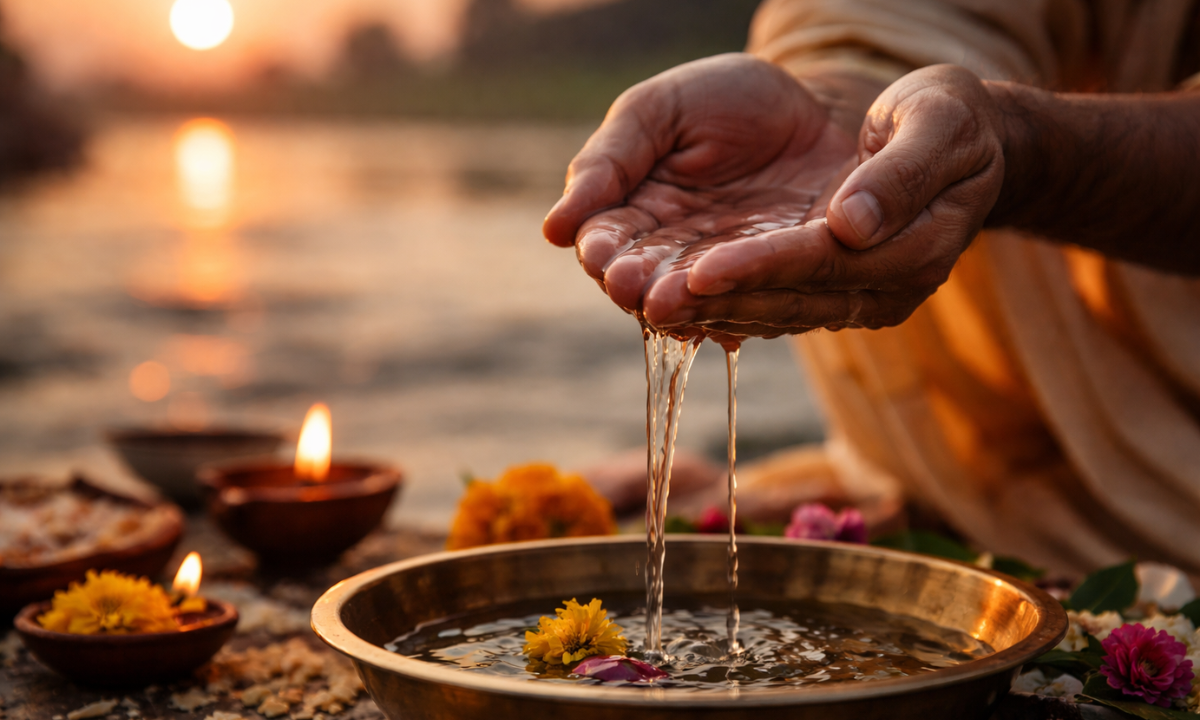
Tarpan is the offering of water mixed with sesame seeds to ancestors. It is performed with prayers for peace and liberation, usually by the male members of the family under the guidance of a priest.
The ritual is done by slowly pouring water through the hands while chanting sacred mantras. It is believed that this offering satisfies and nourishes the departed soul. Tarpan strengthens the bond between generations and honors ancestral lineage, reminding us of our deep spiritual roots and responsibilities.
4. The Mourning Period (Sutaka)
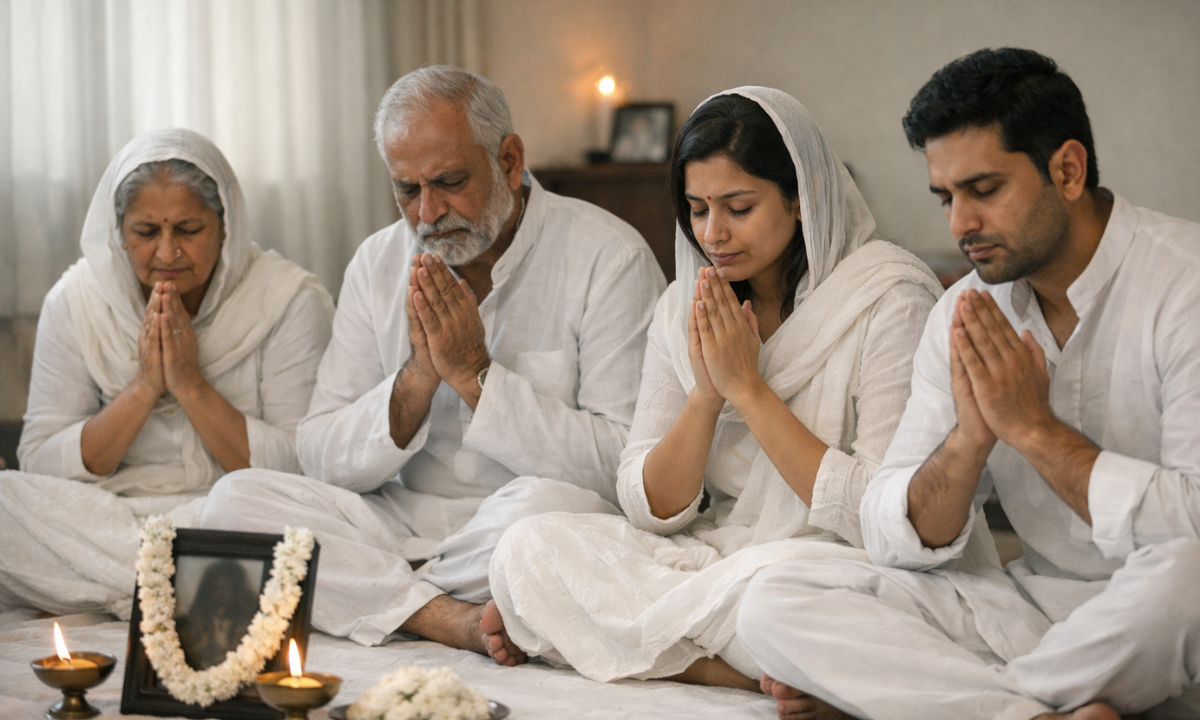
The family observes a mourning period of 10 to 13 days. During this time, they avoid celebrations, temple visits, and social gatherings as a mark of respect for the departed soul.
Daily prayers and simple rituals are often performed at home to seek peace for the soul’s onward journey. This period also allows close relatives to come together, share memories, and support one another emotionally. It creates space for emotional healing, spiritual reflection, and gradual acceptance of the loss.
5. Shradh and the 13th Day Ceremony
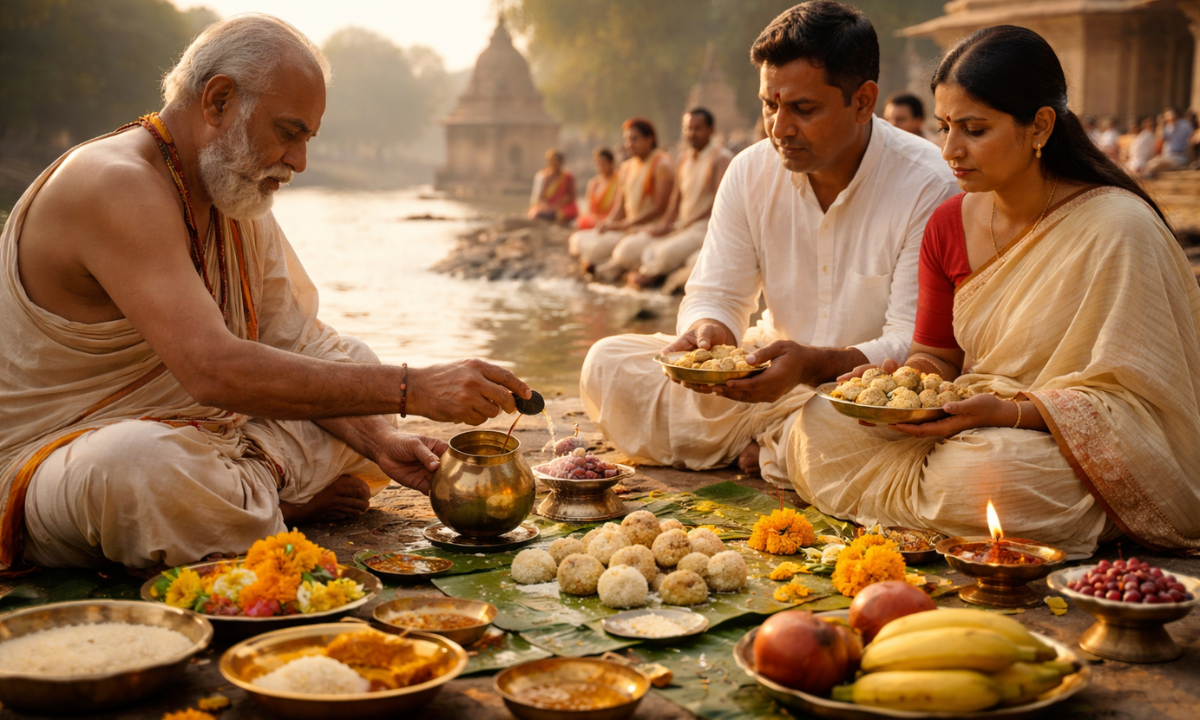
On the 13th day, a ceremony is held to mark the end of mourning. This is often called Tehravin.
Shradh rituals are performed to honor the departed soul and ancestors.
| Ceremony | Purpose |
|---|---|
| Shradh | Shows gratitude and remembrance |
| Feeding Brahmins | Spiritual offering |
| Charity | Earns blessings for the departed |
Shradh may also be observed annually as a remembrance ritual.
Role of a Pandit for Funerals
A knowledgeable pandit for funerals guides the family through each ritual step. He chants sacred mantras, explains their meaning, and ensures the correct procedures are followed according to tradition and family customs.
The presence of a priest brings spiritual structure to the ceremonies, especially when family members may be unsure about the sequence of rituals. He also determines the appropriate dates and timings for ceremonies like Shradh and Pind daan.
Having proper guidance reduces confusion during emotional times. It ensures that rituals are performed with accuracy, devotion, and deep spiritual significance.
Why Traditional Rituals Matter
These rituals are rooted in the belief of reincarnation and moksha (liberation). They offer structure during grief, giving families a clear path to follow when emotions feel overwhelming. The step-by-step nature of the ceremonies provides comfort and a sense of purpose during difficult times.
They also bring family and community together. Shared prayers, chanting, and collective participation create a supportive environment where loved ones can express sorrow openly and find strength in unity.
When we follow these customs, we honor not only the departed but also centuries of spiritual wisdom. These traditions preserve cultural values, reinforce faith, and remind us of the deep connection between life, death, and the eternal soul.
Practical Tips for Families
- Confirm cremation slot availability early.
- Arrange a Pandit in advance.
- Keep necessary documents ready.
- Discuss preferences for electric or wood cremation.
- Plan Asthi Visarjan travel if required.
Early planning reduces stress during difficult moments.
Final Thoughts
The journey of life does not end with death; it transforms. By understanding traditional rituals and their meaning, we ensure that our loved ones receive a dignified farewell rooted in faith and devotion.
When families seek funeral services in Bangalore, they often need compassionate guidance to navigate rituals, cremation arrangements, and ceremonies smoothly.
At Kaashimukthi, we stand beside families during these emotional times, offering respectful support, coordination, and complete funeral assistance so that every Antim Sanskar is performed with peace, honor, and spiritual integrity.
Frequently Asked Questions
1. What are the last rites in the Hindu tradition?
Last rites in Hindu tradition are known as Antim Sanskar, the final sacred ceremony performed after death. These rituals include preparation of the body, the cremation ceremony, and post-cremation practices like Pind daan, Tarpan, and Shradh.
Together, they are believed to guide the soul toward its next journey while helping the family express love, gratitude, and emotional closure.
2. Why is cremation preferred in Hindu final rites?
Cremation is preferred because it symbolizes the return of the physical body to the five natural elements: earth, water, fire, air, and space.
Fire is considered purifying and transformative in Hindu belief. Through cremation, the soul is released from earthly attachments, allowing it to continue its spiritual journey toward rebirth or moksha (liberation).
3. How long does the mourning period last?
The mourning period, known as Sutaka, usually lasts between 10 and 13 days. During this time, the family refrains from celebrations, temple visits, and social gatherings as a mark of respect.
Daily prayers and rituals are performed for the peace of the departed soul. The 13th-day ceremony formally concludes mourning and signifies a spiritual transition.
4. Is Shradh performed only once?
Shradh is first performed on the 13th day after death as part of the concluding rites. However, it is not limited to a single occasion. Families also observe Shradh annually, especially during Pitru Paksha or on the death anniversary.
These rituals honor ancestors, express gratitude, and seek blessings for family well-being and spiritual harmony.
5. Can rituals be adapted in cities?
Yes, traditional rituals can be respectfully adapted to suit urban environments and modern lifestyles. Families may use electric crematoriums, perform ceremonies in community halls, or adjust timings due to logistical constraints.
While certain practical changes may occur, the spiritual essence, prayers, and core intentions behind the rituals remain deeply meaningful and preserved.
Reference:
1. From Google

Madhu is an Entrepreneur, a Mentor, a Writer and an Aspiring Car Race Driver. He is Deeply passionate about leveraging Technology and Human Centred Design to make complex care and End of Life Planning easier. With the ultimate aim of Improving the quality of Life in the Twilight years. Madhu is highly educated and Alumni of IIM-Bangalore, Sikkim Manipal University and Bangalore University besides a Rich Industry Experience in the field of Product Management, Design, Supply chain, Finance, Commercial Management and Funeral Services.